
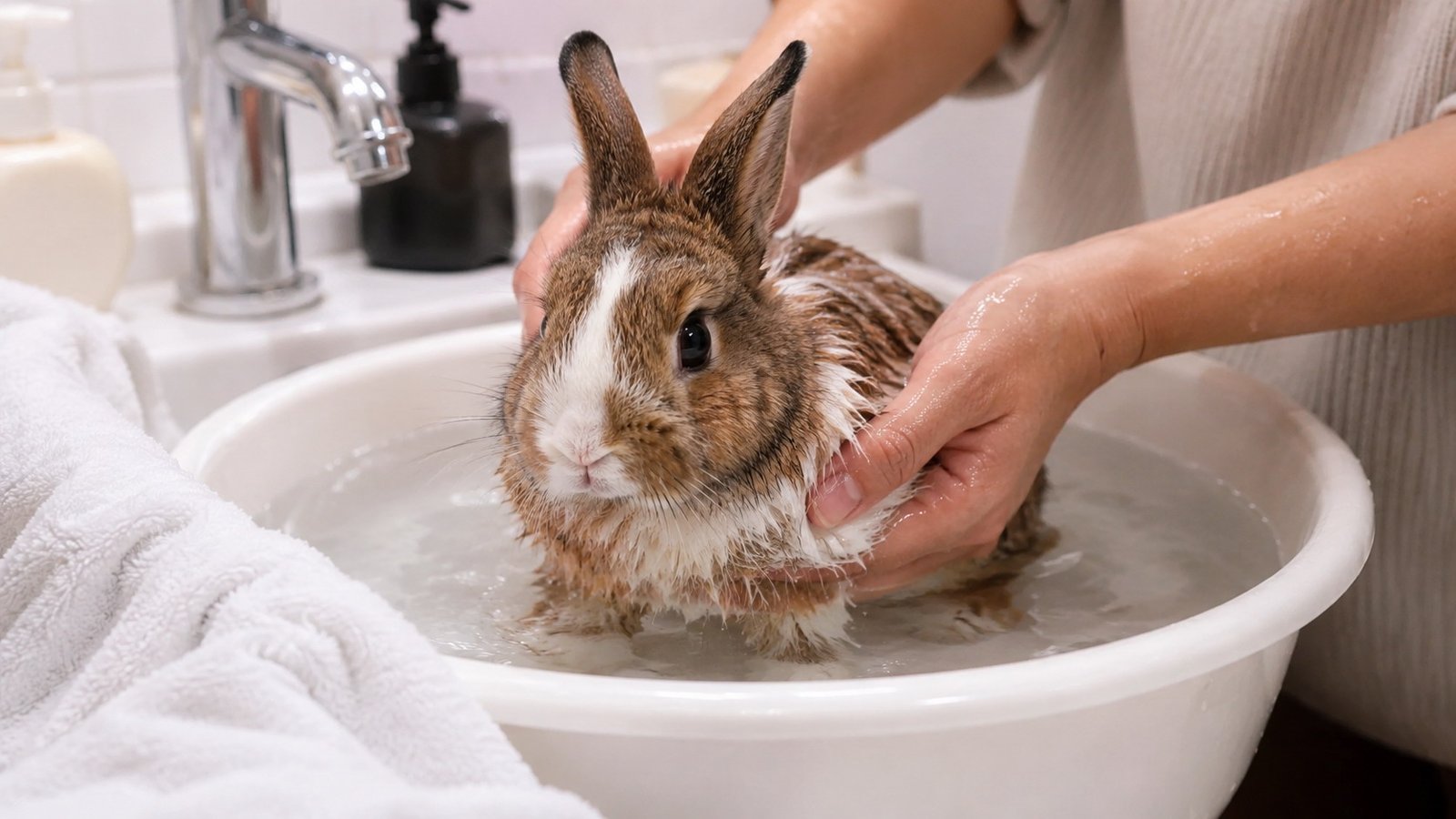
Many rabbit owners wonder whether they should bathe their pet and, if so, how to do it safely. The short answer is that rabbits generally do not need full baths, and bathing can actually be dangerous if done incorrectly. Rabbits are naturally clean animals that groom themselves regularly. However, there are situations where a gentle cleaning is necessary, such as when a rabbit has a dirty rear end, urine stains, or gets a substance on its fur that cannot be removed through grooming.
This guide explains how to bathe a rabbit at home step by step, when bathing is appropriate, safer alternatives to full baths, and the precautions every rabbit owner should know.
In This Article
Do Rabbits Need Baths?
In most cases, no.
Rabbits spend a significant amount of time grooming themselves, much like cats. Their fur naturally stays clean when they are healthy and living in a clean environment.
A bath should only be considered when:
- Your rabbit has feces stuck to its fur
- Urine has soaked the coat
- The rabbit has stepped in something sticky or harmful
- A veterinarian recommends cleaning for a medical reason
- The rabbit is elderly, overweight, or unable to groom itself properly
Why Full Baths Can Be Risky
Unlike many dogs, rabbits typically dislike water. A full bath can cause:
- Extreme stress
- Shock from fear
- Hypothermia if the fur remains wet
- Skin irritation
- Injuries from struggling or kicking
- Respiratory problems if chilled
For these reasons, most rabbit care experts recommend spot cleaning or a shallow butt bath instead of immersing the entire rabbit in water.
Before Bathing Your Rabbit: What You’ll Need
Gather all supplies before bringing your rabbit to the cleaning area.
| Item | Purpose |
| Shallow basin or sink | For controlled cleaning |
| Lukewarm water | Comfortable temperature |
| Soft towels | Drying and warmth |
| Pet-safe rabbit shampoo (if necessary) | Gentle cleaning |
| Cotton balls | Protect ears from water splashes |
| Soft brush or comb | Grooming afterward |
| Non-slip mat | Prevent slipping |
| Treats | Positive reinforcement |
Water Temperature Matters
Use water that feels lukewarm to your wrist.
Avoid:
- Hot water
- Cold water
- Sudden temperature changes
Rabbits are sensitive to temperature fluctuations and can become stressed quickly.
Alternatives to Bathing a Rabbit
Before reaching for water, consider these safer options.
Dry Cleaning
For light dirt:
- Sprinkle a small amount of cornstarch on dirty fur.
- Gently massage it into the coat.
- Brush out the powder and debris.
This method works well for minor messes.
Spot Cleaning
If only one area is dirty:
- Dampen a soft cloth.
- Wipe the affected area.
- Dry thoroughly with a towel.
Many situations can be resolved without an actual bath.
How to Bathe a Rabbit at Home Step by Step
If your rabbit genuinely needs washing, follow these steps carefully.
Step 1: Create a Calm Environment
Choose a quiet room away from:
- Loud noises
- Other pets
- Children running around
A calm setting reduces stress and makes the process safer.
Step 2: Prepare the Cleaning Area
Place a non-slip towel or mat inside the sink or basin.
Add only a few inches (5–8 cm) of lukewarm water if performing a butt bath.
Never fill a tub deeply enough for swimming.
Step 3: Hold Your Rabbit Securely
Support both the chest and hindquarters.
Avoid:
- Holding by the ears
- Grabbing loose skin
- Allowing the rabbit to jump suddenly
A secure hold helps prevent injury.
Step 4: Wet Only the Dirty Area
For most cleaning situations:
- Wet only the affected fur
- Keep the head, ears, and upper body dry
Use a cup or your hand to gently wet the area rather than spraying water directly.
Step 5: Clean Gently
If necessary, apply a tiny amount of rabbit-safe shampoo.
Work it gently into the dirty fur.
Never use:
- Human shampoo
- Dish soap
- Dog shampoo
- Strong scented products
Massage carefully without pulling the fur.
Step 6: Remove Stuck Debris
For dried feces or urine stains:
- Allow the warm water to soften the material.
- Gently loosen it with your fingers.
- Avoid pulling or cutting fur close to the skin.
Patience is important. Forcing debris out can damage delicate skin.
Step 7: Rinse Thoroughly
Any shampoo residue left behind can irritate the skin.
Rinse until:
- Water runs clear
- No slippery residue remains
- Fur feels clean
Keep rinsing focused on the affected area only.
Step 8: Dry Immediately
Drying is one of the most important steps.
Use a soft towel to:
- Blot excess water
- Gently squeeze moisture from fur
- Keep the rabbit warm
Do not rub vigorously.
Step 9: Finish Drying Completely
Rabbit fur is dense and can trap moisture close to the skin.
Continue drying until the coat is completely dry.
Some owners use a hair dryer on the lowest heat and lowest noise setting, but many rabbits find dryers frightening.
If using one:
- Keep it far from the rabbit
- Monitor temperature carefully
- Stop immediately if the rabbit becomes stressed
Towel drying in a warm room is often the safest option.
Step 10: Reward and Observe
Offer a favorite healthy treat afterward.
Monitor your rabbit for:
- Shivering
- Hunched posture
- Loss of appetite
- Unusual behavior
Contact a veterinarian if anything seems abnormal.
How to Give a Rabbit a Butt Bath
A butt bath is the most common type of rabbit bathing.
When a Butt Bath Is Needed
A rear-end cleaning may be necessary when:
- Feces stick to fur
- Urine scald develops
- Soft stool accumulates around the tail area
Butt Bath Procedure
- Fill a shallow basin with lukewarm water.
- Support the rabbit securely.
- Lower only the rear end into the water.
- Gently loosen debris.
- Rinse thoroughly.
- Dry completely.
This method minimizes stress while addressing hygiene issues.
Common Reasons Rabbits Get Dirty
Understanding the cause helps prevent future bathing.
Poor Diet
Too many treats or insufficient fiber can cause soft stools.
Healthy rabbit diets should focus on:
- Unlimited grass hay
- Fresh water
- Appropriate leafy greens
- Limited pellets
Obesity
Overweight rabbits may struggle to reach their rear end for grooming.
Weight management often reduces hygiene problems.
Arthritis or Mobility Issues
Older rabbits sometimes lose flexibility.
Regular health checks can identify these problems early.
Dental Disease
Painful teeth can interfere with grooming behavior.
Signs include:
- Drooling
- Weight loss
- Reduced appetite
- Messy coat
Dirty Living Conditions
A clean habitat helps keep fur clean.
Maintain:
- Dry bedding
- Regular litter changes
- Clean food areas
Mistakes to Avoid When Bathing a Rabbit
Many rabbit injuries occur because of improper bathing techniques.
Fully Submerging the Rabbit
This can cause panic and increase the risk of shock.
Getting Water in the Ears
Moisture inside the ears may contribute to infections.
Using Human Products
Rabbit skin is sensitive and requires gentle care.
Leaving Fur Damp
Moisture trapped in thick fur can lead to:
- Skin problems
- Chilling
- Discomfort
Forcing a Struggling Rabbit
Stop and reassess if your rabbit becomes highly distressed.
In some cases, professional veterinary assistance is safer.
Signs Your Rabbit Needs Veterinary Care Instead of a Bath
Bathing addresses hygiene, but it does not solve underlying medical issues.
Seek veterinary advice if you notice:
- Recurring dirty rear end
- Severe urine scald
- Open wounds
- Maggots or flystrike
- Persistent diarrhea
- Sudden weight loss
- Difficulty moving
- Signs of pain
These symptoms may indicate a health condition requiring treatment.
How Often Should You Bathe a Rabbit?
Most rabbits never need routine baths.
General guidelines:
| Situation | Recommended Cleaning |
| Healthy rabbit | No bath needed |
| Small dirty spot | Spot clean |
| Minor debris in fur | Dry bath |
| Soiled rear end | Butt bath |
| Medical condition | Follow veterinarian advice |
Bathing should be considered an occasional hygiene measure rather than part of regular grooming.
Preventing Future Bathing Needs
The best approach is prevention.
Maintain Proper Nutrition
A high-fiber diet supports healthy digestion and normal stools.
Groom Regularly
Brushing helps remove:
- Loose fur
- Dirt
- Debris
Long-haired rabbits may require daily grooming.
Keep Housing Clean
Regular cleaning reduces urine stains and fur contamination.
Monitor Health Changes
Early detection of:
- Weight gain
- Arthritis
- Dental disease
can prevent grooming difficulties later.
Frequently Asked Questions
Can I bathe my rabbit with human shampoo?
No. Human shampoos can irritate a rabbit’s sensitive skin and may disrupt the natural oils in the coat.
Can rabbits die from being bathed?
Severe stress, shock, hypothermia, or injuries during improper bathing can become life-threatening. This is why full baths are generally discouraged.
What if my rabbit smells bad?
A healthy rabbit usually has little odor. Persistent smells may indicate urine buildup, infection, dental disease, or another health problem that should be evaluated by a veterinarian.
Can baby rabbits be bathed?
Bathing baby rabbits is generally avoided unless absolutely necessary and performed with extreme care. Consult a veterinarian for guidance.
Is a dry bath safe for rabbits?
Yes. Dry cleaning with cornstarch is often one of the safest ways to remove minor dirt and debris from rabbit fur.
Can I use a hair dryer on my rabbit?
Only with caution. Use the lowest heat and noise settings, keep the dryer at a safe distance, and stop if the rabbit becomes stressed.
Final Thoughts on Bathing a Rabbit at Home Step by Step
Learning how to bathe a rabbit at home step by step starts with understanding that most rabbits rarely need a traditional bath. Spot cleaning, dry baths, and gentle butt baths are usually safer and more effective than full-body washing.
If bathing becomes necessary, focus on keeping the process calm, washing only the affected area, and drying the fur completely afterward. Most importantly, recurring hygiene problems often point to underlying issues such as diet, obesity, arthritis, or illness. Addressing those root causes will help keep your rabbit clean, healthy, and comfortable for the long term.

Passionate about pets and animal care, we shares trusted tips, fun facts, and practical advice to help pet lovers give their furry, feathered, and scaly companions the best life possible. From everyday care guides to fascinating animal insights, we’re dedicated to making pet information easy, helpful, and enjoyable for every reader.