
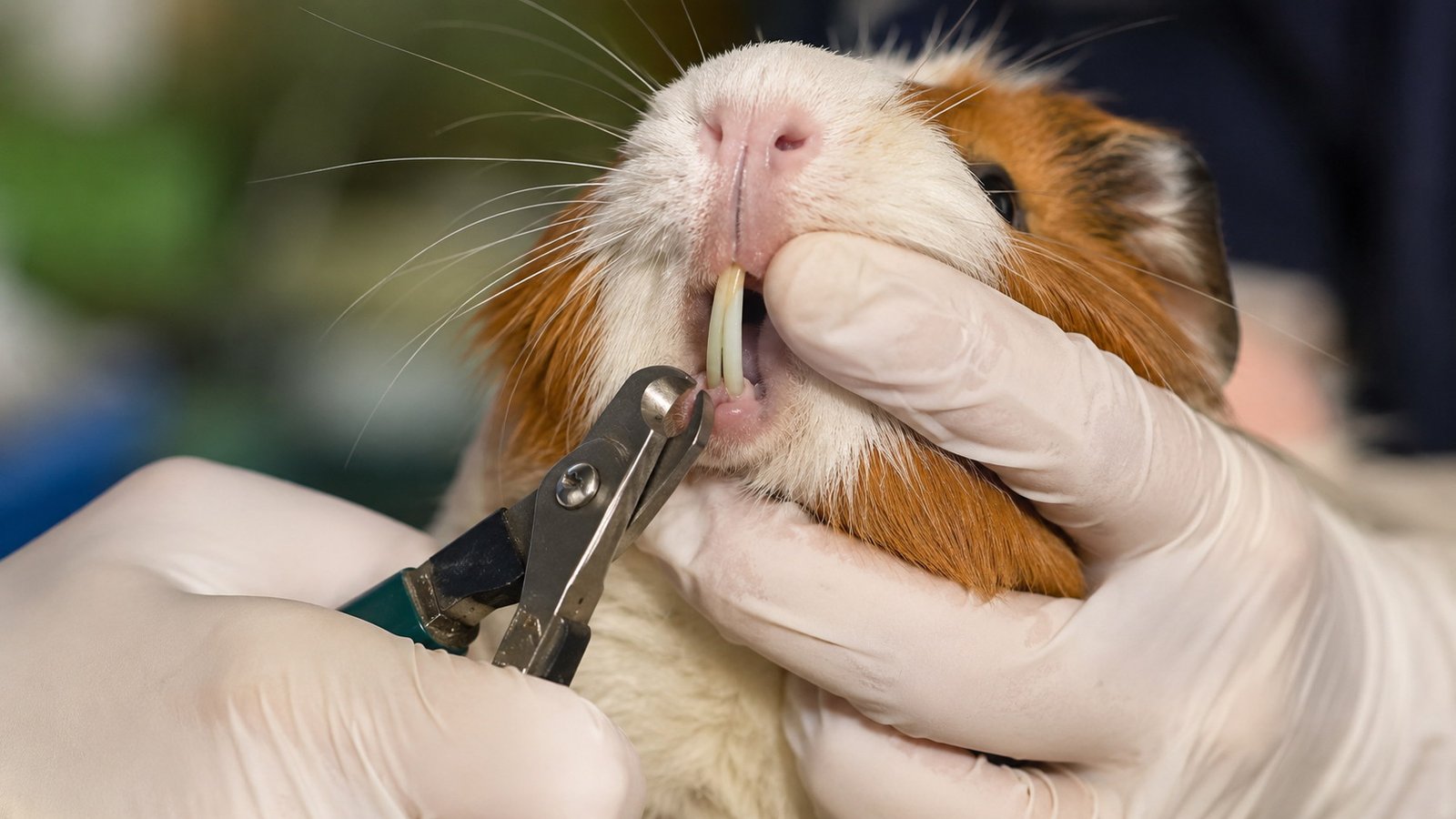
Guinea pig teeth never stop growing. In a healthy guinea pig, constant chewing on hay, grass, and fibrous foods naturally wears the teeth down. Problems arise when the teeth become overgrown, misaligned, broken, or fail to wear evenly.
If you’re wondering how to trim guinea pig teeth, the safest and most accurate answer is this:
Guinea pig teeth should generally be trimmed by an experienced exotic veterinarian rather than at home. Improper trimming can crack teeth, expose sensitive tissue, cause pain, and lead to serious dental complications.
That said, every guinea pig owner should understand how dental trimming works, when it becomes necessary, what signs indicate a problem, and how veterinarians safely correct overgrown teeth.
In This Article
Guinea Pig Teeth
Guinea pigs belong to a group of animals whose teeth grow continuously throughout life.
A healthy adult guinea pig has 20 teeth:
| Tooth Type | Number |
| Incisors (front teeth) | 4 |
| Premolars and molars (back teeth) | 16 |
| Canines | None |
Unlike humans, guinea pig teeth are open-rooted and grow constantly. Normal chewing activity gradually grinds them down at approximately the same rate they grow.
Why Continuous Growth Matters
Continuous growth helps guinea pigs process tough grasses and vegetation in the wild. However, if wear does not keep pace with growth, teeth can become excessively long.
This may result in:
- Difficulty eating
- Weight loss
- Mouth injuries
- Drooling
- Pain
- Infection
- Gastrointestinal problems
Dental disease is one of the most common health issues seen in pet guinea pigs.
Do Guinea Pig Teeth Need Trimming?
Most healthy guinea pigs never require routine tooth trimming.
A guinea pig that receives:
- Unlimited grass hay
- Proper nutrition
- Appropriate chewing opportunities
- Regular veterinary checkups
will often maintain normal tooth length naturally.
Situations That May Require Trimming
Dental trimming may become necessary when a guinea pig develops:
- Overgrown incisors
- Malocclusion (misaligned teeth)
- Broken teeth growing abnormally
- Genetic jaw abnormalities
- Injury-related dental problems
- Overgrown molars
- Tooth root disease
In these cases, trimming addresses symptoms, but the underlying cause must also be identified.
Signs Your Guinea Pig May Have Overgrown Teeth
Dental issues often develop gradually.
Watch for these warning signs:
Eating Difficulties
Your guinea pig may:
- Drop food from its mouth
- Chew slowly
- Avoid hard foods
- Refuse hay
- Show reduced appetite
Excessive Drooling
Wet fur under the chin or around the mouth can indicate dental pain or improper chewing.
Weight Loss
Weight loss is often one of the earliest signs of dental disease.
Weigh your guinea pig weekly using a digital kitchen scale.
Changes in Behavior
You may notice:
- Reduced activity
- Hiding more often
- Irritability
- Reluctance to eat favorite treats
Visible Tooth Problems
Look for:
- Curved incisors
- Teeth crossing over one another
- Uneven front teeth
- Broken teeth
- Excessively long incisors
Eye or Facial Issues
Advanced dental disease can sometimes cause:
- Eye discharge
- Facial swelling
- Abscesses
- Bulging eyes
These signs require immediate veterinary attention.
Why Home Tooth Trimming Is Risky
Many owners discover online videos showing people clipping guinea pig teeth with nail clippers or wire cutters.
This method is strongly discouraged.
Potential Risks
Using household tools can:
- Crack the tooth vertically
- Split the tooth below the gumline
- Cause severe pain
- Create infections
- Damage tooth roots
- Lead to permanent dental problems
Guinea pig teeth contain living tissue. A seemingly simple trim can become a serious medical issue if performed incorrectly.
The Problem With Nail Clippers
Nail clippers exert crushing pressure.
Instead of creating a clean cut, they may:
- Fracture the tooth
- Create jagged edges
- Damage surrounding structures
For this reason, experienced exotic veterinarians generally use specialized dental equipment rather than clipping tools.
How Veterinarians Trim Guinea Pig Teeth
Professional trimming is significantly safer and more precise.
Examination
The veterinarian first evaluates:
- Incisor length
- Tooth alignment
- Jaw movement
- Molar condition
- Overall oral health
A complete dental assessment often includes examination of the back teeth, which cannot be easily inspected at home.
Sedation or Anesthesia
For some procedures, mild sedation or anesthesia may be required.
This allows:
- Better visibility
- Greater accuracy
- Reduced stress
- Improved safety
Whether sedation is necessary depends on the severity of the dental problem.
Dental Burr or Rotary Tool
Veterinarians commonly use:
- High-speed dental burrs
- Rotary dental tools
- Specialized veterinary dental equipment
These tools shorten teeth gradually and create smooth surfaces.
Molar Correction
If molars are involved, specialized instruments may be used to:
- Reduce sharp points
- Correct overgrowth
- Restore proper chewing function
Molar work requires significant expertise and should never be attempted at home.
Step-by-Step: What Happens During Professional Tooth Trimming?
The process typically follows these steps:
- Physical examination
- Weight assessment
- Oral examination
- Evaluation of incisors and molars
- Dental imaging if necessary
- Sedation when required
- Precise trimming using dental equipment
- Smoothing rough edges
- Post-procedure monitoring
- Follow-up recommendations
Many guinea pigs can return to eating normally shortly after treatment.
Can You Trim Guinea Pig Teeth at Home?
The Short Answer
Routine home trimming is not recommended.
Rare Exceptions
In some chronic dental cases, a veterinarian may train an owner to manage recurring incisor overgrowth between appointments.
Even then:
- Proper equipment is required
- Veterinary guidance is essential
- Regular professional monitoring remains necessary
Without training, attempting tooth trimming at home presents significant risks.
What Causes Overgrown Guinea Pig Teeth?
Understanding the cause helps prevent future problems.
Inadequate Hay Consumption
Hay is the most important food for dental wear.
Without enough hay, teeth may not wear down properly.
Genetic Factors
Some guinea pigs inherit jaw structures that predispose them to malocclusion.
Injury
A fall, accident, or chewing injury may alter tooth alignment.
Nutritional Deficiencies
Poor nutrition can affect tooth quality and growth patterns.
Underlying Disease
Dental disease involving roots or jaw bones can disrupt normal wear.
How to Prevent Guinea Pig Teeth From Becoming Overgrown
Prevention is easier and safer than treatment.
Provide Unlimited Hay
The foundation of dental health is constant access to:
- Timothy hay
- Orchard grass
- Meadow hay
- Other appropriate grass hays
Hay should make up most of a guinea pig’s diet.
Encourage Natural Chewing
Safe chewing opportunities include:
- Hay-based toys
- Untreated wood chews
- Cardboard tunnels
- Woven grass products
Feed a Balanced Diet
A healthy diet should include:
- Unlimited hay
- Fresh vegetables
- Quality guinea pig pellets
- Fresh water
Schedule Veterinary Checkups
Regular exams help identify dental issues before they become severe.
Monitor Weight Weekly
A digital scale often reveals problems before obvious symptoms appear.
Front Teeth vs. Back Teeth Problems
Many owners focus only on visible incisors.
However, molar disease is often more serious.
| Front Teeth (Incisors) | Back Teeth (Molars) |
| Easy to see | Difficult to see |
| May appear overgrown | Often hidden |
| Sometimes corrected quickly | Usually require specialized treatment |
| Can indicate larger dental issues | Frequently cause eating difficulties |
A guinea pig can have normal-looking incisors while suffering from significant molar disease.
Common Mistakes Owners Make
Avoid these common errors:
Ignoring Early Symptoms
Subtle changes in eating behavior should not be dismissed.
Assuming Teeth Are Fine Because They Look Normal
Back teeth problems are often invisible without veterinary examination.
Trimming Teeth With Household Tools
This can cause painful fractures and infections.
Feeding Too Many Soft Foods
A diet lacking fibrous hay reduces natural tooth wear.
Delaying Veterinary Care
Dental problems typically worsen over time rather than resolve on their own.
Recovery After Tooth Trimming
Most guinea pigs recover quickly after professional treatment.
During recovery:
- Monitor food intake
- Check water consumption
- Observe droppings
- Follow medication instructions
- Attend recommended follow-up visits
Contact your veterinarian if your guinea pig:
- Stops eating
- Appears lethargic
- Loses weight
- Develops facial swelling
- Shows signs of pain
When to See a Veterinarian Immediately
Seek prompt veterinary care if your guinea pig has:
- Complete loss of appetite
- Significant weight loss
- Excessive drooling
- Mouth bleeding
- Facial swelling
- Broken teeth
- Difficulty chewing
- Eye discharge associated with dental issues
These symptoms may indicate serious dental disease requiring professional treatment.
Frequently Asked Questions
How often do guinea pig teeth need trimming?
Healthy guinea pigs often never need tooth trimming. Those with dental disease may require periodic treatment based on veterinary recommendations.
Can guinea pig teeth become too long overnight?
Not usually. Overgrowth typically develops gradually, although owners may suddenly notice it once symptoms become obvious.
Can I use nail clippers to trim guinea pig teeth?
No. Nail clippers can crack or split teeth and may cause severe pain or infection.
Do all guinea pigs need routine tooth trimming?
No. A proper diet rich in hay naturally wears down teeth in most guinea pigs.
How much does guinea pig tooth trimming cost?
Costs vary widely depending on location, examination fees, sedation requirements, and whether molar treatment is needed.
Can overgrown teeth grow back after trimming?
Yes. Guinea pig teeth continue growing throughout life, so underlying dental problems may require ongoing management.
What is the best food for preventing dental problems?
Unlimited grass hay is the most effective dietary tool for maintaining healthy tooth wear.
Final Thoughts on How to Trim Guinea Pig Teeth
Knowing how to trim guinea pig teeth starts with understanding that trimming is usually a veterinary procedure rather than a home-care task. While overgrown teeth can cause pain, weight loss, and serious health complications, improper trimming can make the problem far worse.
The best approach is prevention: provide unlimited high-quality hay, encourage natural chewing behavior, monitor your guinea pig’s weight, and schedule regular veterinary checkups. If you notice drooling, eating difficulties, or unusually long teeth, seek professional evaluation promptly. Early treatment not only protects your guinea pig’s teeth but also supports their overall health and quality of life.

Passionate about pets and animal care, we shares trusted tips, fun facts, and practical advice to help pet lovers give their furry, feathered, and scaly companions the best life possible. From everyday care guides to fascinating animal insights, we’re dedicated to making pet information easy, helpful, and enjoyable for every reader.