
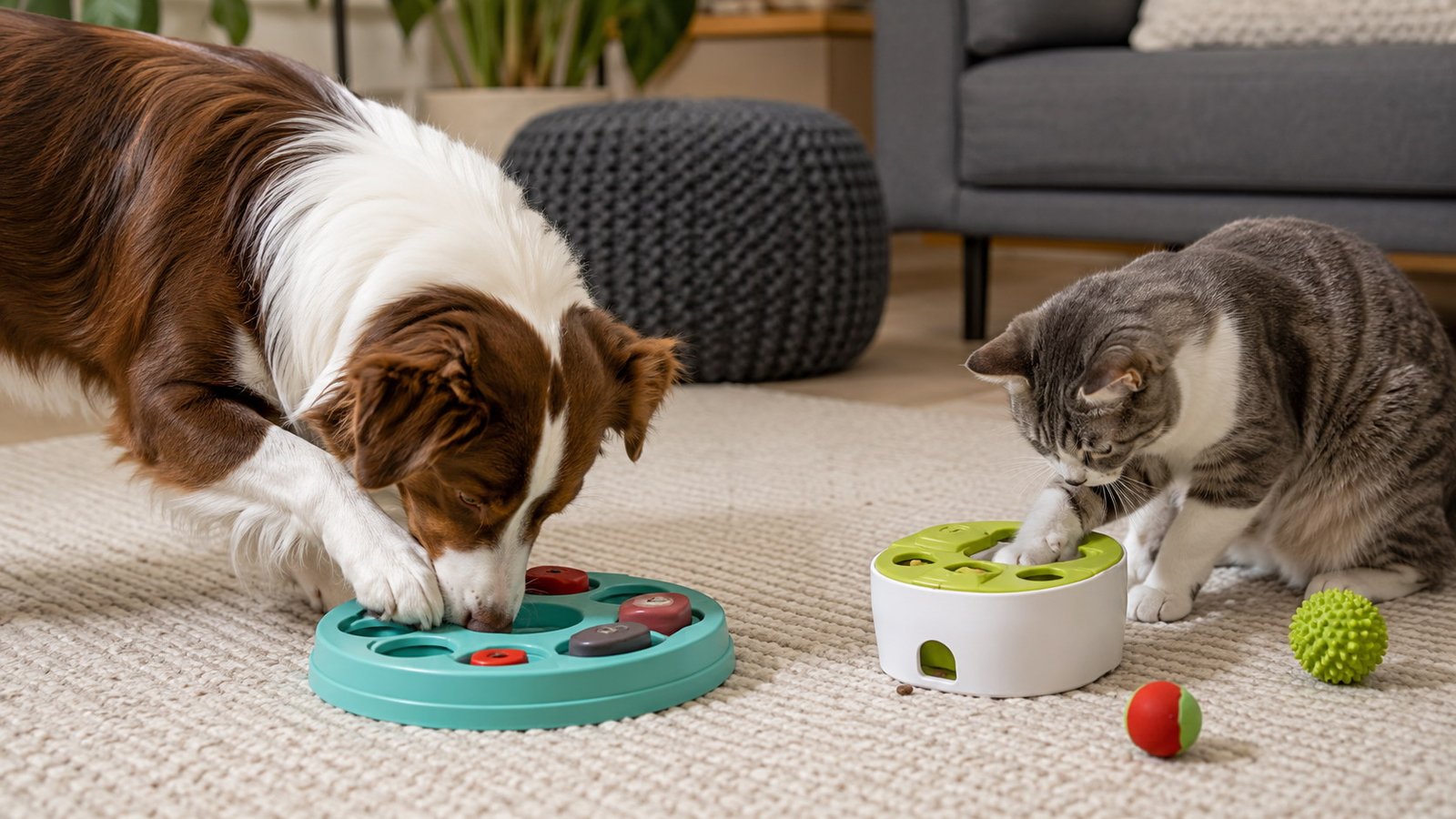
Mental enrichment toys for cats and dogs are no longer considered optional extras. In 2026, they are a core part of modern pet care because they help prevent boredom, reduce destructive behavior, improve confidence, and support healthier aging.
Pets that spend most of their time indoors often lack the mental challenges they would naturally encounter through hunting, exploring, problem-solving, and social interaction. Enrichment toys recreate some of those experiences in safe and engaging ways.
For many pet owners, the biggest challenge is choosing toys that actually match their pet’s personality, age, energy level, and intelligence. A puzzle feeder that keeps one dog busy for 30 minutes might frustrate another. A motion-activated cat toy may excite one cat while completely overwhelming another.
This guide explains how mental enrichment toys work, which types are most effective in 2026, how to choose the right options for your pet, and how to avoid common mistakes that reduce engagement.
In This Article
What Are Mental Enrichment Toys?
Mental enrichment toys are products designed to stimulate a pet’s brain through problem-solving, sensory exploration, movement, or reward-based interaction.
Unlike standard chew toys or balls, enrichment toys encourage pets to think and engage actively rather than passively.
Examples include:
- Puzzle feeders
- Snuffle mats
- Treat-dispensing toys
- Interactive electronic toys
- Scent games
- Slow feeders
- Motion-activated chase toys
- Training games
- Hide-and-seek enrichment systems
The goal is to mimic natural behaviors such as:
| Pet Behavior | Enrichment Goal |
| Hunting | Chase and capture toys |
| Foraging | Puzzle feeders and snuffle mats |
| Problem-solving | Interactive puzzles |
| Exploring | Rotating novelty toys |
| Chewing | Durable chew enrichment |
| Tracking scents | Nose work toys |
Why Mental Enrichment Matters More in 2026
Pet lifestyles have changed significantly over the past decade.
More cats live exclusively indoors, while many dogs spend long hours inside apartments or homes with limited outdoor stimulation. At the same time, pet owners increasingly recognize the connection between mental activity and emotional health.
Mental enrichment helps reduce:
- Excessive barking
- Furniture scratching
- Separation-related stress
- Overeating
- Destructive chewing
- Restlessness
- Attention-seeking behavior
It also supports:
- Cognitive health in senior pets
- Confidence in shy animals
- Weight management
- Better sleep patterns
- Improved focus during training
Veterinary behaviorists and trainers now commonly recommend daily enrichment alongside exercise and nutrition.
How Mental Enrichment Toys Work
Most enrichment toys activate one or more of these systems:
Food Motivation
Food-based enrichment remains the most effective category for many pets.
Examples include:
- Treat mazes
- Frozen lick mats
- Slow feeders
- Puzzle dispensers
The pet must solve a challenge to access food rewards.
This taps into natural foraging instincts and can significantly increase engagement time.
Prey Drive Stimulation
Cats especially benefit from toys that mimic prey movement.
Popular 2026 options include:
- AI-randomized feather toys
- Motion-triggered laser systems
- Robotic prey simulators
- Fluttering electronic insects
Dogs with high prey drive may enjoy:
- Tug puzzles
- Chase-release toys
- Retrieval problem games
Scent Engagement
Dogs experience the world heavily through scent.
Scent-based enrichment includes:
- Snuffle mats
- Hidden treat boxes
- Nose work kits
- Scent trails
Cats also benefit from scent stimulation, especially through silvervine, catnip blends, or hidden treat hunts.
Cognitive Problem-Solving
Advanced puzzle toys challenge pets to:
- Slide compartments
- Press buttons
- Rotate pieces
- Pull tabs
- Sequence actions
These toys are especially helpful for intelligent working breeds and highly curious cats.
Best Types of Mental Enrichment Toys for Dogs
Puzzle Feeders
Puzzle feeders remain one of the most effective enrichment tools for dogs.
They slow eating while encouraging problem-solving.
Common designs include:
- Sliding compartments
- Rotating lids
- Hidden treat chambers
- Multi-step puzzles
Best for:
- High-energy dogs
- Fast eaters
- Intelligent breeds
- Rainy-day indoor activity
Potential drawback:
- Some dogs become frustrated if difficulty increases too quickly
Snuffle Mats
Snuffle mats encourage dogs to use their noses to locate hidden food.
Benefits include:
- Lower stress
- Calm indoor activity
- Slower eating
- Reduced boredom
They work especially well for:
- Anxious dogs
- Senior dogs
- Apartment dogs
- Puppies learning scent work
Frozen Enrichment Toys
Stuffable toys filled with frozen food have become extremely popular in 2026.
Common fillings include:
- Wet dog food
- Pumpkin puree
- Plain yogurt
- Mashed banana
- Kibble soaked in broth
Freezing extends engagement time significantly.
These toys are ideal for:
- Crate training
- Alone-time routines
- Teething puppies
Smart Interactive Toys
Technology-driven enrichment has expanded rapidly.
Modern smart toys may include:
- App-controlled movement
- Randomized patterns
- Voice interaction
- Auto-reward systems
- Adjustable difficulty levels
Some advanced systems track:
- Play duration
- Reaction speed
- Engagement trends
While useful, smart toys should supplement—not replace—human interaction.
Best Types of Mental Enrichment Toys for Cats
Wand and Chase Toys
Interactive wand toys remain one of the healthiest enrichment activities for cats.
They mimic hunting sequences:
- Stalk
- Chase
- Pounce
- Capture
Cats typically engage more fully when the movement resembles prey rather than constant frantic motion.
Motion-Activated Toys
In 2026, motion-responsive cat toys are more realistic and energy-efficient than older designs.
Popular styles include:
- Rolling robotic mice
- Fluttering bird simulators
- Peek-and-hide feather toys
- Autonomous laser systems
These help indoor cats stay active during periods of low human interaction.
Food Puzzles for Cats
Cats can become highly engaged with foraging toys.
Examples include:
- Treat balls
- Puzzle towers
- Hidden compartments
- Slow-feed trays
Food puzzles are especially valuable for:
- Overweight cats
- Highly food-motivated cats
- Indoor-only cats
Sensory Enrichment Toys
Cats rely heavily on sensory stimulation.
Good enrichment options include:
- Catnip toys
- Silvervine sticks
- Crinkle tunnels
- Textured scratching systems
- Rotating scent toys
Changing scents and textures periodically keeps novelty levels high.
Best Mental Enrichment Toys by Pet Personality
| Pet Type | Recommended Toys |
| High-energy dog | Puzzle feeders, scent games, smart chase toys |
| Senior dog | Snuffle mats, gentle puzzles, lick mats |
| Destructive chewer | Durable treat dispensers, frozen enrichment toys |
| Anxious dog | Nose work toys, calming lick mats |
| Indoor cat | Motion toys, puzzle feeders, climbing enrichment |
| Shy cat | Slow interactive wand play, scent enrichment |
| Highly intelligent dog | Multi-step puzzles, advanced training games |
| Food-driven cat | Treat mazes, hunting feeders |
How to Choose the Right Enrichment Toy
Match the Difficulty Level
One of the biggest mistakes pet owners make is choosing puzzles that are too difficult.
Signs a toy is too hard:
- Immediate frustration
- Barking or pawing aggressively
- Walking away quickly
- Destructive chewing unrelated to the puzzle
Start simple and increase complexity gradually.
Prioritize Safety
Always check:
- Material durability
- Choking hazards
- Loose pieces
- Battery compartments
- Cleaning instructions
Discard damaged toys promptly.
Rotate Toys Regularly
Pets often lose interest if the same toys remain available constantly.
A simple rotation schedule works well:
- Keep 3–5 toys available
- Store the rest
- Rotate every few days
This maintains novelty without requiring constant new purchases.
Consider Your Pet’s Natural Instincts
Different pets enjoy different forms of enrichment.
For example:
- Terriers often enjoy digging challenges
- Herding breeds enjoy problem-solving
- Sighthounds prefer movement-based games
- Cats typically prefer stalk-and-pounce activities
DIY Mental Enrichment Ideas
Expensive toys are not always necessary.
Simple homemade enrichment activities can work extremely well.
DIY Dog Enrichment
- Scatter kibble in grass
- Freeze treats inside silicone molds
- Hide treats around the house
- Use cardboard box puzzles
- Roll treats inside towels
DIY Cat Enrichment
- Paper bag exploration
- Cardboard hideouts
- Treat scavenger hunts
- Homemade feather wands
- Toilet paper tube puzzles
Supervision is important with DIY activities to prevent accidental ingestion of unsafe materials.
Common Mistakes Pet Owners Make
Using Enrichment Only Occasionally
Mental stimulation works best when it becomes part of a daily routine.
Even 10–20 minutes of focused enrichment can make a noticeable difference.
Overstimulating Sensitive Pets
Not all pets enjoy constant stimulation.
Some cats become stressed by noisy electronic toys. Some dogs become hyper-focused on laser games.
Balance excitement with calming activities.
Ignoring Breed Tendencies
Breed traits strongly influence enrichment preferences.
A scent hound may enjoy nose work far more than visual puzzles, while a Bengal cat may require much more physical and mental stimulation than a sedentary breed.
Relying Entirely on Electronic Toys
Technology can help, but enrichment should include:
- Human interaction
- Training
- Physical activity
- Environmental enrichment
No automated toy fully replaces social engagement.
Best Practices for Daily Mental Enrichment
Create a Routine
Pets thrive on predictable enrichment schedules.
Example:
- Morning sniffing game
- Afternoon chew enrichment
- Evening interactive play session
Combine Physical and Mental Activity
Mental work can tire pets effectively, but combining both types of stimulation is ideal.
Examples:
- Obstacle courses
- Fetch with commands
- Interactive chase games
- Nose work walks
Reward Exploration
Allow pets to investigate new textures, scents, and safe environments.
Environmental enrichment matters as much as toys.
Observe Engagement Patterns
Pay attention to:
- Which toys maintain interest
- Which activities calm your pet
- Which puzzles cause frustration
Customization matters more than trends.
Mental Enrichment for Senior Pets
Cognitive enrichment is increasingly important as pets age.
Senior pets may experience:
- Reduced mobility
- Lower sensory awareness
- Cognitive decline
Good senior-friendly enrichment includes:
- Gentle scent games
- Easy food puzzles
- Soft chew enrichment
- Low-impact interactive play
Avoid overly complex or physically demanding toys.
Are Smart AI Pet Toys Worth It in 2026?
AI-powered enrichment toys are now more common, especially for indoor pets.
Features may include:
- Adaptive play patterns
- Camera interaction
- Mobile app monitoring
- Automated movement randomization
Potential benefits:
- Extended independent play
- Better novelty
- Activity tracking
Potential drawbacks:
- Higher cost
- Battery dependency
- Reduced owner interaction if overused
For most pets, traditional enrichment combined with occasional smart technology provides the best balance.
Quick Summary
| Topic | Key Takeaway |
| Mental enrichment | Supports emotional and cognitive health |
| Best dog toys | Puzzle feeders, scent games, frozen enrichment |
| Best cat toys | Wand toys, motion toys, food puzzles |
| Biggest mistake | Choosing toys that are too difficult |
| Most effective strategy | Daily rotation and variety |
| Senior pets | Benefit from gentle cognitive stimulation |
| Smart toys | Helpful supplements, not replacements |
Frequently Asked Questions
What are the best mental enrichment toys for indoor cats?
Interactive wand toys, food puzzles, motion-activated toys, and scent-based enrichment products are among the best options for indoor cats because they encourage natural hunting and exploration behaviors.
Do dogs really need mental stimulation every day?
Yes. Daily mental stimulation helps reduce boredom, destructive behavior, and stress while supporting emotional balance and cognitive health.
Are puzzle toys good for anxious dogs?
Many anxious dogs benefit from calming enrichment activities such as snuffle mats, lick mats, and scent work because these activities encourage focused, soothing behavior.
Can enrichment toys replace exercise?
No. Mental enrichment complements physical exercise but does not fully replace walks, active play, or species-appropriate movement.
How often should I rotate enrichment toys?
Rotating toys every few days helps maintain novelty and keeps pets more engaged over time.
Are electronic pet toys safe?
Most are safe when used correctly and supervised appropriately. Always inspect for loose parts, damaged batteries, or broken materials.
Final Thoughts on Mental Enrichment Toys for Cats and Dogs in 2026
Mental enrichment toys have evolved far beyond simple boredom breakers. In 2026, they are a practical tool for improving behavior, supporting emotional well-being, encouraging healthy activity, and helping pets live more balanced indoor lives.
The best enrichment strategy is rarely about buying the most advanced gadget. Success usually comes from understanding your pet’s instincts, rotating activities regularly, and creating opportunities for curiosity, exploration, and problem-solving every day.
A few carefully chosen enrichment activities can dramatically improve quality of life for both pets and owners—especially when they are tailored to the individual animal rather than trends alone.

Passionate about pets and animal care, we shares trusted tips, fun facts, and practical advice to help pet lovers give their furry, feathered, and scaly companions the best life possible. From everyday care guides to fascinating animal insights, we’re dedicated to making pet information easy, helpful, and enjoyable for every reader.