
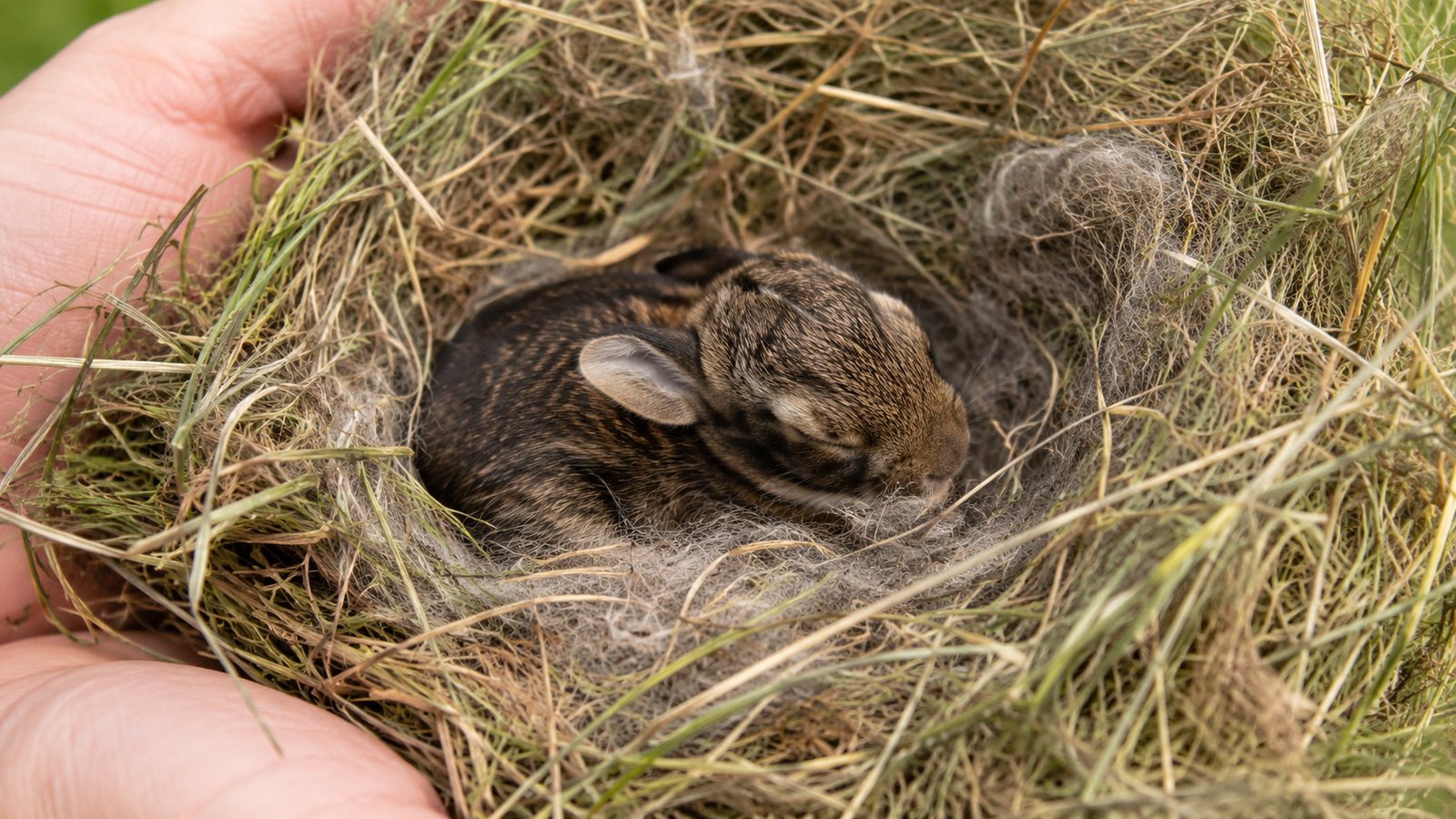
Finding a newborn wild rabbit alone in your yard can be alarming. Your first instinct may be to rescue it immediately, but in many cases, the best thing you can do is leave it alone. Mother rabbits often visit their nests only a few times a day, usually at dawn and dusk, to avoid attracting predators.
Knowing how to care for a newborn wild rabbit starts with identifying whether the rabbit is truly orphaned or injured. Wild baby rabbits are extremely fragile, and improper care can quickly become life-threatening. This guide explains exactly what to do, what not to do, and when professional wildlife rehabilitation is necessary.
In This Article
What Should You Do If You Find a Newborn Wild Rabbit?
If you find a newborn wild rabbit:
- Check whether it is injured or cold
- Look for signs of a nearby nest
- Avoid touching it unnecessarily
- Return it to the nest if possible
- Keep pets and people away
- Contact a licensed wildlife rehabilitator if the baby is injured, weak, or truly orphaned
Do not feed cow’s milk, force-feed water, or keep the rabbit as a pet. Wild rabbits require specialized care and have a high mortality rate without professional rehabilitation.
How to Tell if a Baby Wild Rabbit Needs Help
Many healthy baby rabbits are mistakenly “rescued” when they are actually fine. Before intervening, assess the situation carefully.
Signs the Rabbit Probably Does NOT Need Rescue
A baby rabbit may be okay if:
- It is fully furred
- Its eyes are open
- It can hop normally
- It appears alert and responsive
- There are no visible injuries
- It is sitting quietly in grass or near a nest
Young wild rabbits often leave the nest very early compared to other animals. A rabbit the size of a tennis ball with upright ears is usually independent.
Signs the Rabbit NEEDS Immediate Help
A newborn wild rabbit may require intervention if it:
- Is bleeding or injured
- Has been caught by a cat or dog
- Feels cold to the touch
- Is covered in flies or maggots
- Appears weak or unresponsive
- Has closed eyes and no fur while the nest is destroyed
- Cries continuously or crawls aimlessly
Even small puncture wounds from cats can become fatal infections within 24 hours.
Understanding Wild Rabbit Nests
Wild rabbits build shallow nests in grass, gardens, and lawns. The nests are often hidden with fur and dry grass, making them difficult to spot.
What a Rabbit Nest Looks Like
A typical nest may look like:
- A small patch of dead grass
- A shallow depression in the ground
- A cluster of fur and plant material
- A barely noticeable hole in the lawn
Mother rabbits do not stay with the babies all day. This is normal behavior.
What to Do if the Nest Has Been Disturbed
Lawn mowing, pets, and landscaping frequently destroy rabbit nests.
Step-by-Step Instructions
1. Rebuild the Nest
Use:
- Dry grass
- Fur from the original nest if available
- Leaves or soft hay
Create a shallow bowl shape in the original location.
2. Return the Babies
Place the baby rabbits gently back into the nest.
Wear gloves if possible, but human scent alone will not cause the mother to abandon them.
3. Cover the Nest Lightly
Use grass or natural material to camouflage the nest again.
4. Monitor From a Distance
Avoid hovering nearby. The mother usually returns at dawn or dusk.
One common method is placing small pieces of string or grass in a pattern over the nest. If disturbed overnight, the mother likely returned.
How to Care for an Orphaned Newborn Wild Rabbit
If the mother is confirmed dead or absent for over 24 hours and the babies appear weak, immediate care becomes critical until a wildlife rehabilitator can take over.
Keep the Baby Rabbit Warm First
Warmth matters more than food during the first hours of rescue.
Safe Warming Methods
You can use:
- A heating pad on LOW under half the box
- A warm water bottle wrapped in cloth
- Soft fleece blankets
Never place the rabbit directly on a heat source.
Ideal Environment
| Factor | Recommended Range |
| Temperature | Warm, not hot |
| Bedding | Soft fleece or clean towels |
| Noise level | Quiet |
| Lighting | Dim |
| Handling | Minimal |
Stress alone can kill newborn wild rabbits.
What to Feed a Newborn Wild Rabbit
Feeding wild rabbits incorrectly is one of the biggest causes of death in rescued babies.
Never Feed These Foods
Do NOT give:
- Cow’s milk
- Goat milk from the store without guidance
- Bread
- Lettuce
- Carrots
- Human baby formula
- Water through a syringe unless instructed by a professional
Aspiration pneumonia from improper feeding is common and often fatal.
Recommended Emergency Formula
Wildlife rehabilitators commonly use specialized milk replacers designed for small mammals.
Temporary emergency options may include:
- Kitten Milk Replacer (KMR)
- Goat milk formulas recommended by rehabilitators
However, feeding instructions vary based on species, age, and condition. Professional guidance is strongly recommended before feeding.
How Often Should You Feed a Baby Wild Rabbit?
Mother rabbits naturally feed their babies only once or twice daily.
Overfeeding can cause digestive failure.
General Feeding Frequency
| Rabbit Age | Feeding Frequency |
| Newborn (eyes closed) | 2 times daily |
| Eyes opening | 2 times daily |
| Fully furred and active | Gradual weaning begins |
Exact amounts depend on weight and species.
How to Feed Safely
Feeding Tips
- Keep the rabbit upright, never on its back
- Feed slowly
- Use a tiny syringe or eyedropper carefully
- Stop immediately if milk bubbles from the nose
If fluid enters the lungs, the rabbit may develop aspiration pneumonia.
Caring for Baby Wild Rabbits by Age
Different stages require different care approaches.
Newborn Rabbits (0–7 Days)
Characteristics
- Eyes closed
- Bare or lightly furred skin
- Unable to hop
- Completely dependent on warmth
Care Priorities
- Maintain body heat
- Minimal handling
- Proper hydration and formula
- Immediate contact with a rehabilitator
Young Rabbits (1–2 Weeks)
Characteristics
- Fur growing in
- Eyes beginning to open
- Increased movement
Care Priorities
- Continue formula
- Keep environment clean
- Avoid stress
Older Babies (3–5 Weeks)
Characteristics
- Fully furred
- Eating grass or natural vegetation
- More active
Care Priorities
- Introduce natural foods
- Reduce handling
- Prepare for release if under professional guidance
Best Foods for Weaning Wild Rabbits
As rabbits grow, they naturally transition to solid foods.
Safe Natural Foods
Offer only natural rabbit foods such as:
- Timothy hay
- Untreated grass
- Dandelion greens
- Clover
- Native weeds
Avoid commercial treats or sugary vegetables.
Common Mistakes When Caring for a Newborn Wild Rabbit
Many well-meaning rescuers accidentally harm baby rabbits.
1. Feeding Cow’s Milk
Rabbit digestion is highly specialized. Cow’s milk can cause severe diarrhea and dehydration.
2. Handling Too Much
Wild rabbits are prey animals and stress easily.
3. Keeping the Rabbit Indoors Long-Term
Wild rabbits do poorly in captivity and should not become pets.
4. Giving Water Incorrectly
Baby rabbits can inhale water easily.
5. Releasing Too Early
Weak or improperly weaned rabbits often die after release.
Signs a Baby Wild Rabbit Is Improving
Positive signs include:
- Warm body temperature
- Strong movements
- Full belly after feeding
- Normal posture
- Interest in natural foods
- Quiet resting behavior
Healthy babies are generally calm, not constantly crying.
Signs of Illness or Decline
Seek emergency wildlife care if you notice:
- Bloated stomach
- Diarrhea
- Difficulty breathing
- Cold body
- Lethargy
- Milk coming from the nose
- Refusal to eat
Baby rabbits can decline extremely quickly.
Should You Keep a Wild Rabbit as a Pet?
In most places, keeping wild rabbits is illegal without permits.
Even if legal, wild rabbits:
- Are difficult to tame
- Stress easily
- Require specialized diets
- Can injure themselves trying to escape
- Usually do not adapt well to captivity
Their best chance of survival is rehabilitation followed by release into the wild.
How Wildlife Rehabilitators Help
Licensed wildlife rehabilitators provide:
- Proper species identification
- Veterinary treatment
- Correct feeding protocols
- Parasite treatment
- Safe release preparation
This dramatically improves survival odds.
How to Find a Wildlife Rehabilitator
Look for:
- Licensed wildlife rescue organizations
- Local animal rehabilitation centers
- Veterinary clinics with wildlife contacts
- State wildlife agencies
Many rehabilitators provide emergency instructions by phone before intake.
Can You Touch a Baby Wild Rabbit?
Yes. Contrary to popular myths, mother rabbits usually do not reject babies because humans touched them.
Still, handling should remain minimal because stress can be dangerous.
How Long Can a Baby Wild Rabbit Survive Without Its Mother?
Healthy baby rabbits may go many hours between feedings naturally because mother rabbits visit infrequently.
However, newborns with closed eyes can decline within 24 hours if:
- Cold
- Injured
- Dehydrated
- Truly orphaned
What if a Cat Caught the Rabbit?
A rabbit caught by a cat needs immediate professional help even if no wounds are visible.
Cat saliva contains bacteria that often cause fatal infections in small wildlife.
This is considered a medical emergency.
Quick Summary
| Situation | What To Do |
| Healthy older baby found alone | Leave it alone |
| Nest disturbed | Rebuild nest and return babies |
| Baby is cold | Warm first |
| Injured rabbit | Contact wildlife rehabilitator |
| Cat or dog attack | Emergency wildlife care |
| Unsure if orphaned | Monitor nest for 24 hours |
Best Practices for Caring for a Newborn Wild Rabbit
Do
- Keep the rabbit warm
- Minimize handling
- Rebuild nests when possible
- Use quiet, low-stress environments
- Contact professionals quickly
Don’t
- Feed cow’s milk
- Give random vegetables
- Let children handle the rabbit
- Keep it as a pet
- Assume the mother abandoned it
FAQ About Newborn Wild Rabbit Care
How do you know if a newborn wild rabbit is abandoned?
If the mother has not returned for 24 hours, the babies are cold, weak, dehydrated, or the nest is destroyed, they may be orphaned.
Can baby wild rabbits survive without their mother?
Very young rabbits rarely survive long without proper care. Immediate warmth and professional rehabilitation greatly improve survival chances.
What do newborn wild rabbits eat naturally?
They drink their mother’s rich milk once or twice daily until they are old enough to eat grasses and natural vegetation.
Can I give water to a baby wild rabbit?
Do not force water into a baby rabbit’s mouth. Improper hydration methods can cause aspiration and death.
How long do baby wild rabbits stay in the nest?
Most wild rabbits leave the nest after about three weeks and become independent surprisingly early.
Should I move a rabbit nest to a safer place?
No. Mother rabbits may not find relocated nests. It is usually better to protect the original location temporarily.
Final Thoughts on How to Care for a Newborn Wild Rabbit
Learning how to care for a newborn wild rabbit begins with recognizing that intervention is not always necessary. Many baby rabbits are healthiest when left with their mother in the wild. If genuine rescue is needed, warmth, minimal stress, and rapid contact with a licensed wildlife rehabilitator are the most important priorities.
Wild rabbits are delicate animals with specialized needs. Proper handling during the first critical hours can make the difference between survival and loss.

Passionate about pets and animal care, we shares trusted tips, fun facts, and practical advice to help pet lovers give their furry, feathered, and scaly companions the best life possible. From everyday care guides to fascinating animal insights, we’re dedicated to making pet information easy, helpful, and enjoyable for every reader.