
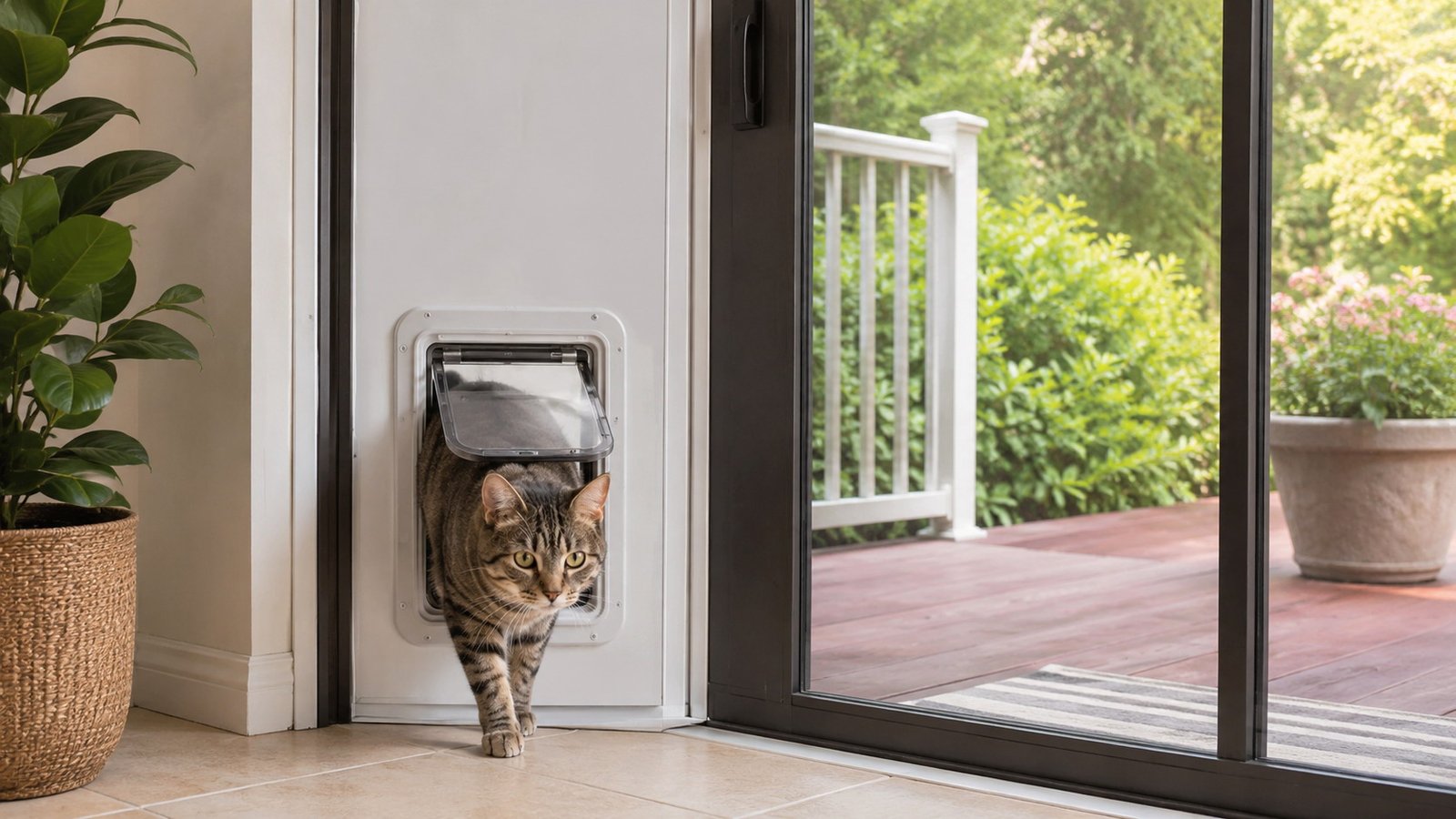
A cat door for a sliding glass door is one of the easiest ways to give indoor cats safe outdoor access without cutting holes into walls or permanently modifying your home. The best options are secure, weather-resistant, easy to install, and sized correctly for your cat and your sliding patio door.
For most households, a high-quality patio panel insert with an insulated flap offers the best balance of convenience, durability, and energy efficiency. The right model depends on your cat’s size, climate, security needs, and whether you rent or own your home.
This guide explains how sliding glass cat doors work, the different types available, what features matter most, common mistakes to avoid, and how to choose the best option for your situation.
In This Article
What Is a Cat Door for a Sliding Glass Door?
A sliding glass cat door is a pet access system designed specifically for patio doors and sliding glass doors. Instead of cutting into walls or doors, the unit fits into the existing sliding door track.
Most models use a tall vertical panel that locks into place beside the sliding glass door. The panel contains a built-in pet flap that allows cats to move in and out independently.
This design is especially popular because it:
- Requires minimal installation
- Works well for renters
- Avoids permanent structural changes
- Can often be removed later
- Fits many modern apartments and homes
Some models are made exclusively for cats, while others are large enough for both cats and small dogs.
Why Cat Owners Choose Sliding Glass Cat Doors
Cats naturally enjoy controlling their environment. A properly installed cat door can reduce stress and make daily routines easier for both pets and owners.
Main Benefits
More Independence for Cats
Cats can access patios, enclosed yards, catios, or litter areas without waiting for someone to open the door.
Less Scratching and Meowing
Many cats scratch at doors or vocalize repeatedly when they want outside access. A cat door solves this problem quickly.
Great for Indoor-Outdoor Setups
If you have:
- A secure backyard
- A screened patio
- A catio
- An enclosed balcony
A sliding glass cat door creates convenient access while keeping the main entry sealed.
Easier Than Wall Installation
Wall-mounted pet doors often require:
- Cutting drywall
- Framing
- Insulation work
- Permanent modifications
Sliding glass inserts are usually far simpler.
Ideal for Renters
Many landlords prohibit permanent changes to walls or doors. Sliding door inserts can often be installed without damage.
Types of Sliding Glass Cat Doors
Not all cat doors for sliding glass doors work the same way. Understanding the main types helps narrow your options.
Adjustable Patio Panel Inserts
These are the most common.
A vertical aluminum or vinyl panel fits inside the sliding door track. Most are height-adjustable to fit different door sizes.
Pros
- Easy installation
- Removable
- Good for renters
- Widely available
- Minimal tools required
Cons
- Slightly reduces doorway width
- Some cheaper models leak air
- Lower-end versions may feel flimsy
Best For
Most homeowners and renters.
Permanent Built-In Sliding Door Pet Doors
These replace part of the existing glass structure with a professionally installed pet door system.
Pros
- Cleaner appearance
- Better insulation
- Stronger security
- Long-term durability
Cons
- Expensive
- Professional installation often needed
- Permanent modification
Best For
Homeowners wanting a polished long-term solution.
Electronic or Microchip Cat Doors
These use:
- RFID collar tags
- Microchip recognition
- Magnetic systems
The flap unlocks only for authorized pets.
Pros
- Prevents stray animals from entering
- Adds security
- Useful in multi-pet homes
Cons
- More expensive
- Requires batteries or power
- Electronics may fail over time
Best For
Homes in areas with stray cats, raccoons, or wildlife.
Features That Matter Most
Choosing the best cat door involves more than just size. Several factors affect comfort, security, and long-term satisfaction.
Door Height Compatibility
Sliding patio doors vary significantly in height.
Common ranges include:
- 76–81 inches
- 91–96 inches
Measure carefully before buying.
Many adjustable panels work within a height range, but not all.
Flap Size
Your cat should pass through comfortably without crouching excessively.
Typical Cat Flap Sizes
| Cat Size | Recommended Flap Opening |
| Small cats | 5 x 7 inches |
| Average adult cats | 6 x 8 inches |
| Large cats | 7 x 10 inches |
| Maine Coons or large breeds | 8 x 12 inches |
If you have multiple pets, size for the largest one.
Insulation and Weather Resistance
Poorly insulated pet doors can create drafts and increase energy bills.
Look for:
- Double-flap systems
- Magnetic closures
- Weather stripping
- Insulated frames
- UV-resistant materials
This matters especially in hot summers or cold winters.
Security Features
Security is one of the biggest concerns with sliding glass cat doors.
Good models include:
- Locking covers
- Strong frame construction
- Security bars
- Reinforced glass-compatible panels
Some cheap units weaken the sliding door’s locking system.
Tip
Use a security rod or dowel in the sliding track for extra protection.
Installation Difficulty
Some panels install in minutes, while others require drilling or hardware mounting.
Easiest Options
- Tension-mounted inserts
- Adjustable patio panels
More Complex Options
- Custom glass inserts
- Permanent installations
Noise Level
Certain flaps slap loudly when closing. This can bother light sleepers or anxious cats.
Flexible vinyl flaps are usually quieter than rigid plastic models.
Durability
Cats repeatedly brushing through the flap creates wear over time.
Higher-quality doors typically use:
- Tempered glass-compatible framing
- Aluminum construction
- Heavy-duty flap hinges
- Scratch-resistant materials
Best Cat Door Styles for Different Situations
Different households need different solutions.
Best for Renters
Choose:
- Removable patio inserts
- No-drill installation
- Adjustable height panels
Avoid permanent glass modifications.
Best for Cold Climates
Look for:
- Double-pane insulation
- Magnetic flap seals
- Dual-flap systems
- Energy-efficient weatherproofing
Draft protection becomes critical in winter.
Best for Multi-Cat Homes
Consider:
- Wider flap openings
- Durable hinges
- Electronic entry systems
Frequent use increases wear.
Best for Large Cats
Large breeds like:
- Maine Coons
- Norwegian Forest Cats
- Ragdolls
Need oversized openings and taller flap clearances.
Best for Security
Electronic microchip doors provide the strongest protection against:
- Stray cats
- Raccoons
- Possums
- Neighborhood animals
How to Measure for a Sliding Glass Cat Door
Accurate measurements prevent frustrating installation problems.
Step 1: Measure Door Height
Measure from:
- Bottom inside track
- To top inside track
Do not measure the exterior frame.
Step 2: Measure Track Width
Some panels fit only certain track depths.
Step 3: Measure Your Cat
Measure:
- Width across shoulders
- Height from chest to top of back
Add 1–2 inches for comfortable clearance.
Step 4: Check Door Clearance
Ensure the sliding panel still opens comfortably after installation.
Common Problems With Sliding Glass Cat Doors
Even good cat doors have limitations.
Reduced Walking Space
Patio insert panels slightly narrow the doorway.
This may feel noticeable in smaller apartments.
Drafts and Energy Loss
Cheap doors often seal poorly.
You may notice:
- Air leaks
- Condensation
- Temperature fluctuations
Cats Refusing to Use the Door
Some cats fear the flap initially.
Training usually solves this issue.
Security Concerns
Improper installation can weaken patio door security.
Always reinforce the locking system.
Flap Wear Over Time
Heavy use may eventually cause:
- Loose hinges
- Cracked flaps
- Poor sealing
Replacement flaps are available for many brands.
How to Train a Cat to Use a Sliding Glass Cat Door
Most cats can learn within a few days.
Step-by-Step Training
1. Keep the Flap Open Initially
Tape or prop it open so the cat can walk through freely.
2. Use Treats and Toys
Encourage movement through the opening using:
- Favorite treats
- Wand toys
- Positive reinforcement
3. Practice Both Directions
Some cats learn one direction faster than the other.
4. Gradually Lower the Flap
Allow the cat to push through gently.
5. Never Force the Cat
Forced training can create long-term fear.
Patience works better than pressure.
Common Mistakes Buyers Make
Avoiding these mistakes saves money and frustration.
Buying the Cheapest Option
Low-cost models often:
- Leak air
- Crack quickly
- Rattle loudly
- Fit poorly
A mid-range insulated model usually performs far better.
Ignoring Climate
Warm-weather doors may fail badly in cold climates.
Choosing the Wrong Flap Size
Too-small openings make cats reluctant to use the door.
Forgetting Security Upgrades
Many owners overlook:
- Security bars
- Secondary locks
- Reinforced track protection
Not Measuring Correctly
Incorrect height measurements are extremely common.
Best Practices for Choosing the Right Cat Door
Prioritize Fit First
Even premium models fail if sizing is wrong.
Choose Insulation Based on Climate
The harsher the weather, the more insulation matters.
Think About Long-Term Use
A temporary renter solution differs from a permanent home upgrade.
Consider Future Pets
If you may adopt a larger pet later, size accordingly.
Check Replacement Part Availability
Being able to replace flaps and weather stripping extends product lifespan.
Are Sliding Glass Cat Doors Safe?
Yes, when properly installed.
However, safety depends heavily on:
- Build quality
- Lock reinforcement
- Installation accuracy
Safer Setup Tips
- Use a security bar in the sliding track
- Choose tempered-glass-compatible systems
- Lock the pet flap at night if needed
- Use microchip access in wildlife-heavy areas
Are Sliding Glass Cat Doors Energy Efficient?
High-quality insulated models can be surprisingly efficient.
The best energy-saving features include:
- Double-flap insulation
- Magnetic sealing
- Tight weather stripping
- Insulated aluminum frames
Poorly made doors can significantly reduce energy efficiency.
Sliding Glass Cat Door vs Wall-Mounted Cat Door
| Feature | Sliding Glass Door | Wall-Mounted Door |
| Installation | Easier | More difficult |
| Rental-friendly | Yes | Usually no |
| Permanent modification | Minimal | Significant |
| Insulation | Moderate to excellent | Often excellent |
| Cost | Moderate | Moderate to high |
| Removal | Easy | Difficult |
For most people, sliding door inserts are the simpler and more flexible option.
Quick Summary
If you want the best cat door for a sliding glass door, focus on these priorities:
- Correct sizing for both the door and the cat
- Strong insulation and weather sealing
- Secure locking systems
- Durable flap materials
- Easy installation and maintenance
For renters and most homeowners, adjustable patio insert panels offer the best overall balance of convenience and practicality.
Microchip-enabled models are ideal for security-conscious households, while insulated dual-flap systems work best in colder climates.
FAQ
What is the best type of cat door for a sliding glass door?
Adjustable patio panel inserts are usually the best option because they are easy to install, removable, and compatible with many sliding door sizes.
Can burglars use a cat door to break in?
A properly installed cat door with reinforced locks and a security bar greatly reduces risk. Large pet doors pose more concern than small cat-sized openings.
Do sliding glass cat doors leak air?
Cheap models often do. Higher-quality insulated doors with weather stripping and magnetic flaps seal much better.
Are sliding glass cat doors renter-friendly?
Yes. Many models install without permanent modifications, making them ideal for apartments and rental homes.
How long does installation take?
Most adjustable patio insert systems can be installed in 15–45 minutes with basic tools.
Will my cat automatically know how to use the door?
Usually not immediately. Most cats need a few days of gentle training and positive reinforcement.
Final Thoughts
The best cat door for a sliding glass door should make life easier without compromising comfort, safety, or energy efficiency. A well-designed patio insert gives cats freedom while preserving the functionality of your home.
Before buying, carefully measure your sliding door, consider your climate, and think realistically about your cat’s behavior and size. Paying attention to insulation, security, and durability upfront often prevents the most common complaints later.
A quality sliding glass cat door can become one of the most practical upgrades for households with curious, active cats.

Passionate about pets and animal care, we shares trusted tips, fun facts, and practical advice to help pet lovers give their furry, feathered, and scaly companions the best life possible. From everyday care guides to fascinating animal insights, we’re dedicated to making pet information easy, helpful, and enjoyable for every reader.