
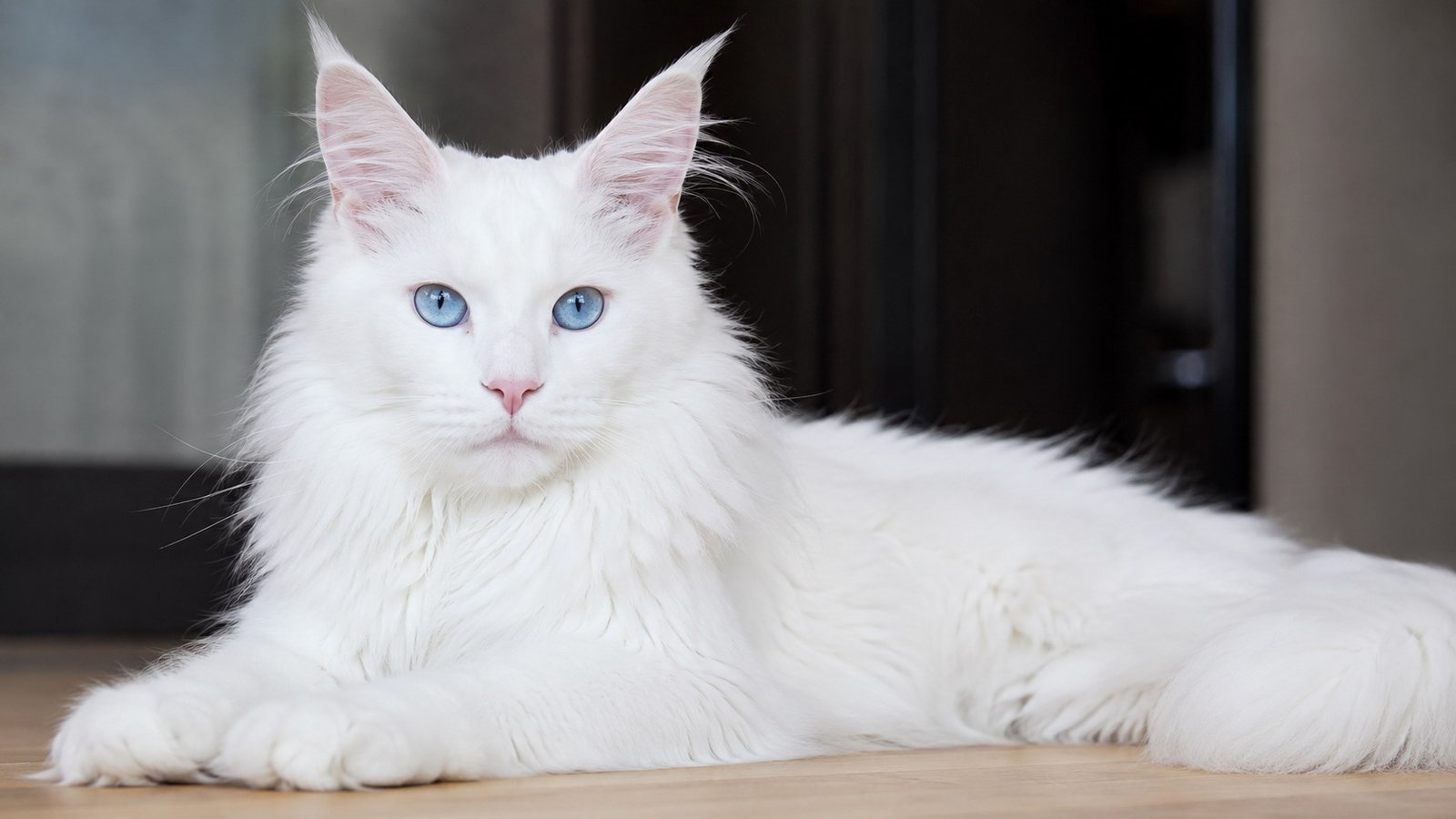
A white Maine Coon cat with blue eyes is one of the rarest and most visually striking variations of the Maine Coon breed. These cats combine the large size, fluffy coat, and friendly personality of the Maine Coon with an all-white coat and vivid blue eyes caused by specific genetics.
Many people are drawn to white blue-eyed Maine Coons because they look almost mythical. Yet there is much more to know beyond appearance, including genetics, health considerations, grooming needs, temperament, and how to identify a healthy, responsibly bred cat.
This guide explains everything you need to know in a clear, beginner-friendly way.
In This Article
What Is a White Maine Coon Cat With Blue Eyes?
A white Maine Coon with blue eyes is a purebred Maine Coon that has:
- A completely white coat
- Blue eyes, often icy or deep sapphire in color
- The physical characteristics typical of the Maine Coon breed
These cats are not albino. Their white coat comes from a dominant white gene that masks the cat’s underlying color pattern.
Quick Facts
| Feature | Details |
| Breed | Maine Coon |
| Coat Color | Solid white |
| Eye Color | Blue, odd-eyed, or copper/gold |
| Size | Large to giant |
| Weight | 10–25 pounds |
| Lifespan | 12–15 years |
| Grooming Needs | Moderate to high |
| Rarity | Relatively rare |
| Personality | Friendly, social, intelligent |
Why Are White Blue-Eyed Maine Coons So Rare?
The combination of a pure white coat and blue eyes is uncommon because it depends on specific genetics.
A Maine Coon must inherit the dominant white masking gene, often represented as “W.” This gene hides the cat’s underlying fur color and pattern completely.
Blue eyes occur because the white gene can affect pigmentation in the iris. When pigment cells are absent or reduced, the eyes appear blue.
Not all white Maine Coons have blue eyes. Some have:
- Gold or copper eyes
- Green eyes
- Odd eyes (one blue eye and one gold eye)
A fully white Maine Coon with two blue eyes is especially sought after because the genetic combination is less common.
Are White Maine Coons Albino?
No. Most white Maine Coons are not albino cats.
An albino cat lacks melanin entirely due to a genetic mutation. Albino cats usually have:
- Very pale skin
- Pinkish features
- Extremely light-sensitive eyes
White Maine Coons still produce pigment genetically. The white gene simply masks visible coat color.
You can often tell the difference because non-albino white Maine Coons may:
- Have faint kitten markings that fade over time
- Develop normal nose and paw pad pigmentation
- Show standard eye colors
Appearance of a White Maine Coon With Blue Eyes
These cats are famous for their dramatic appearance.
Size and Build
Maine Coons are among the largest domestic cat breeds. A fully grown male may weigh 15–25 pounds, while females are typically smaller.
They have:
- Muscular bodies
- Broad chests
- Large paws
- Long bushy tails
Coat Texture
The coat is thick and water-resistant with:
- A silky topcoat
- Dense undercoat
- Heavy neck ruff
- Feathering on the legs and tail
The pure white coloring gives the coat a snow-like appearance that stands out dramatically against blue eyes.
Eye Color
Blue eyes in white Maine Coons are usually:
- Bright icy blue
- Deep sapphire
- Pale sky blue
Eye color may continue changing slightly during kittenhood before settling permanently.
Distinctive Features
Many white Maine Coons also have:
- Lynx-like ear tufts
- Tufted paws
- Square muzzles
- Long whiskers
Temperament and Personality
Despite their regal appearance, white Maine Coons are known for being affectionate and easygoing.
Common Personality Traits
Most Maine Coons are:
- Friendly
- Intelligent
- Social
- Gentle with children
- Good with other pets
They are often described as “dog-like” because they may:
- Follow owners around
- Learn tricks
- Enjoy interactive play
- Greet people at the door
Are White Maine Coons Different in Personality?
Coat color does not reliably determine temperament.
A white Maine Coon with blue eyes generally behaves like any other well-socialized Maine Coon:
- Curious
- Playful
- Adaptable
- Loyal
Personality depends more on:
- Breeding quality
- Socialization
- Environment
- Individual genetics
Do White Blue-Eyed Maine Coons Have Hearing Problems?
This is one of the most common questions people ask.
The Short Answer
Some white blue-eyed cats are deaf, but not all of them.
Why Deafness Can Occur
The same gene responsible for white fur can affect cells involved in hearing development.
Cats with:
- White coats
- Blue eyes
have a higher risk of congenital deafness compared to other cats.
Important Facts
- A white cat with one blue eye may be deaf on the same side as the blue eye
- Many white blue-eyed Maine Coons hear perfectly normally
- Responsible breeders often test kittens for hearing issues
Signs of Deafness in Cats
Possible signs include:
- Not responding to sounds
- Sleeping very deeply
- Loud vocalization
- Startling easily when touched
Veterinarians can perform a BAER (Brainstem Auditory Evoked Response) test to confirm hearing ability.
Caring for a White Maine Coon Cat With Blue Eyes
These cats need regular grooming and attentive care to stay healthy.
Grooming Requirements
A Maine Coon’s long coat requires consistent maintenance.
Weekly Grooming Routine
Aim to:
- Brush the coat 2–4 times weekly
- Remove loose undercoat hair
- Prevent mats around the belly and legs
- Clean around the ears and eyes
White coats show dirt more easily, so hygiene matters.
Helpful Grooming Tools
Useful tools include:
- Stainless steel comb
- Slicker brush
- Undercoat rake
- Pet-safe whitening shampoo
Avoid overbathing, as it can dry out the skin and coat.
Diet and Nutrition
Large cats benefit from high-quality nutrition.
Ideal Diet Features
Look for:
- High animal protein
- Balanced fatty acids
- Taurine
- Controlled calorie intake
Maine Coons grow slowly and may not reach full maturity until 3–5 years old.
Weight Management Matters
Because they are large cats, owners sometimes overlook obesity.
Excess weight can worsen:
- Joint strain
- Heart issues
- Mobility problems
Regular monitoring helps maintain healthy body condition.
Exercise and Mental Stimulation
Maine Coons are intelligent and active.
Best Enrichment Activities
They often enjoy:
- Cat trees
- Puzzle feeders
- Wand toys
- Fetch games
- Climbing shelves
A bored Maine Coon may become destructive or overly vocal.
Health Issues in White Maine Coons
Like all pedigreed cats, Maine Coons can inherit certain conditions.
Common Maine Coon Health Concerns
Hypertrophic Cardiomyopathy (HCM)
HCM is a hereditary heart disease seen in some Maine Coons.
Responsible breeders typically screen breeding cats.
Hip Dysplasia
Because Maine Coons are large, hip joint problems can occur.
Symptoms may include:
- Reduced jumping
- Limping
- Stiffness
Spinal Muscular Atrophy (SMA)
SMA affects muscle development and mobility.
Genetic testing helps reduce risk in breeding programs.
White Coat–Related Concerns
White cats may also be more prone to:
- Sun sensitivity
- Ear tip sunburn
- Skin irritation
Indoor living is safest, especially for cats with pale skin.
How Much Does a White Maine Coon With Blue Eyes Cost?
These cats are often expensive due to rarity and breeding demand.
Typical Price Range
Prices vary widely depending on:
- Bloodline
- Breeder reputation
- Eye color
- Show quality
- Geographic location
A pet-quality white blue-eyed Maine Coon kitten may cost:
- $1,500–$4,000 or more
Exceptional show-quality cats can exceed this range.
Why They Cost More
Higher prices often reflect:
- Health testing
- Responsible breeding practices
- Vaccinations
- Socialization
- Registration paperwork
Extremely low prices can be a warning sign of irresponsible breeding.
How to Find a Healthy White Maine Coon Kitten
Choosing the right breeder matters more than finding the rarest appearance.
What to Look for in a Breeder
A responsible breeder should:
- Provide health records
- Perform genetic testing
- Allow questions
- Raise kittens in clean environments
- Socialize kittens early
Ask About These Tests
Important screenings include:
- HCM testing
- Hip evaluations
- Hearing tests when relevant
- Genetic disease screening
Red Flags to Avoid
Be cautious if a breeder:
- Refuses to show parents
- Offers kittens too young
- Avoids health questions
- Sells unusually cheap kittens
- Keeps cats in poor conditions
Rare coloring alone should never outweigh health and temperament.
White Maine Coon vs Regular Maine Coon
| Feature | White Maine Coon | Other Maine Coons |
| Coat Color | Pure white | Wide variety |
| Eye Color | Often blue or odd-eyed | Gold, green, copper |
| Rarity | Less common | More common |
| Deafness Risk | Higher if blue-eyed | Lower |
| Grooming | Similar | Similar |
| Personality | Same breed traits | Same breed traits |
Are White Maine Coons Good Family Cats?
Yes. Maine Coons are widely considered excellent family companions.
They are typically:
- Patient with children
- Friendly with guests
- Compatible with cat-friendly dogs
- Adaptable to busy households
Their social nature means they usually prefer companionship over long periods alone.
Indoor or Outdoor?
Indoor living is strongly recommended.
Reasons to Keep Them Indoors
Indoor cats face fewer risks from:
- Traffic
- Disease
- Predators
- Theft
- Sun damage
This is especially important for white cats because their ears and nose can be sensitive to UV exposure.
Safe Outdoor Alternatives
If you want outdoor enrichment, consider:
- Enclosed cat patios
- Leash training
- Secure cat fencing
Common Mistakes Owners Make
Choosing Appearance Over Health
Many buyers focus only on blue eyes and white fur.
Temperament, health testing, and breeder ethics matter far more in the long run.
Underestimating Grooming Needs
A Maine Coon coat can mat quickly without regular care.
Skipping grooming may lead to:
- Painful tangles
- Skin irritation
- Excess shedding
Overfeeding
Large cats still need portion control.
Free-feeding calorie-dense food often causes obesity.
Ignoring Mental Stimulation
These cats are highly intelligent and need engagement.
Without enrichment, they may:
- Become bored
- Scratch furniture
- Demand constant attention
Best Practices for Raising a White Maine Coon
Start Grooming Early
Kittens that are brushed gently from a young age usually tolerate grooming better as adults.
Schedule Regular Vet Care
Routine wellness exams help detect:
- Heart disease
- Dental issues
- Weight changes
- Joint problems
Prioritize Socialization
Expose kittens gradually to:
- New sounds
- Visitors
- Handling
- Carriers
- Nail trims
Confident early experiences create calmer adult cats.
FAQ About White Maine Coon Cats With Blue Eyes
Are white Maine Coons always deaf?
No. Some white blue-eyed cats are deaf, but many hear normally. Hearing tests can confirm whether a kitten has hearing impairment.
Do white Maine Coons shed a lot?
Yes. Like all Maine Coons, they shed moderately to heavily, especially during seasonal coat changes.
Can a white Maine Coon have green eyes?
Yes, although blue, gold, and odd eyes are more common in solid white cats.
Are white Maine Coons rare?
Yes. Fully white Maine Coons are less common than many other coat colors, and blue-eyed white Maine Coons are even rarer.
How big do white Maine Coons get?
Adult males may reach 15–25 pounds, while females are generally smaller.
Do white Maine Coons need special shampoo?
Not necessarily, but pet-safe whitening shampoos can help maintain brightness without damaging the coat.
Quick Summary
A white Maine Coon cat with blue eyes is a rare and beautiful variation of one of the world’s most beloved cat breeds. These cats combine the Maine Coon’s large size, affectionate personality, and luxurious coat with a striking snow-white appearance and vivid blue eyes.
Although they are visually stunning, responsible ownership involves more than appearance alone. Prospective owners should understand:
- The genetics behind white coats and blue eyes
- Potential hearing concerns
- Grooming requirements
- Health screening importance
- Proper nutrition and enrichment needs
With good care, responsible breeding, and regular veterinary attention, a white blue-eyed Maine Coon can become a healthy, affectionate companion for many years.
Anyone considering one of these cats should focus on temperament, health, and ethical breeding practices first. The remarkable appearance is simply an added bonus.

Passionate about pets and animal care, we shares trusted tips, fun facts, and practical advice to help pet lovers give their furry, feathered, and scaly companions the best life possible. From everyday care guides to fascinating animal insights, we’re dedicated to making pet information easy, helpful, and enjoyable for every reader.