
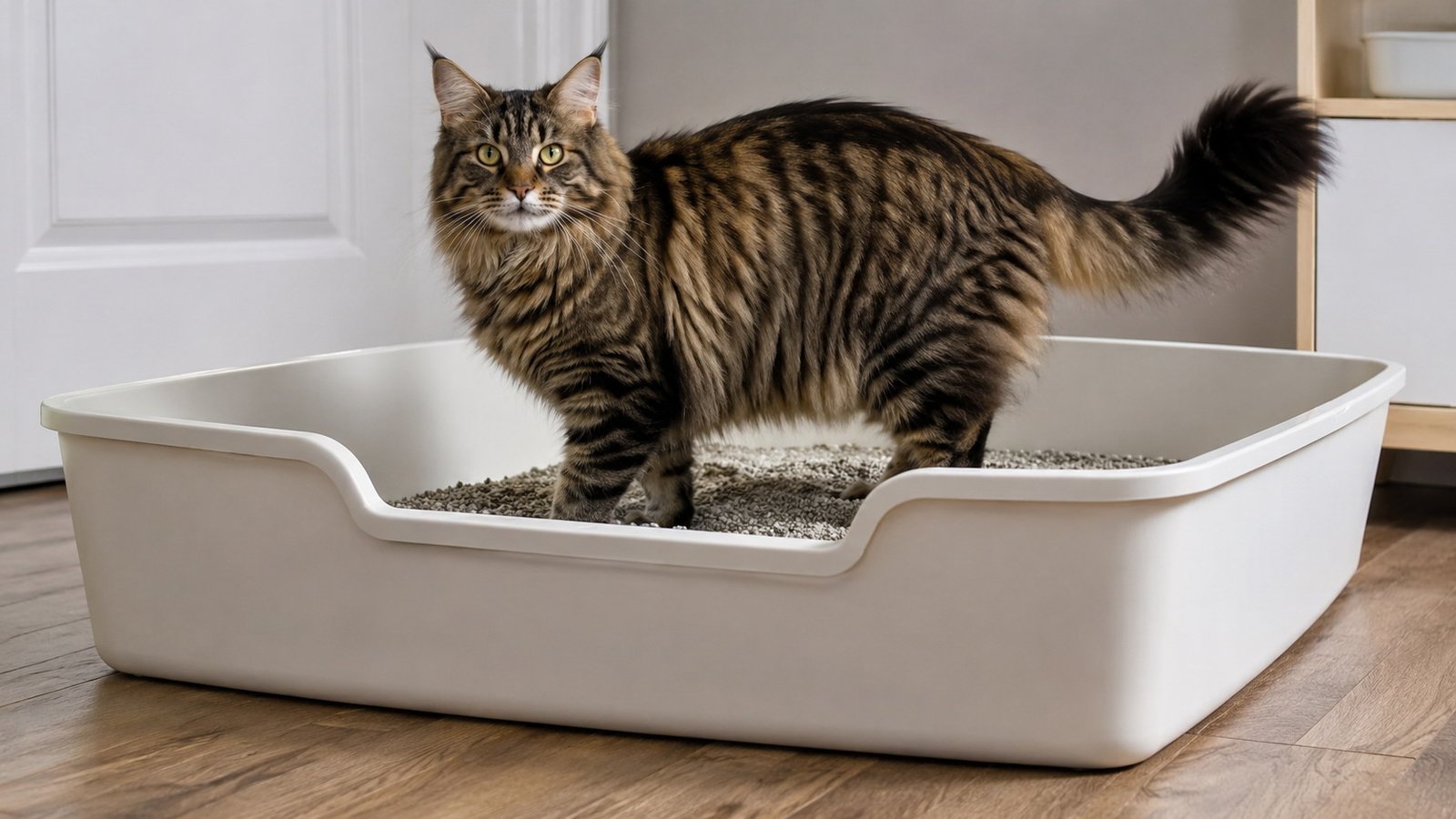
A standard litter box is rarely big enough for a Maine Coon. These cats are one of the largest domestic breeds in the world, and many adults weigh between 12 and 25 pounds. Their long bodies, fluffy tails, and large paws make cramped litter boxes uncomfortable and messy.
An extra large cat litter box for Maine Coon cats should give them enough room to turn around, dig comfortably, and eliminate without touching the walls. In most cases, the ideal box is at least 1.5 times the length of the cat from nose to tail base.
Choosing the wrong litter box often leads to common problems such as:
- Litter tracking
- Urine spraying outside the box
- Refusing to use the litter box
- Frequent cleanup around the box
- Stress-related accidents
This guide explains exactly what size works best, which styles are most effective, common mistakes owners make, and how to create a litter setup that actually works for giant cats.
In This Article
Why Maine Coons Need an Extra Large Litter Box
Maine Coons are not just heavier than average cats. They are significantly longer and taller.
A regular litter box designed for a typical 8–10 pound cat often feels restrictive for a Maine Coon. If the cat cannot comfortably turn around or dig, litter habits can quickly become problematic.
Physical Traits That Affect Litter Box Size
Maine Coons typically have:
- Long bodies
- Large rear stance
- Thick tails
- Heavy digging behavior
- Strong jumping ability
- High urine output compared to smaller cats
Because of these traits, many standard litter boxes fail in three ways:
- They are too short
- The walls are too low
- The opening is too small
Large breeds also tend to kick more litter while burying waste, especially young active Maine Coons.
What Size Litter Box Does a Maine Coon Need?
Recommended Minimum Size
For most adult Maine Coons:
- Length: 24–30 inches
- Width: 18–22 inches
- Height: 6–12 inches depending on style
The general rule is:
The litter box should be at least 1.5 times the cat’s body length.
That measurement excludes the tail.
Quick Size Guide
| Maine Coon Size | Recommended Box Length | Best Box Type |
| Kitten | 18–22 inches | Low-entry open box |
| Young adult | 22–26 inches | High-sided XL box |
| Large adult male | 26–30 inches | Storage tote or giant litter pan |
| Senior Maine Coon | 24–28 inches | Low-entry jumbo box |
Best Types of Extra Large Litter Boxes for Maine Coons
Not every “XL” litter box is actually large enough. Many products marketed as extra large are still too small for giant breeds.
Here are the most effective options.
Open Extra Large Litter Boxes
Open boxes are often the best choice for Maine Coons because they provide:
- Maximum turning space
- Better airflow
- Easier access
- Less trapped odor
- More visibility for nervous cats
Best For
- Very large adult Maine Coons
- Cats that dislike enclosed spaces
- Multi-cat households
Drawbacks
- More visible litter mess
- Less odor containment
- More litter tracking
Ideal Features
Look for:
- High sides
- Wide base
- Reinforced plastic
- Non-stick interior
High-Sided Jumbo Litter Boxes
High-sided boxes help contain:
- Urine spraying
- Aggressive digging
- Litter scatter
This style works especially well for male Maine Coons, which may urinate higher than smaller cats.
Benefits
- Cleaner surrounding floors
- Better litter retention
- Reduced cleanup frequency
Potential Downsides
Very high walls may be difficult for:
- Kittens
- Seniors
- Cats with arthritis
Some owners choose a box with one lowered entrance side for easier access.
Covered Litter Boxes for Maine Coons
Covered litter boxes can work, but many are too cramped internally.
A Maine Coon may fit physically inside while still feeling uncomfortable during use.
Problems With Small Covered Boxes
- Tail pressing against walls
- Poor ventilation
- Trapped odors
- Difficulty turning around
When Covered Boxes Work Well
Choose only oversized covered boxes with:
- Wide entry openings
- Tall ceilings
- Deep interiors
- Removable tops
Some Maine Coons prefer privacy, especially in busy households.
Top-Entry Litter Boxes
Top-entry boxes are generally not ideal for large Maine Coons.
While they reduce litter tracking, they can create problems:
- Difficult entry for giant cats
- Limited interior space
- Stress on joints
- Harder access for seniors
They may work for younger athletic Maine Coons, but most owners find traditional jumbo boxes more practical.
Storage Totes as DIY Maine Coon Litter Boxes
Many experienced Maine Coon owners use large plastic storage containers instead of commercial litter boxes.
This approach works surprisingly well because storage totes are often:
- Longer
- Wider
- Taller
- More affordable
Why Storage Totes Work
A large tote provides:
- Excellent turning space
- Better spray containment
- Extra litter depth
- Customizable entry height
How to Convert a Storage Tote Into a Litter Box
- Choose a tote at least 30 inches long
- Cut a low entrance opening
- Sand rough edges
- Add 3–5 inches of litter
- Place on a litter mat
This setup is especially effective for very large male Maine Coons.
Best Litter Depth for Maine Coons
Large cats usually prefer deeper litter.
Recommended Depth
- 3–5 inches for clumping litter
- Slightly less for pellet litter
Too little litter causes:
- Poor odor control
- Faster box contamination
- More sticking to the bottom
Too much litter may increase:
- Tracking
- Waste
- Excessive digging
Choosing the Right Litter Alongside the Box
The litter itself matters just as much as the box size.
Good Litter Characteristics for Maine Coons
Look for:
- Strong odor control
- Low dust
- Heavy clumping
- Low tracking
- Unscented formulas
Large cats produce more waste volume, so weak clumping litter often breaks apart quickly.
Commonly Preferred Types
- Clay clumping litter
- Corn litter
- Grass seed litter
- Wood pellet systems
Very dusty litter can cling to long Maine Coon fur and paws.
Where to Place a Maine Coon Litter Box
Placement affects litter habits more than many owners realize.
Best Placement Practices
Choose a location that is:
- Quiet
- Easy to access
- Well ventilated
- Away from food and water
- Large enough for easy entry and exit
Avoid:
- Tight laundry corners
- Busy hallways
- Loud appliances
- Small closets
A giant cat needs enough room to approach and exit comfortably.
How Many Litter Boxes Does a Maine Coon Need?
The standard recommendation is:
One litter box per cat, plus one extra.
For example:
- 1 cat = 2 boxes
- 2 cats = 3 boxes
This becomes especially important with large breeds because boxes fill faster.
Common Problems With Maine Coon Litter Boxes
Urine Outside the Box
This usually happens because:
- The box is too small
- The sides are too low
- The cat cannot position comfortably
Switching to a jumbo high-sided box often solves the issue immediately.
Excessive Litter Tracking
Maine Coons have large furry paws that trap litter easily.
Ways to Reduce Tracking
- Use larger-grain litter
- Add a litter mat
- Choose high-sided boxes
- Keep litter depth moderate
Some owners trim paw fur slightly for easier cleanup.
Refusing to Use the Box
Cats may avoid litter boxes if:
- They feel cramped
- The box is dirty
- There is not enough privacy
- Another cat blocks access
Large cats are especially sensitive to undersized boxes.
Strong Odor Problems
Large cats create more waste, which increases odor quickly.
Better Odor Control Tips
- Scoop at least twice daily
- Use quality clumping litter
- Wash boxes weekly
- Avoid heavily perfumed litter
- Maintain proper litter depth
Best Practices for Maine Coon Litter Box Setup
Choose the Largest Box You Can Fit
Most owners underestimate how much space a Maine Coon actually needs.
If you are deciding between two sizes, choose the larger option.
Prioritize Floor Space Over Height
A tall but narrow box is not ideal.
Cats care more about:
- Turning space
- Digging room
- Comfortable stance
Wide rectangular boxes usually work best.
Keep Boxes Extremely Clean
Maine Coons are often surprisingly picky about cleanliness.
Because they produce larger waste clumps, boxes become dirty faster than owners expect.
Cleaning Schedule
- Scoop: 1–2 times daily
- Refill litter: as needed
- Deep clean: weekly
Use Large Litter Mats
Small mats rarely catch enough debris from giant paws.
Oversized textured mats help reduce:
- Tracking
- Dust spread
- Cleanup time
Common Mistakes Owners Make
Buying “XL” Boxes That Are Still Too Small
Many commercial XL boxes are only slightly larger than standard models.
Always check actual dimensions rather than marketing labels.
Choosing Decorative Furniture Boxes
Hidden litter furniture often lacks:
- Proper airflow
- Sufficient interior length
- Easy turning space
Large cats may feel trapped inside.
Using Tiny Covered Boxes
A covered box that forces a Maine Coon to crouch awkwardly can create long-term litter aversion.
Ignoring Senior Cat Needs
Older Maine Coons may develop:
- Arthritis
- Hip discomfort
- Reduced mobility
High entry walls can become difficult with age.
Extra Large Litter Box Features Worth Looking For
Rounded Interior Corners
These make cleaning easier and reduce buildup.
Non-Stick Surfaces
Waste removes more easily from smoother plastics.
Reinforced Bases
Large cats place significant weight on litter boxes.
Lower Front Entry
Helpful for seniors while still keeping high side walls elsewhere.
Deep Base Design
Improves odor control and reduces spills.
Are Automatic Litter Boxes Good for Maine Coons?
Some automatic litter boxes work well for Maine Coons, but size limitations are common.
Potential Issues
- Small internal dimensions
- Weight sensor limitations
- Tight entry openings
- Mechanical jams from large waste clumps
Always verify:
- Interior dimensions
- Maximum weight support
- Waste bin capacity
Large cats can overwhelm smaller automatic systems quickly.
Quick Summary
Here are the key things to remember when choosing an extra large cat litter box for a Maine Coon:
- Bigger is almost always better
- Aim for at least 24–30 inches in length
- High sides help contain litter and urine
- Open boxes are usually preferred
- Storage totes often outperform commercial boxes
- Scoop frequently because large cats produce more waste
- Prioritize turning space and comfort over aesthetics
A properly sized litter box improves hygiene, reduces stress, and helps prevent long-term litter problems.
FAQs
What is the best litter box size for a Maine Coon?
Most adult Maine Coons need a litter box that is at least 24–30 inches long and wide enough to turn around comfortably.
Are covered litter boxes bad for Maine Coons?
Not necessarily, but many covered boxes are too small internally. Oversized covered models with tall ceilings and wide openings work best.
Can a storage tote be used as a litter box for a Maine Coon?
Yes. Large plastic storage totes are one of the most practical solutions for giant cats because they provide excellent space and high sides.
How deep should litter be for a Maine Coon?
About 3–5 inches of litter is ideal for most Maine Coons, especially with clumping litter.
Why does my Maine Coon pee outside the litter box?
The most common causes are:
- Box too small
- Walls too low
- Dirty litter
- Stress
- Medical issues
A larger high-sided box often solves the problem.
How often should a Maine Coon litter box be cleaned?
Large cats usually require scooping at least once or twice daily, with full washing weekly for best odor control and hygiene.
Final Thoughts
Finding the right extra large cat litter box for Maine Coon cats is less about fancy features and more about proper space, comfort, and practicality.
A box that feels roomy and secure helps your cat maintain healthy litter habits while making cleanup easier for you. Many owners discover that oversized open boxes or modified storage totes work far better than standard pet-store litter pans.
The goal is simple: give your Maine Coon enough room to move naturally, dig comfortably, and use the litter box without frustration. When the setup matches the size of the cat, most litter box problems become much easier to manage.

Passionate about pets and animal care, we shares trusted tips, fun facts, and practical advice to help pet lovers give their furry, feathered, and scaly companions the best life possible. From everyday care guides to fascinating animal insights, we’re dedicated to making pet information easy, helpful, and enjoyable for every reader.