
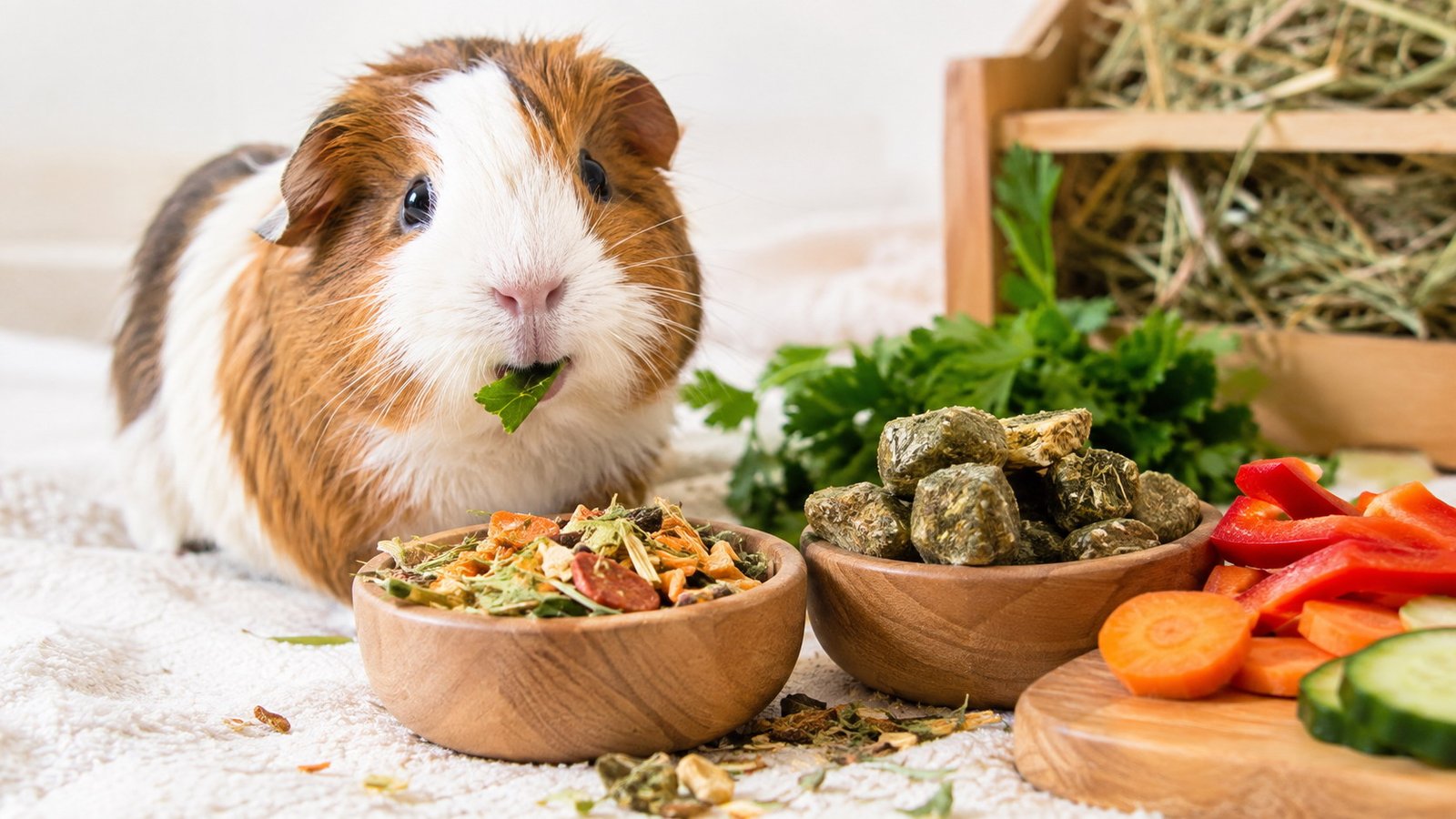
Finding healthy guinea pig treat recipes can be surprisingly tricky. Many treats marketed for small pets contain unnecessary sugar, grains, or other ingredients that do not fit well into a guinea pig’s natural diet.
The good news is that you can make simple treats at home using guinea-pig-safe vegetables, herbs, and plenty of hay. This guide explains what makes a treat healthy, which ingredients to avoid, how much to offer, and several easy recipes you can prepare for your guinea pig. You’ll also learn how to introduce new foods safely and recognize signs that a particular treat may not agree with your pet.
In This Article
What Makes a Guinea Pig Treat Actually Healthy?
A healthy treat should add variety and enrichment without disrupting the nutritional balance of your guinea pig’s regular diet. Treats are extras, not replacements for the foods your pet needs every day.
Guinea pigs are herbivores with a digestive system designed to process a high-fiber diet. Grass hay should make up the foundation of their diet, while appropriate fresh vegetables, guinea pig pellets, and clean drinking water provide additional nutrients.
A homemade treat is a good choice when its ingredients support those dietary needs rather than working against them.
Look for Fiber, Not Sugar
Fiber is one of the most important characteristics of a good guinea pig treat. Hay-based treats are particularly useful because they encourage chewing while contributing fiber to the diet.
Fresh vegetables can also make excellent treats. Bell peppers, leafy greens, and certain herbs provide variety while generally containing much less sugar than fruit.
Fruit is different. Although many fruits are safe for guinea pigs in small quantities, they contain naturally occurring sugars. Think of fruit as an occasional treat rather than an everyday snack.
Keep the Ingredient List Simple
You do not need a long list of ingredients to make something your guinea pig will enjoy.
Good homemade recipes often use just two or three components, such as:
- Timothy or other appropriate grass hay
- Guinea-pig-safe fresh vegetables
- Small amounts of suitable fresh herbs
- Limited portions of guinea-pig-safe fruit
- Water when needed to bind ingredients
Simple recipes also make it easier to identify what caused a problem if your guinea pig develops loose stool, reduced appetite, or another digestive change after trying something new.
Ingredients That Should Not Be Added
Some ingredients commonly found in human snacks should stay out of homemade guinea pig treats.
Never add chocolate, dairy products, meat, onions, garlic, caffeine, or foods containing artificial sweeteners. Highly processed ingredients, excessive salt, added sugar, honey, and heavily seasoned foods are also inappropriate.
Avoid the temptation to make a guinea pig treat resemble a human cookie. Your pet does not need sugar or rich ingredients to enjoy a snack.
Treats Should Complement the Main Diet
Even the healthiest homemade recipe should remain a small part of your guinea pig’s overall feeding routine.
Your pet should continue to have unlimited access to suitable grass hay, along with an appropriate daily diet. Treats are primarily useful for variety, bonding, enrichment, and occasional rewards.
If your guinea pig is filling up on treats and eating less hay, the treats are being offered too frequently or in portions that are too large.
Before You Start: Guinea Pig Foods That Are Safe—and Foods to Avoid
Choosing ingredients is the most important part of making safe homemade guinea pig treats. A food can be perfectly healthy for people while being unsuitable for guinea pigs.
Fresh produce should be clean, fresh, and free from mold or spoilage. Introduce unfamiliar ingredients gradually instead of giving your pet several new foods at once.
Guinea-Pig-Friendly Ingredients for Homemade Treats
A variety of vegetables and herbs can be incorporated into homemade treats or simply offered as small fresh snacks.
Common options include:
- Bell peppers
- Carrots in limited amounts
- Romaine lettuce
- Cilantro
- Parsley in appropriate portions
- Cucumber
- Zucchini
- Fresh grass hay
- Small amounts of guinea-pig-safe leafy greens
Bell peppers are particularly useful because they provide vitamin C, an essential nutrient that guinea pigs cannot produce themselves.
Fresh herbs can also add interesting aromas and flavors. Start with a small amount if your guinea pig has never eaten the herb before.
What About Fruit?
Some fruits can be given to guinea pigs, but they should not become the main ingredient in homemade treats.
Small portions of options such as apple, strawberry, or blueberry may be appropriate for many healthy guinea pigs. Always remove unsuitable seeds, pits, stems, or other parts before serving.
Fruit works best as an occasional bonus, rather than the foundation of a treat recipe.
Foods to Keep Out of the Treat Bowl
Several foods should never be used simply because your guinea pig seems interested in them.
| Avoid | Why it should stay off the menu |
| Chocolate | Unsafe for guinea pigs |
| Onion and garlic | Can be harmful and are inappropriate for their diet |
| Dairy products | Guinea pigs are herbivores and do not need dairy |
| Meat | Not appropriate for a guinea pig’s digestive system |
| Sugary human snacks | Excess sugar and unsuitable ingredients |
| Salty foods | Guinea pigs do not need heavily salted foods |
| Artificial sweeteners | Some can be dangerous to pets |
| Caffeinated foods or drinks | Not appropriate for guinea pigs |
| Moldy or spoiled produce | Can cause illness |
Never assume that a food is safe just because another small animal can eat it. Guinea pigs have specific nutritional requirements.
For additional guidance on guinea pig diet and safe feeding, the RSPCA guinea pig care guidance is a useful reference.
Introduce New Treat Ingredients Slowly
A new recipe may look perfectly healthy, but your guinea pig’s digestive system still needs time to adjust to unfamiliar foods.
When introducing a new ingredient, offer a very small amount first. Continue feeding the rest of your pet’s normal diet and watch for changes in appetite or stool.
If everything remains normal, the ingredient can gradually become part of your pet’s food rotation.
Avoid introducing several unfamiliar ingredients simultaneously. If your guinea pig develops digestive problems, it becomes much harder to determine which food caused the reaction.
7 Healthy Guinea Pig Treat Recipes You Can Make at Home
The best healthy guinea pig treat recipes are usually simple. You do not need complicated equipment or unusual ingredients to create something enjoyable.
The recipes below focus on hay, vegetables, herbs, and limited amounts of fruit. Portions should remain small, and individual dietary needs should always take priority.
Fresh Vegetable Mini Bites
These simple vegetable bites are ideal when you want a fresh treat without relying on sugary ingredients.
Ingredients:
- A small piece of bell pepper
- A small amount of cucumber
- A little romaine lettuce or another suitable leafy green
How to make them:
- Wash the vegetables thoroughly.
- Cut them into very small pieces.
- Combine a few pieces rather than making a large portion.
- Serve immediately as an occasional treat.
There is no need to cook the vegetables or add seasoning.
Tip: Use vegetables your guinea pig already tolerates rather than introducing several unfamiliar foods at once.
Herb and Hay Treat Balls
Hay-based treats can provide both flavor and additional chewing activity.
Ingredients:
- Finely cut suitable grass hay
- A small amount of fresh guinea-pig-safe herb
- Water as needed
How to make them:
- Cut the hay into shorter pieces.
- Finely chop the herb.
- Mix the ingredients together.
- Add a tiny amount of water to help the mixture hold together.
- Form very small balls.
- Allow them to dry completely before offering one to your guinea pig.
The finished treat should be dry rather than wet or sticky.
Important: Do not add flour, sugar, honey, salt, dairy, or other ingredients simply to make the balls easier to shape.
Crunchy Carrot and Bell Pepper Bites
Carrot can be appealing to guinea pigs because of its sweetness, but it should be used moderately. Pairing a small amount with bell pepper makes a simple vegetable-focused treat.
Ingredients:
- A small piece of carrot
- A small piece of bell pepper
Preparation:
- Wash both vegetables.
- Finely chop them into small pieces.
- Mix them together.
- Offer a modest portion.
The key is portion size. Carrots should not become an unlimited snack, particularly when your guinea pig already receives other sweet vegetables or fruit.
Homemade Hay Cookies
These are a useful alternative to commercial treats that contain added sugar or unnecessary ingredients.
Ingredients:
- Finely chopped grass hay
- A small amount of guinea-pig-safe vegetable
- Water
Method:
- Chop the hay into manageable pieces.
- Finely mince the vegetable.
- Combine the ingredients.
- Add enough water to form a firm mixture.
- Shape into tiny, thin pieces.
- Dry thoroughly until firm and no longer moist inside.
- Cool completely before serving.
Keep the cookies small. Their purpose is to provide occasional enrichment, not to replace your guinea pig’s normal hay supply.
Fresh Herb and Vegetable Salad Cups
You can also skip baking entirely and create a fresh treat from a few safe ingredients.
Try combining:
- A little romaine lettuce
- A few pieces of bell pepper
- A small amount of cilantro
- A small piece of cucumber
Wash everything carefully, chop it into bite-sized pieces, and serve fresh.
This option is especially convenient because there is no need to prepare a large batch or store homemade treats.
Apple and Oat Guinea Pig Treats—With an Important Twist
Apple is a sweet food, so it should be treated differently from hay and leafy vegetables.
If you choose to use apple, use only a tiny amount and remove the seeds and core. A homemade treat should not contain sugar, honey, syrup, or other sweeteners.
Oats also aren’t necessary for a guinea pig’s diet. Rather than turning oats into a regular ingredient, consider making the recipe primarily hay-based and using a very small amount of apple only for occasional flavor.
The goal isn’t to make the treat sweeter. It’s to make a tiny portion interesting without adding unnecessary sugar.
Frozen Vegetable Treats for Hot Days
A small frozen vegetable treat can provide enrichment during warm weather, although it should never replace normal access to fresh water.
Choose suitable vegetables such as cucumber or bell pepper, wash them thoroughly, cut them into very small pieces, and freeze tiny portions.
Allow the treat to soften slightly before offering it. Avoid giving your guinea pig a large block of frozen food.
Keep the portion small and observe how your pet responds. Some guinea pigs enjoy the texture, while others simply prefer their vegetables fresh.
Homemade treats should always remain a supplement to a balanced guinea pig diet. When preparing any recipe, prioritize hay, safe vegetables, appropriate portions, and your pet’s individual tolerance over making elaborate snacks.
Healthy Guinea Pig Treat Recipes for Different Needs
Not every guinea pig enjoys the same foods, and not every treat serves the same purpose. Some owners want a low-sugar snack for occasional enrichment, while others are looking for a hay-based option that encourages natural chewing.
The best approach is to choose healthy guinea pig treat recipes based on the ingredients and your pet’s regular diet, rather than simply choosing the treat that looks most appealing.
Low-Sugar Treats for Everyday Enrichment
If you want to offer treats frequently as part of bonding or enrichment, vegetables and hay are generally better choices than fruit-based recipes.
Small pieces of bell pepper, cucumber, leafy greens, or suitable herbs can be used as simple rewards. You can also hide small amounts of these foods around a safe enclosure to encourage foraging.
Hay-based treats are another useful option because they keep the emphasis on fiber.
A good everyday enrichment treat should be more about texture, smell, variety, and interaction than sweetness.
Hay-Rich Treats for Fiber and Chewing
Hay is already the foundation of a guinea pig’s diet, so hay-based treats can fit naturally into their feeding routine.
Simple hay balls or homemade hay cookies can make ordinary hay more interesting without turning it into a sugary snack.
Try:
- Timothy hay or another suitable grass hay
- Small amounts of fresh herbs
- Tiny pieces of guinea-pig-safe vegetables
- Water to bind the ingredients
Avoid turning hay treats into dense baked snacks. The finished product should remain simple and fiber-focused.
Vegetable-Based Treats for Variety
Fresh vegetables are excellent for adding variety to a guinea pig’s diet when offered in appropriate portions.
Bell peppers are particularly useful because guinea pigs need dietary vitamin C. Other suitable vegetables and leafy greens can provide different flavors and textures.
Rotating several safe vegetables can also prevent treats from becoming monotonous.
Keep in mind that variety does not mean unlimited quantities. Even healthy foods can cause digestive problems if a guinea pig suddenly eats too much.
Fruit Treats Should Stay Occasional
Fruit is often a favorite because of its natural sweetness, but that same sweetness is why it should be limited.
A tiny piece of suitable fruit can work well as an occasional reward. It doesn’t need to appear in every homemade recipe.
If your guinea pig already receives fruit, consider using vegetables or hay for most treats and saving fruit for special occasions.
Consider Your Guinea Pig’s Individual Needs
A young, adult, senior, overweight, underweight, or medically sensitive guinea pig may have different nutritional considerations.
Guinea pigs with dental problems, digestive issues, urinary concerns, or other health conditions may need dietary adjustments recommended by an exotic-animal veterinarian.
Never use homemade treats to manage a medical condition without veterinary guidance.
How Much Is Too Much? Guinea Pig Treat Portions Explained
One of the easiest mistakes to make is assuming that a healthy ingredient can be given without limits.
Treats are still treats. Your guinea pig’s main diet should provide the majority of its nutrition, while snacks add variety and enrichment.
Treats vs. Daily Vegetables
There is an important difference between a normal serving of vegetables and a special treat.
Fresh vegetables can be part of a balanced guinea pig feeding routine, while homemade cookies, fruit bites, or other special recipes should generally be offered in smaller quantities.
A useful way to think about it is:
| Food | General role |
| Grass hay | Main source of fiber and a dietary foundation |
| Fresh vegetables and leafy greens | Regular source of variety and nutrients |
| Appropriate guinea pig pellets | Concentrated nutrition in controlled amounts |
| Fresh water | Essential every day |
| Homemade treats | Occasional enrichment or reward |
| Fruit | Occasional treat because of its natural sugar |
The exact feeding routine can vary depending on your guinea pig’s age, health, weight, and veterinary recommendations.
Start With Tiny Portions
When trying a new homemade recipe, begin with a very small serving.
For example, rather than giving an entire homemade cookie or several pieces of fruit, offer a tiny portion and see how your guinea pig responds.
Watch for:
- Normal appetite
- Normal droppings
- Normal activity
- No obvious abdominal discomfort
- Continued interest in hay
If everything remains normal, you can continue offering the ingredient appropriately.
Don’t Let Treats Replace Hay
A guinea pig that eagerly eats a treat may make you think it needs more. That isn’t necessarily true.
Some guinea pigs will happily eat sweet or highly palatable foods while ignoring healthier options. Giving too many treats can therefore interfere with the eating pattern you want to encourage.
Hay should remain readily available even when you’re offering homemade treats.
Fruit Needs Extra Portion Control
Fruit should generally be treated more like a dessert than a vegetable.
A small piece occasionally is very different from giving fruit every day in generous portions. Excessive fruit can add unnecessary sugar to the diet and may contribute to digestive upset or unwanted weight gain.
If you’re making an apple-based or berry-based treat, keep the fruit component deliberately small.
Common Mistakes That Can Turn a Healthy Treat Into an Unhealthy One
Homemade doesn’t automatically mean healthy. A recipe can quickly become unsuitable when owners add ingredients designed for human snacks rather than guinea pig nutrition.
Avoid these common mistakes when preparing treats at home.
Adding Sugar, Honey, or Syrup
Guinea pigs don’t need added sweeteners.
Honey, maple syrup, sugar, molasses, and similar ingredients can turn a simple treat into a concentrated source of unnecessary sugar.
If a recipe needs sugar to make your guinea pig interested in it, change the recipe rather than adding more sweetness.
Using Too Much Fruit
Fruit can make homemade treats especially tempting, which makes portion control even more important.
A recipe containing a large amount of apple, banana, berries, or other fruit may look healthy because it contains natural ingredients. However, natural sugar is still sugar.
Use fruit sparingly and rely more heavily on hay and suitable vegetables.
Replacing Hay With Treats
Another common mistake is giving treats because a guinea pig seems reluctant to eat hay.
Treats should not be used to compensate for consistently poor hay intake. A major change in appetite can indicate a health problem, particularly when accompanied by weight loss, reduced droppings, lethargy, or other unusual behavior.
A guinea pig that suddenly stops eating should receive prompt veterinary attention.
Giving Too Much Because Your Guinea Pig Begs
Guinea pigs can become very enthusiastic about favorite foods. Some may squeak, approach the enclosure, or follow your hand whenever they expect a treat.
Those behaviors are adorable, but they don’t necessarily mean your pet needs another snack.
Create a consistent treat routine instead of responding to every request. This makes portion control much easier.
Introducing Several New Foods at Once
Suppose you make a treat containing carrot, apple, cilantro, oats, and another unfamiliar ingredient. If your guinea pig develops soft stool afterward, you won’t know which ingredient was responsible.
Introduce new foods one at a time whenever practical.
This simple approach makes it much easier to identify foods your guinea pig tolerates well.
Storing Homemade Treats Incorrectly
Fresh ingredients can spoil, especially when combined with moisture.
Fresh vegetable treats should generally be prepared in small quantities and served promptly. Homemade baked or dried treats should be completely dry before storage and kept in a clean, appropriate container.
Discard anything that develops:
- Mold
- An unusual smell
- Excess moisture
- A slimy texture
- Visible spoilage
When you’re unsure whether a homemade treat is still fresh, throw it away rather than taking a chance with your guinea pig’s health.
Expert Tips for Making Homemade Guinea Pig Treats Safer
Making your own treats gives you control over the ingredients, but safe preparation matters just as much as the recipe itself. Guinea pigs are small animals, so even relatively minor dietary mistakes can have an outsized effect.
A few simple habits can make your homemade treats safer and easier to manage.
Wash Fresh Produce Thoroughly
Wash vegetables, herbs, and fruit under clean running water before preparing them. This helps remove dirt and reduces surface contamination.
Use fresh produce that looks and smells normal. Never use moldy, rotten, or visibly spoiled food as an ingredient, even if you plan to bake or dry it.
Keep Preparation Simple and Clean
Wash your hands, utensils, bowls, and preparation surfaces before making treats.
Avoid cross-contamination with foods that aren’t appropriate for guinea pigs. A cutting board used for onions, garlic, meat, or heavily seasoned foods should be thoroughly cleaned before being used for pet food.
Remove Unsafe Parts
Some fruits and vegetables have parts that shouldn’t be offered to guinea pigs.
Before preparing a recipe, check the particular ingredient and remove pits, seeds, cores, tough stems, or other potentially unsuitable parts when necessary.
Don’t assume that every part of a plant is safe simply because the main fruit or vegetable is.
Introduce Recipes Gradually
A new recipe should be introduced just like any other unfamiliar food: gradually.
Offer a very small amount first and continue your guinea pig’s normal diet. Watch its appetite and droppings over the following period.
One new ingredient at a time is especially helpful when you’re testing several homemade treat ideas.
Watch Your Guinea Pig’s Response
Every guinea pig is an individual. One may love cilantro while another ignores it. One may tolerate a particular vegetable well while another develops digestive upset after eating too much.
Pay attention to:
- Appetite
- Dropping size and consistency
- Energy level
- Normal eating and chewing behavior
- Weight over time
- Any unusual changes after eating
Keep a simple list of ingredients your guinea pig enjoys and tolerates. It can make future treat preparation much easier.
Make Small Batches
Homemade treats don’t need to be prepared in large quantities.
Small batches reduce waste and make it easier to maintain freshness. This is particularly important for treats containing fresh vegetables or other moist ingredients.
Fresh is generally preferable to making a month’s supply of homemade snacks.
Healthy Guinea Pig Treat Recipes vs. Store-Bought Treats: Which Is Better?
Homemade and commercial treats can both have a place in pet care, but their nutritional quality depends heavily on the ingredients.
The word natural on a package doesn’t automatically make a product appropriate for guinea pigs. Likewise, homemade doesn’t automatically mean healthy.
Homemade Treats: Pros and Cons
Homemade recipes offer one major advantage: you control what goes into the treat.
You can focus on hay, safe vegetables, and small amounts of appropriate ingredients while avoiding added sugar, artificial flavors, and unnecessary fillers.
Potential advantages include:
- Full control over ingredients
- Easy adjustment to your guinea pig’s preferences
- Ability to make very small portions
- Less reliance on processed ingredients
- Opportunity to turn treat preparation into enrichment
There are drawbacks, too. Homemade treats require proper food handling, ingredient research, and storage. A poorly designed recipe can still contain too much sugar or inappropriate foods.
Store-Bought Treats: What Should You Check?
Commercial guinea pig treats vary considerably.
Before buying one, examine the ingredient list rather than relying solely on attractive packaging or claims such as “natural,” “healthy,” or “premium.”
Look for products that emphasize appropriate fiber sources and avoid unnecessary sweeteners.
Be cautious with treats containing:
- Added sugar
- Honey or syrup
- Artificial sweeteners
- Large amounts of dried fruit
- Chocolate or cocoa
- Dairy ingredients
- Excessive seeds or nuts
- Highly processed fillers
A long ingredient list isn’t automatically bad, but it gives you more things to evaluate.
A Simple Comparison
| Feature | Homemade treats | Store-bought treats |
| Ingredient control | Very high | Depends on the product |
| Preparation required | Yes | Minimal |
| Portion customization | Easy | Usually predetermined |
| Storage | Requires attention | Usually easier |
| Added ingredients | You control them | Must check the label |
| Best use | Simple, fresh enrichment | Convenient occasional treat |
The better choice ultimately depends on the individual product and recipe.
A tiny piece of fresh bell pepper may be a better treat than a highly processed commercial snack, while a carefully formulated commercial product may be more convenient than a homemade recipe.
Don’t choose a treat simply because your guinea pig loves it. Choose it because it fits the animal’s nutritional needs.
Guinea Pig Nutrition Basics: Why Hay Still Matters More Than Treats
Even the best healthy guinea pig treat recipes are only a small part of proper guinea pig care.
Treats can provide variety and enrichment, but they shouldn’t distract from the foods that form the foundation of your pet’s diet.
Hay Comes First
Grass hay should be available to guinea pigs continuously. It provides the fiber needed for healthy digestion and also supports the natural wearing of continuously growing teeth through chewing.
Suitable hay options may include timothy, orchard grass, meadow, or other appropriate grass hays.
The exact type can depend on factors such as age and individual dietary needs.
If your guinea pig has unlimited hay but is consistently choosing treats instead, reduce the treats rather than increasing them.
Fresh Vegetables Provide Important Variety
Fresh vegetables and leafy greens can complement hay by supplying nutrients and variety.
Bell peppers are especially useful because guinea pigs cannot make their own vitamin C. Other suitable vegetables can be rotated to provide different flavors and textures.
Sudden changes should be avoided. Introduce unfamiliar vegetables gradually and monitor your pet’s digestive response.
Pellets Have a Supporting Role
High-quality guinea pig pellets can provide concentrated nutrients, but pellets should not replace hay.
Choose a product formulated specifically for guinea pigs rather than using rabbit food or a generic small-animal mix.
Avoid relying on colorful mixes containing lots of dried fruit, seeds, or sugary pieces simply because your guinea pig appears to enjoy picking through them.
Fresh Water Is Essential
Clean drinking water should always be available.
Check the water supply regularly and clean the bottle or bowl appropriately. If you use a bottle, make sure your guinea pig can operate it comfortably and that the nozzle isn’t blocked.
Water intake can also change when a guinea pig is eating more fresh vegetables, so maintaining constant access is important.
Where Treats Fit Into the Daily Routine
Think of treats as a small addition rather than another major food group.
A simple routine might look like this:
- Hay: Available throughout the day
- Fresh water: Available throughout the day
- Appropriate pellets: Offered according to your guinea pig’s dietary needs
- Fresh vegetables and leafy greens: Offered as part of the regular diet
- Homemade treats: Small, occasional portions
- Fruit: Limited, occasional treat
The right quantities depend on the individual guinea pig, including its age, size, activity level, body condition, and health.
Treats should never push out hay, appropriate vegetables, or other nutritionally important foods.
The healthiest treat is one that your guinea pig can enjoy without compromising the balanced diet it needs every day.
How to Tell if a New Treat Is Not Agreeing With Your Guinea Pig
Even carefully selected healthy guinea pig treat recipes may not suit every individual guinea pig. A food that causes no problems for one pet could lead to digestive upset in another, particularly if it is introduced too quickly or offered in excessive amounts.
Pay attention to your guinea pig after introducing a new ingredient or homemade treat. Early changes are easier to address when you notice them promptly.
Watch for Changes in Droppings
Your guinea pig’s droppings can provide useful clues about digestive health.
Be alert for:
- Softer-than-normal droppings
- Diarrhea
- A noticeable reduction in the number of droppings
- Unusually small droppings
- A sudden change that continues after the new food is introduced
One soft dropping isn’t necessarily an emergency, but persistent or significant changes deserve attention.
If you suspect a treat is responsible, stop offering the new food and return to the familiar diet while monitoring your pet. Contact a veterinarian if the problem continues or your guinea pig appears unwell.
Reduced Appetite Is More Concerning
A guinea pig that suddenly eats less should not simply be assumed to be a picky eater.
Guinea pigs need to eat regularly to keep their digestive system moving. Reduced appetite can occur with dental problems, gastrointestinal issues, pain, and other health conditions.
Signs that deserve prompt veterinary attention include:
- Refusing hay or other normal foods
- Significant reduction in eating
- Very few or no droppings
- Lethargy
- Unusual hiding or weakness
- Abdominal swelling or obvious discomfort
- Difficulty chewing or dropping food from the mouth
- Noticeable weight loss
If your guinea pig stops eating, contact an exotic-pet veterinarian promptly rather than trying to solve the problem with more treats.
Don’t Wait for Severe Symptoms
Small animals can sometimes hide signs of illness until they become quite sick. That’s why subtle changes in eating, behavior, and droppings are worth taking seriously.
A homemade treat should never be used as a treatment for diarrhea, appetite loss, bloating, or another suspected illness.
When something seems wrong, discontinue the questionable food and seek professional veterinary advice.
Guinea Pig Treat Recipe FAQs
What are the healthiest treats for guinea pigs?
Hay-based treats and small portions of appropriate fresh vegetables are among the simplest choices. Bell pepper, suitable leafy greens, herbs, and other guinea-pig-safe vegetables can provide variety without relying heavily on sugar. Fruit can be offered occasionally in small amounts.
Can guinea pigs eat homemade treats every day?
Some small pieces of appropriate vegetables may fit into a guinea pig’s regular diet, but special homemade treats such as cookies, hay balls, and fruit-based snacks should remain limited. Treats should never replace unlimited access to suitable hay.
What fruits can guinea pigs have as treats?
Small amounts of guinea-pig-safe fruits such as apple, strawberry, or blueberry may be offered occasionally. Fruit should be limited because it contains natural sugar. Remove unsuitable seeds, pits, cores, or other unsafe parts before serving.
Can guinea pigs eat oats in homemade treats?
Oats are not necessary for a guinea pig’s diet. A better approach is to make homemade treats primarily from appropriate hay and vegetables rather than relying on oats or other grain-based ingredients.
How often should guinea pigs get treats?
There isn’t one universal treat schedule for every guinea pig. The important principle is moderation. Small vegetable treats can be incorporated appropriately into a balanced diet, while sugary foods and fruit should remain occasional. Your guinea pig’s regular nutrition should always take priority.
Are store-bought guinea pig treats safe?
Some commercial treats may be appropriate, but check the ingredient list carefully. Avoid products containing added sugar, honey, artificial sweeteners, chocolate, dairy, or excessive dried fruit. A product being labeled for guinea pigs does not automatically mean it is the best nutritional choice.
What treats should guinea pigs never eat?
Never give guinea pigs chocolate, meat, dairy products, onions, garlic, caffeinated foods or drinks, heavily salted snacks, sugary human foods, or foods containing potentially dangerous artificial sweeteners. Avoid any food that is moldy, spoiled, or of uncertain safety.
Can baby or senior guinea pigs have the same treats as adult guinea pigs?
Not necessarily. Age can affect nutritional requirements, and young or older guinea pigs may have different dietary considerations. Keep treats small and choose foods appropriate for the individual animal. If your guinea pig has a health condition or special dietary requirement, ask an exotic-pet veterinarian before introducing new treats.
Keep Guinea Pig Treats Simple, Safe, and Occasional
The best healthy guinea pig treat recipes don’t need to be complicated. Hay, safe vegetables, fresh herbs, and tiny amounts of fruit can provide plenty of variety without turning treats into a major part of your pet’s diet.
Focus on fiber-rich ingredients, limited sugar, small portions, and gradual introduction. Watch your guinea pig’s appetite and droppings whenever you add something new, and stop experimenting with food if your pet develops concerning symptoms.
Most importantly, remember that treats are there to complement good nutrition—not replace it. Keep plenty of suitable hay available, provide an appropriate balanced diet, and use homemade treats as a simple way to add enrichment and variety.
Try one of the simple recipes above, start with a tiny portion, and see which healthy ingredients your guinea pig enjoys and tolerates best.

Passionate about pets and animal care, we shares trusted tips, fun facts, and practical advice to help pet lovers give their furry, feathered, and scaly companions the best life possible. From everyday care guides to fascinating animal insights, we’re dedicated to making pet information easy, helpful, and enjoyable for every reader.