
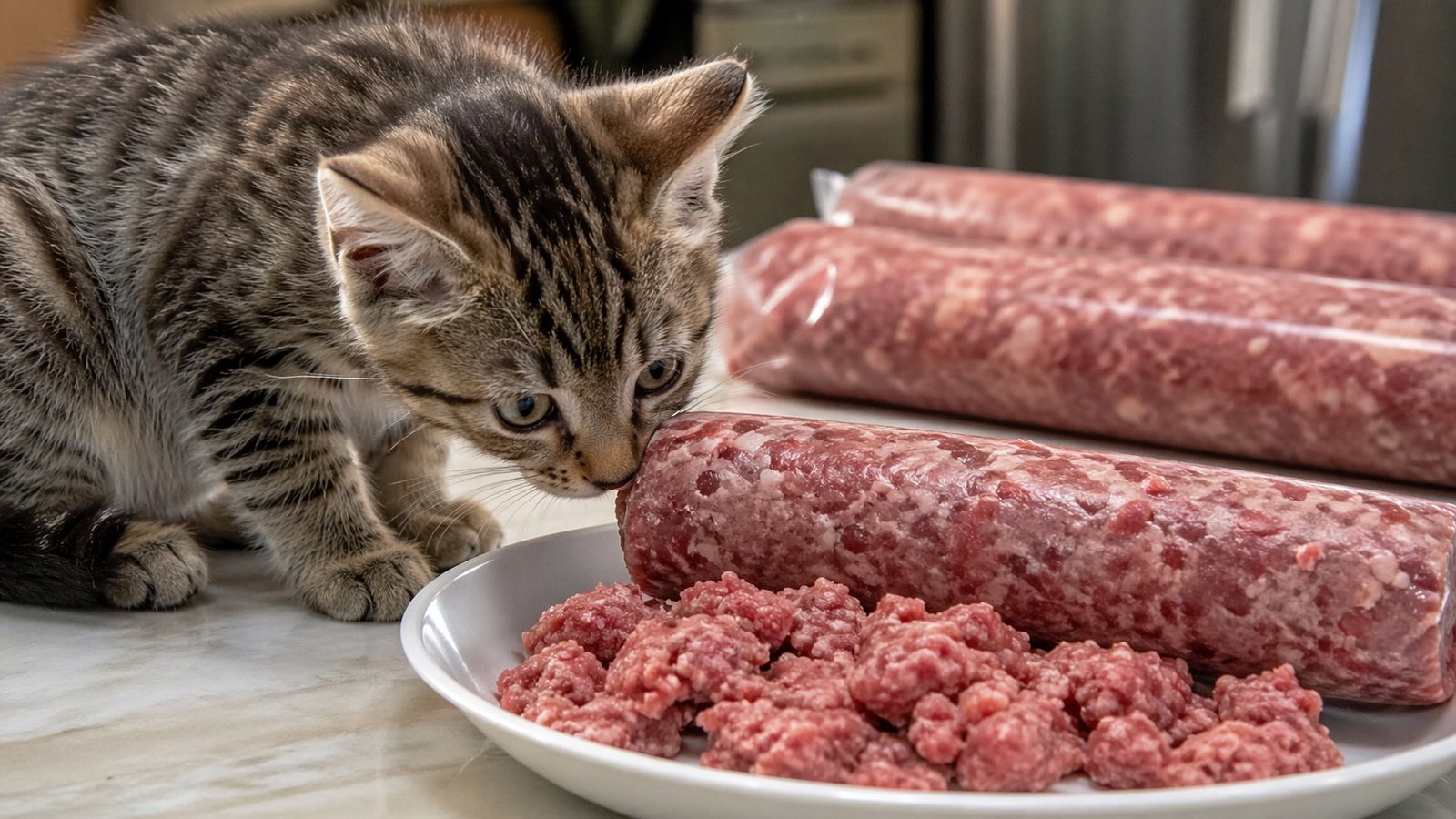
Choosing the right food for a growing kitten can feel overwhelming, especially when raw diets enter the conversation. Blue Ridge Beef Kitten Grind Frozen Raw Cat Food Chub is one option that’s gaining attention among pet owners who want a more natural, species-appropriate diet.
This guide breaks down exactly what this product is, what’s inside it, and whether it’s a good fit for your kitten. You’ll learn the benefits, potential risks, and how it compares to other feeding options—so you can make a confident, informed choice.
In This Article
What Is Blue Ridge Beef Kitten Grind Frozen Raw Cat Food Chub?
Blue Ridge Beef Kitten Grind Frozen Raw Cat Food Chub is a raw, minimally processed cat food designed specifically for kittens. It comes in a “chub,” which is essentially a tube-shaped package of ground raw ingredients that you store frozen and thaw before feeding.
What does “kitten grind” mean?
“Kitten grind” refers to a finely ground mix of meat, bone, and organs tailored for younger cats. The texture is softer and easier for kittens to eat, while still delivering essential nutrients needed for growth.
What does “chub” mean?
A “chub” is simply the packaging format:
- Cylindrical tube of frozen raw food
- Easy to portion once thawed
- Typically sold in bulk for cost efficiency
Who is this product made for?
This food is intended for:
- Kittens in their growth stage (typically under 12 months)
- Owners interested in raw or biologically appropriate diets
- Cats transitioning away from kibble or canned food
Blue Ridge Beef as a brand is known for producing simple, raw pet food blends without unnecessary fillers, which appeals to owners looking for more control over their pet’s diet.
Why Raw Feeding for Kittens Is Gaining Popularity
Raw feeding has become a hot topic in the pet world—and for good reason. Many cat owners are rethinking traditional kibble diets and exploring options that more closely match a cat’s natural eating habits.
Cats are obligate carnivores
Cats rely on animal-based nutrients to survive. Their bodies are designed to:
- Digest raw meat efficiently
- Extract nutrients from organs and bones
- Thrive on high-protein, low-carbohydrate diets
That’s why products like Blue Ridge Beef Kitten Grind Frozen Raw Cat Food Chub are often described as “biologically appropriate.”
Potential benefits of raw diets
Pet owners who switch to raw feeding often report:
- Improved digestion (smaller, less odorous stools)
- Shinier coats and healthier skin
- Higher energy levels
- Better weight management
Still, raw feeding isn’t automatically perfect. It requires careful handling and a good understanding of nutrition to ensure kittens get everything they need.
For a deeper look at safe feeding practices, the American Veterinary Medical Association provides helpful guidance here:
https://www.avma.org/resources-tools/pet-owners/petcare/raw-pet-foods-and-your-pet
Key Ingredients in Blue Ridge Beef Kitten Grind Frozen Raw Cat Food Chub
Understanding what goes into your kitten’s food is essential—especially with raw diets where you’re closer to the source ingredients.
Core components of the kitten grind
Most formulations of this product include:
- Muscle meat (typically beef) – primary protein source
- Ground bone – provides calcium and phosphorus
- Organ meats (like liver) – rich in vitamins and minerals
This combination mimics a prey-based diet, which is what cats would naturally consume in the wild.
Why these ingredients matter
Each component plays a critical role:
| Ingredient | Nutritional Benefit |
| Muscle meat | Protein for growth and energy |
| Bone | Calcium for strong bones and teeth |
| Organs | Essential vitamins (A, B) and minerals |
What’s not included
One of the biggest selling points:
- No grains or fillers
- No artificial preservatives
- No unnecessary additives
That simplicity can be a big advantage—but it also means you need to ensure the diet is complete and balanced, especially for growing kittens.
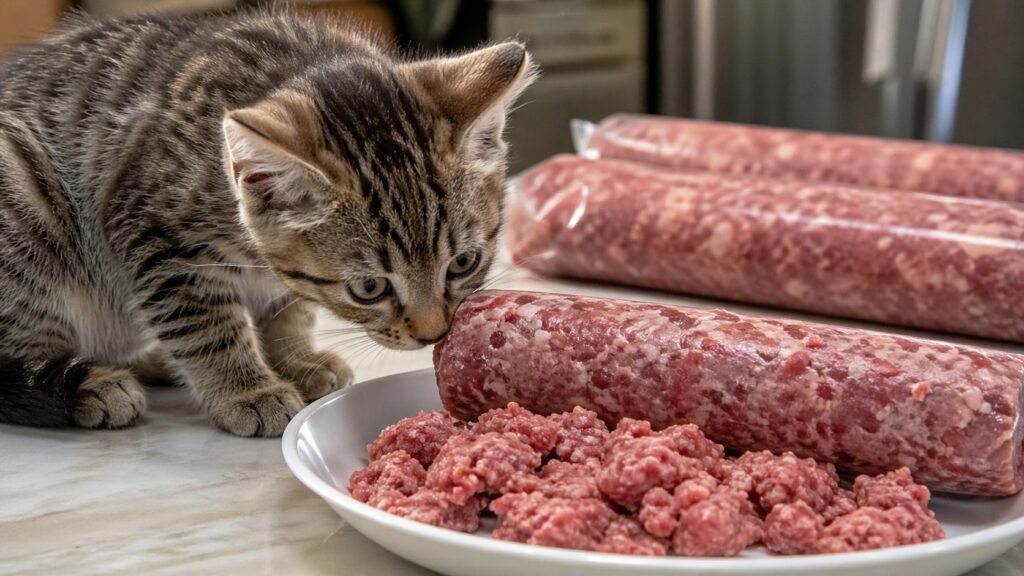
Nutritional Benefits of Blue Ridge Beef Kitten Grind for Growing Cats
Kittens grow fast, and their nutritional needs are much higher than adult cats. That’s where a raw option like Blue Ridge Beef Kitten Grind Frozen Raw Cat Food Chub can stand out—when used correctly.
High-quality protein for rapid growth
Protein is the foundation of a kitten’s development. This formula delivers animal-based protein, which is easier for cats to digest and use compared to plant-based alternatives.
Expect support for:
- Muscle development
- Healthy organ growth
- Sustained energy throughout the day
Natural calcium and phosphorus balance
Because the grind includes bone, it provides calcium and phosphorus in a natural ratio, which is essential for:
- Strong bones and teeth
- Proper skeletal development
Imbalanced minerals in kittens can lead to serious growth issues, so this aspect is especially important.
Better digestion and hydration
Raw diets naturally contain more moisture than kibble. That can help:
- Improve hydration (cats often don’t drink enough water)
- Reduce constipation
- Support urinary tract health
Many owners also notice smaller, less smelly stools, which is a sign of efficient nutrient absorption.
A quick reality check
While the nutritional profile is promising, keep this in mind:
Not all raw grinds are “complete and balanced” on their own.
Some kittens may require additional nutrients like taurine, omega fatty acids, or specific vitamins.
When in doubt, it’s smart to:
- Consult a veterinarian
- Monitor growth and weight regularly
Is Blue Ridge Beef Kitten Grind Frozen Raw Cat Food Chub Safe?
Raw feeding can be safe—but only if handled properly. This is one area where attention to detail really matters.
Understanding the risks
Raw meat can carry bacteria such as:
- Salmonella
- E. coli
These don’t always make cats sick, but they can pose risks to:
- Humans in the household
- Young, elderly, or immunocompromised pets
Safe handling practices (must-follow)
To reduce risks, follow these essentials:
- Keep it frozen until ready to use
- Thaw in the refrigerator (never at room temperature)
- Use clean utensils and bowls
- Wash hands thoroughly after handling
- Discard uneaten food after 20–30 minutes
Storage guidelines
| Stage | Recommendation |
| Frozen storage | Keep at consistent freezer temperature |
| After thawing | Use within 2–3 days (refrigerated) |
| Serving | Do not refreeze thawed portions |
Brand safety considerations
Blue Ridge Beef focuses on minimal processing, which preserves nutrients but also means fewer “kill steps” for bacteria compared to cooked foods.
That’s why safe handling at home is non-negotiable.
If your household isn’t comfortable with raw food safety practices, this may not be the best option.
How to Feed Blue Ridge Beef Kitten Grind to Your Kitten (Step-by-Step)
Feeding raw isn’t complicated, but it does require a bit of planning—especially for growing kittens.
Step 1: Calculate the right portion
Kittens typically eat more per pound of body weight than adult cats.
General guideline:
- Feed about 8–10% of your kitten’s body weight per day, split into multiple meals
Example:
| Kitten Weight | Daily Food Amount |
| 1 kg | 80–100 grams |
| 2 kg | 160–200 grams |
Adjust based on appetite, growth, and activity level.
Step 2: Transition slowly (if switching diets)
Switching abruptly can upset your kitten’s stomach.
Use a gradual transition:
- Day 1–2: 25% raw, 75% current food
- Day 3–4: 50% raw, 50% current food
- Day 5–6: 75% raw, 25% current food
- Day 7: 100% raw
Watch for signs of digestive upset, like diarrhea or vomiting.
Step 3: Feed multiple small meals
Kittens need frequent meals to support growth.
Aim for:
- 3–4 meals per day
- Consistent feeding times
Step 4: Monitor your kitten closely
Raw feeding isn’t “set it and forget it.”
Keep an eye on:
- Weight gain (steady, not excessive)
- Stool quality
- Energy levels
- Coat condition
Any sudden changes should be taken seriously.
Step 5: Know when to involve a vet
Reach out to a veterinarian if you notice:
- Poor growth or weight loss
- Persistent diarrhea
- Lethargy or low appetite
A vet can help determine whether the diet needs adjustment or supplementation.
Blue Ridge Beef Kitten Grind Frozen Raw Cat Food Chub: Pros and Cons
No single food is perfect for every kitten. Understanding the strengths and limitations of Blue Ridge Beef Kitten Grind Frozen Raw Cat Food Chub helps you decide if it truly fits your situation.
What pet owners love
- High-protein, species-appropriate nutrition
Built around meat, bone, and organs—exactly what cats are designed to eat. - Minimal processing
Nutrients stay closer to their natural state compared to heavily processed kibble. - No fillers or grains
Ideal for owners avoiding unnecessary carbohydrates or additives. - Good palatability
Many kittens find raw food highly appealing, even picky eaters.
Potential drawbacks to consider
- Requires freezer storage and planning
You’ll need space and a routine for thawing portions ahead of time. - Handling precautions are essential
Raw food demands strict hygiene practices—no shortcuts here. - May not be fully complete on its own
Some formulations lack added nutrients like taurine or essential vitamins. - Not always convenient for travel or busy schedules
Feeding raw on the go can be tricky.
Bottom line: This product can be excellent when used correctly, but it requires more effort than traditional cat food.
Common Mistakes When Feeding Raw Diets to Kittens
Raw feeding can go wrong quickly if the basics aren’t followed. Many issues come down to simple, avoidable mistakes.
Feeding the wrong portions
Kittens need more food than adult cats—but guessing isn’t enough.
- Overfeeding can lead to rapid, unhealthy weight gain
- Underfeeding can slow growth and development
Always adjust portions based on your kitten’s progress, not just a chart.
Assuming the food is “complete”
One of the biggest misconceptions:
Not all raw grinds are nutritionally complete.
Missing nutrients may include:
- Taurine (critical for heart and eye health)
- Omega-3 fatty acids
- Certain vitamins and trace minerals
If you’re unsure, consider:
- Adding a balanced supplement
- Rotating with other complete foods
- Consulting a vet or pet nutritionist
Poor food handling habits
Improper handling increases the risk of contamination.
Common slip-ups:
- Thawing at room temperature
- Leaving food out too long
- Reusing unwashed bowls
Consistency with hygiene is non-negotiable in raw feeding.
Switching too quickly
Kittens have sensitive digestive systems.
A sudden switch can cause:
- Diarrhea
- Vomiting
- Loss of appetite
A gradual transition is always safer and more successful.
Skipping regular health checks
Raw feeding requires observation.
Don’t ignore:
- Changes in stool
- Slower growth
- Dull coat or low energy
Early adjustments prevent bigger problems later.
Comparing Blue Ridge Beef Kitten Grind vs Other Raw Cat Food Brands
Not all raw cat foods are created equal. Comparing options helps you see where Blue Ridge Beef Kitten Grind Frozen Raw Cat Food Chub stands.
Key differences at a glance
| Feature | Blue Ridge Beef Kitten Grind | Other Raw Brands (General) |
| Ingredient simplicity | Very simple (meat, bone, organ) | Often include added supplements |
| Processing level | Minimal | Minimal to moderate |
| Nutritional completeness | May require supplementation | Often labeled “complete & balanced” |
| Price | Usually more affordable | Often higher due to added nutrients |
| Convenience | Moderate (bulk chubs) | Higher (pre-portioned patties, nuggets) |
Where Blue Ridge Beef stands out
- Cost-effective for raw feeding beginners
- Straightforward ingredient list (easy to understand)
- Flexible for owners who prefer customizing their cat’s diet
Where other brands may have an edge
- Convenience (ready-to-serve portions)
- Clearly labeled “complete and balanced” formulas
- Less guesswork for first-time raw feeders
Which option is better?
It depends on your priorities:
- Choose Blue Ridge Beef if you want control, simplicity, and affordability
- Choose other raw brands if you prefer convenience and nutritional completeness out of the box
There’s no one-size-fits-all answer—just the best fit for you and your kitten.
Signs Your Kitten Is Thriving on Blue Ridge Beef Kitten Grind
Once you start feeding Blue Ridge Beef Kitten Grind Frozen Raw Cat Food Chub, your kitten’s condition will tell you a lot about whether the diet is working.
Positive signs to look for
- Steady, healthy weight gain
Growth should be consistent—not too fast, not too slow. - Shiny, soft coat
A noticeable improvement in fur quality often shows good nutrition. - Small, firm stools
Raw diets are typically more digestible, resulting in less waste. - High energy and playful behavior
Kittens should be active, curious, and engaged. - Bright eyes and alertness
Subtle but important indicators of overall health.
When something feels off
Pay attention if you notice:
- Chronic diarrhea or very loose stools
- Poor appetite
- Lethargy or low energy
- Dull coat or excessive shedding
These signs may indicate nutritional imbalance or digestive issues. Don’t wait too long—adjust the diet or consult a vet if needed.
When Blue Ridge Beef Kitten Grind May Not Be Ideal
Raw feeding isn’t the best choice for every kitten or household. Being honest about limitations helps prevent problems.
Situations where it may not fit
- Kittens with medical conditions
Digestive disorders, immune issues, or special dietary needs may require veterinary-prescribed diets. - Homes with strict hygiene concerns
Households with young children, elderly individuals, or immunocompromised members may prefer cooked or commercial options. - Owners who want a complete, ready-to-feed diet
This product may require additional supplementation, which not everyone is comfortable managing. - Busy schedules or frequent travel
Raw feeding demands planning, thawing, and careful storage.
A practical alternative
If raw feeding feels overwhelming, consider:
- High-quality wet food
- Commercial “complete and balanced” raw formulas
- A mixed feeding approach (raw + canned)
What matters most is consistency and proper nutrition—not sticking to one feeding philosophy.
Expert Tips for Feeding Raw Diets Safely and Effectively
Getting raw feeding right doesn’t require perfection—but it does require awareness and consistency.
Smart habits that make a difference
- Rotate protein sources
Even if you start with beef, adding variety over time supports balanced nutrition. - Consider supplements when needed
Taurine, omega-3s, and vitamins may need to be added depending on the formula. - Use a kitchen scale
Accurate portions prevent underfeeding or overfeeding. - Stick to a feeding routine
Kittens thrive on consistency.
Hygiene checklist (keep this simple but strict)
- Wash hands after handling raw food
- Clean bowls immediately after meals
- Sanitize surfaces regularly
- Store food properly at all times
Small habits like these significantly reduce risk.
Monitor and adjust
No diet is perfect forever.
Keep evaluating:
- Growth rate
- Body condition
- Stool quality
Adjust early rather than waiting for problems to escalate.
How Raw Feeding Connects to Overall Cat Health
Feeding choices affect much more than just your kitten’s appetite. A well-managed raw diet can influence long-term health in several ways.
Dental health benefits
Chewing raw textures (especially when bone content is included) may:
- Help reduce plaque buildup
- Support healthier gums
Though it’s not a replacement for dental care, it can be a helpful addition.
Weight management and metabolism
High-protein, low-carb diets often:
- Support lean muscle development
- Reduce the risk of obesity later in life
This is especially important during the early growth stage.
Skin, coat, and immune support
Nutrient-dense diets contribute to:
- Healthier skin barrier
- Reduced shedding
- Stronger immune function
For a broader look at feline nutrition standards, you can refer to guidelines from the Association of American Feed Control Officials (AAFCO):
https://www.aafco.org/consumers/understanding-pet-food/
Frequently Asked Questions About Blue Ridge Beef Kitten Grind Frozen Raw Cat Food Chub
Is Blue Ridge Beef Kitten Grind complete and balanced for kittens?
Not always. Some formulations may lack essential nutrients, so supplementation or rotation with other foods might be necessary.
Can adult cats eat Blue Ridge Beef Kitten Grind?
Yes, but it’s formulated for kittens. Adult cats may need different nutritional ratios, so it’s better to choose an age-appropriate formula.
How long does it last after thawing?
Typically 2–3 days in the refrigerator. Always keep it properly stored and discard anything that smells off.
Do I need to add supplements?
In many cases, yes. Nutrients like taurine and omega-3 fatty acids may need to be added for a fully balanced diet.
Is this food vet-approved?
Opinions vary. Some vets support raw feeding when done correctly, while others prefer commercial diets. It’s best to consult your own veterinarian.
Is Blue Ridge Beef Kitten Grind Frozen Raw Cat Food Chub Worth It?
Blue Ridge Beef Kitten Grind Frozen Raw Cat Food Chub can be a solid option for kitten owners who want a more natural, meat-based diet—but it’s not a plug-and-play solution.
It works best for:
- Owners willing to learn and follow safe raw feeding practices
- Those comfortable monitoring nutrition and making adjustments
- Kittens without special medical needs
It may not be ideal if you’re looking for:
- Maximum convenience
- A guaranteed complete-and-balanced formula without extra effort
The key takeaway: your kitten’s health depends more on how you feed than what trend you follow.
If you’re considering raw feeding, start slowly, stay consistent, and keep learning. Your kitten will benefit from the extra care—and you’ll gain confidence as you go.

Passionate about pets and animal care, we shares trusted tips, fun facts, and practical advice to help pet lovers give their furry, feathered, and scaly companions the best life possible. From everyday care guides to fascinating animal insights, we’re dedicated to making pet information easy, helpful, and enjoyable for every reader.