
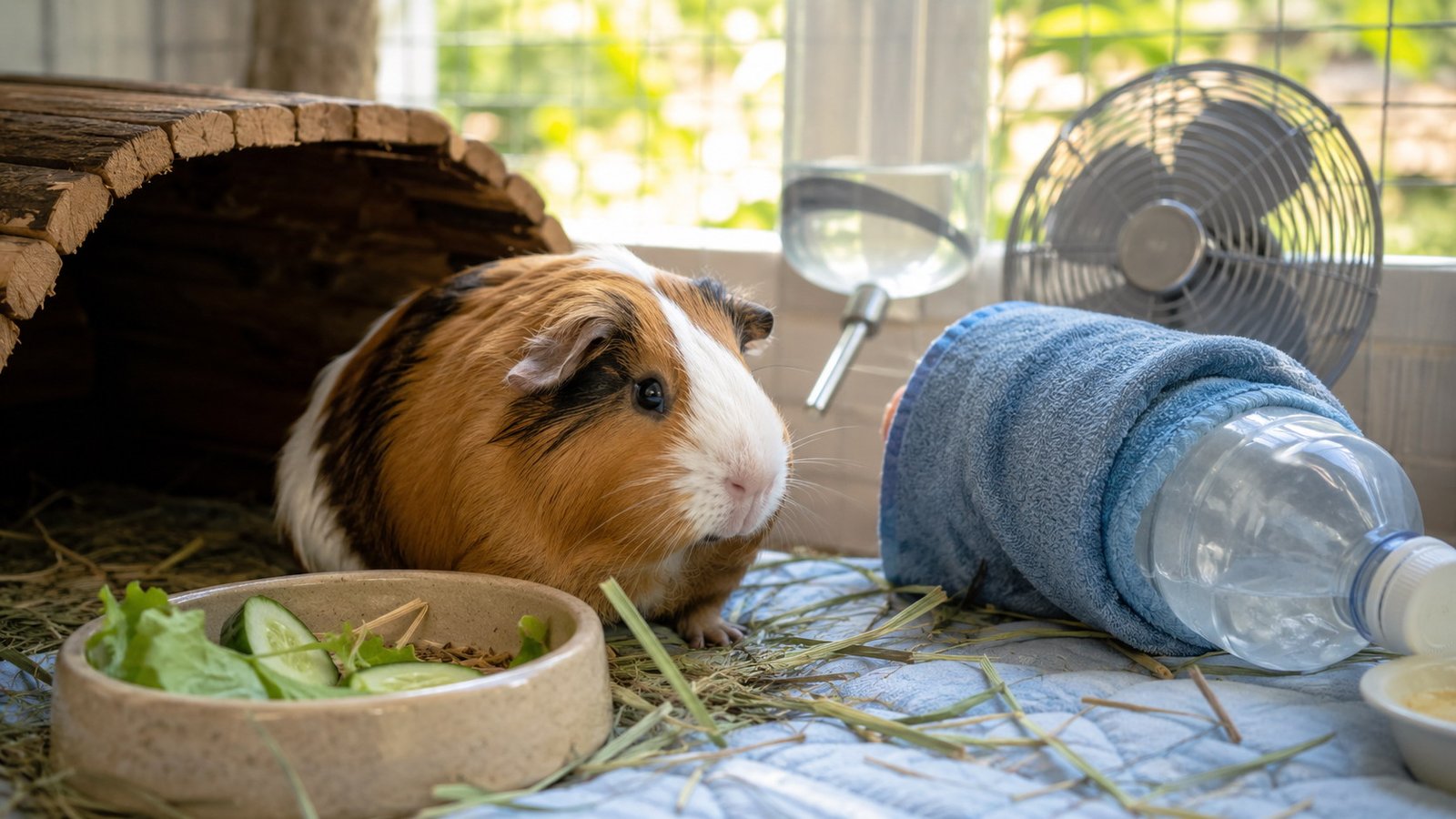
Guinea pigs are highly sensitive to heat. Unlike humans, they cannot sweat effectively to regulate their body temperature, making hot weather potentially dangerous. During warm days, guinea pigs can quickly become overheated, and in severe cases, heat stress may progress to life-threatening heatstroke.
The most effective refresh techniques for guinea pigs on a hot day include providing cool drinking water, improving airflow, using frozen water bottles wrapped in towels, offering water-rich vegetables, keeping their enclosure out of direct sunlight, and monitoring for signs of overheating. These simple strategies can help your guinea pig stay comfortable and healthy throughout the summer.
This guide covers everything guinea pig owners need to know about cooling their pets safely, avoiding common mistakes, and recognizing emergency warning signs.
In This Article
Why Guinea Pigs Struggle in Hot Weather
Guinea pigs originated in the cooler regions of South America and are naturally adapted to moderate temperatures. They generally thrive in temperatures between 65°F and 75°F (18°C to 24°C).
When temperatures rise above this range, their bodies have difficulty releasing excess heat.
Several factors increase heat sensitivity:
- Thick fur that traps heat
- Limited ability to sweat
- Small body size
- Poor tolerance for high humidity
- Enclosed habitats that can become heat traps
Long-haired breeds may be especially vulnerable because their coats retain more heat.
What Temperature Is Too Hot for Guinea Pigs?
The following table provides a useful guideline.
| Temperature | Risk Level | Recommended Action |
| 65–75°F (18–24°C) | Comfortable | Normal care |
| 75–80°F (24–27°C) | Mild caution | Increase monitoring |
| 80–85°F (27–29°C) | High risk | Use active cooling methods |
| Above 85°F (29°C) | Dangerous | Keep guinea pigs indoors and closely monitor |
| Above 90°F (32°C) | Very dangerous | High risk of heatstroke |
Humidity can make hot conditions even more stressful, even if temperatures seem moderate.
Best Refresh Techniques for Guinea Pig in Hot Day
1. Provide Constant Access to Fresh, Cool Water
Hydration is the first line of defense against overheating.
Refresh your guinea pig’s water several times throughout the day.
Helpful tips:
- Refill water bottles with cool water
- Clean bottles daily
- Use multiple water sources if you have several guinea pigs
- Check bottle nozzles regularly to ensure water flows properly
Avoid ice-cold water, which may discourage drinking.
2. Use Frozen Water Bottles as Cooling Stations
A frozen water bottle is one of the safest and most effective cooling tools.
How to Use It
- Fill a plastic bottle with water.
- Freeze it completely.
- Wrap it in a towel or fleece cover.
- Place it inside the enclosure.
Your guinea pig can lie beside the bottle whenever it wants to cool down.
Benefits include:
- No direct contact with ice
- Long-lasting cooling effect
- Allows self-regulation
Always provide enough space so your guinea pig can move away if it becomes too cool.
3. Offer Cooling Ceramic Tiles
Ceramic and stone surfaces remain naturally cooler than bedding materials.
Place:
- Ceramic floor tiles
- Marble slabs
- Granite cooling stones
inside the habitat.
Many guinea pigs enjoy stretching out on these surfaces during warm weather.
For extra cooling, refrigerate the tile briefly before placing it in the enclosure.
4. Improve Air Circulation Safely
Good airflow helps remove trapped heat.
Ways to improve ventilation include:
- Opening windows in a secure room
- Running an air conditioner
- Using ceiling fans to circulate room air
- Increasing enclosure ventilation
Avoid directing strong fans directly at guinea pigs because constant drafts can cause discomfort.
The goal is air circulation around the room, not blowing directly onto the animal.
5. Keep the Habitat Out of Direct Sunlight
Even a few hours of direct sunlight can dramatically increase cage temperatures.
Move enclosures away from:
- Sun-facing windows
- Glass doors
- Conservatories
- Outdoor patios without shade
Remember that sunlight shifts throughout the day.
Check your guinea pig’s enclosure regularly to ensure the sun has not moved onto the habitat.
6. Feed Water-Rich Vegetables
Certain vegetables provide both hydration and nutrition.
Excellent choices include:
- Cucumber
- Romaine lettuce
- Green leaf lettuce
- Bell peppers
- Celery (in moderation)
- Zucchini
These vegetables can help supplement water intake during hot weather.
Cooling Vegetable Guide
| Vegetable | Water Content | Cooling Benefit |
| Cucumber | Very high | Excellent |
| Romaine lettuce | High | Very good |
| Bell pepper | High | Very good |
| Zucchini | High | Good |
| Celery | High | Good |
Avoid sudden dietary changes and introduce new foods gradually.
7. Create Shaded Resting Areas
Every guinea pig enclosure should include cool hiding spots.
Good options include:
- Wooden hideouts
- Fleece tunnels
- Cardboard shelters
- Fabric-covered houses
Place these shelters away from heat sources.
Providing multiple hideouts allows guinea pigs to choose the most comfortable location.
8. Reduce Excess Bedding During Heat Waves
Some bedding materials retain heat.
During very hot weather, consider:
- Using thinner bedding layers
- Removing unnecessary fleece layers
- Increasing ventilation beneath bedding
However, never compromise cleanliness or comfort simply to reduce heat retention.
9. Bring Outdoor Guinea Pigs Indoors
Outdoor hutches can become dangerously hot even when the air temperature seems manageable.
During heat waves, the safest option is usually moving guinea pigs indoors where temperatures are controlled.
Indoor environments provide:
- Stable temperatures
- Better monitoring
- Reduced risk of heatstroke
- Easier access to cooling tools
10. Freeze Safe Treats for Enrichment
Some owners offer chilled vegetables from the refrigerator.
Examples include:
- Refrigerated cucumber slices
- Chilled bell pepper strips
- Cool lettuce leaves
These provide mild cooling while encouraging hydration.
Avoid feeding frozen vegetables directly, as extremely cold foods may upset digestion.
Emergency Cooling Techniques During Extreme Heat
If temperatures rise unexpectedly, these emergency measures can help reduce heat exposure.
Temporary Cooling Setup
Create a cooling zone using:
- Frozen water bottles
- Ceramic tiles
- Increased airflow
- Fresh vegetables
- Cool drinking water
Monitor your guinea pig frequently until temperatures decrease.
Damp Cloth Method
You may lightly dampen a cloth with cool water and place it nearby to help cool the surrounding air.
Do not soak your guinea pig or force water onto its body.
Sudden wetting can create stress and may not cool the animal effectively.
Signs Your Guinea Pig Is Overheating
Recognizing overheating early can save your guinea pig’s life.
Watch for:
- Rapid breathing
- Heavy panting
- Lethargy
- Weakness
- Excessive drooling
- Refusal to eat
- Red or hot ears
- Lying stretched out unusually
- Loss of coordination
These signs indicate the guinea pig is struggling to regulate its temperature.
Heatstroke in Guinea Pigs: A Veterinary Emergency
Heatstroke is a medical emergency requiring immediate veterinary attention.
Symptoms may include:
- Severe panting
- Collapse
- Seizures
- Unresponsiveness
- Extreme weakness
What to Do
- Move the guinea pig to a cooler area immediately.
- Provide airflow.
- Offer cool drinking water if the guinea pig is alert.
- Place cool (not ice-cold) surfaces nearby.
- Contact an emergency veterinarian immediately.
Do not place the guinea pig in ice water or attempt aggressive cooling.
Rapid temperature changes can worsen the situation.
Common Cooling Mistakes to Avoid
Many well-meaning owners accidentally increase risks.
Using Ice Directly
Direct contact with ice can cause discomfort and sudden temperature stress.
Always wrap frozen bottles or cooling packs.
Bathing Guinea Pigs Frequently
Routine bathing is not an effective cooling method and may create unnecessary stress.
Placing Cages Near Air Conditioner Vents
Strong cold drafts can make guinea pigs uncomfortable.
Maintain even room temperatures instead.
Ignoring Humidity
High humidity reduces the effectiveness of natural cooling mechanisms.
A moderately warm but humid day may be more dangerous than a hotter dry day.
Leaving Outdoor Hutches Unchecked
Temperatures inside hutches can rise much faster than ambient air temperatures.
Regular monitoring is essential.
Best Daily Summer Routine for Guinea Pig Owners
A simple summer routine helps prevent overheating.
Morning
- Replace water
- Offer fresh vegetables
- Check room temperature
- Ensure cooling stations are available
Afternoon
- Refresh water again
- Inspect cooling bottles
- Monitor for signs of heat stress
- Close blinds if sunlight enters the room
Evening
- Replace melted cooling bottles
- Remove uneaten vegetables
- Check overall comfort level
Consistency is often more effective than emergency cooling after problems develop.
How Long Can Guinea Pigs Stay in Hot Weather?
The answer depends on:
- Temperature
- Humidity
- Air circulation
- Access to water
- Overall health
Healthy guinea pigs may tolerate short periods of moderate warmth when proper cooling measures are available. However, prolonged exposure to temperatures above 85°F (29°C) significantly increases health risks.
Senior guinea pigs, young guinea pigs, overweight animals, and long-haired breeds require extra attention during hot weather.
Frequently Asked Questions
Can guinea pigs have ice cubes?
Small amounts of ice in drinking water are generally unnecessary. Cool water is usually sufficient and more comfortable for most guinea pigs.
Do fans cool guinea pigs?
Fans improve air circulation but should not blow directly onto guinea pigs for extended periods. Indirect airflow works best.
Can guinea pigs stay outside during summer?
They can, but outdoor temperatures must remain safe, and adequate shade, ventilation, and cooling measures are essential. During heat waves, indoor housing is safer.
What vegetables help cool guinea pigs down?
Water-rich vegetables such as cucumber, romaine lettuce, bell peppers, and zucchini can support hydration and comfort.
Should I spray my guinea pig with water?
Generally no. Spraying can cause stress and may not cool the animal effectively. Environmental cooling methods are safer.
What is the first sign of overheating in guinea pigs?
Rapid breathing, lethargy, and unusual stretching out are often among the earliest warning signs.
Final Thoughts on Refresh Techniques for Guinea Pig in Hot Day
Using effective refresh techniques for guinea pig in hot day conditions can dramatically reduce the risk of overheating and heatstroke. Fresh water, cooling tiles, frozen water bottles, shaded resting areas, proper airflow, and water-rich vegetables form the foundation of safe summer care.
The key is prevention. By preparing your guinea pig’s environment before temperatures become extreme, you can keep your pet comfortable, hydrated, and healthy throughout the hottest months of the year.

Passionate about pets and animal care, we shares trusted tips, fun facts, and practical advice to help pet lovers give their furry, feathered, and scaly companions the best life possible. From everyday care guides to fascinating animal insights, we’re dedicated to making pet information easy, helpful, and enjoyable for every reader.