
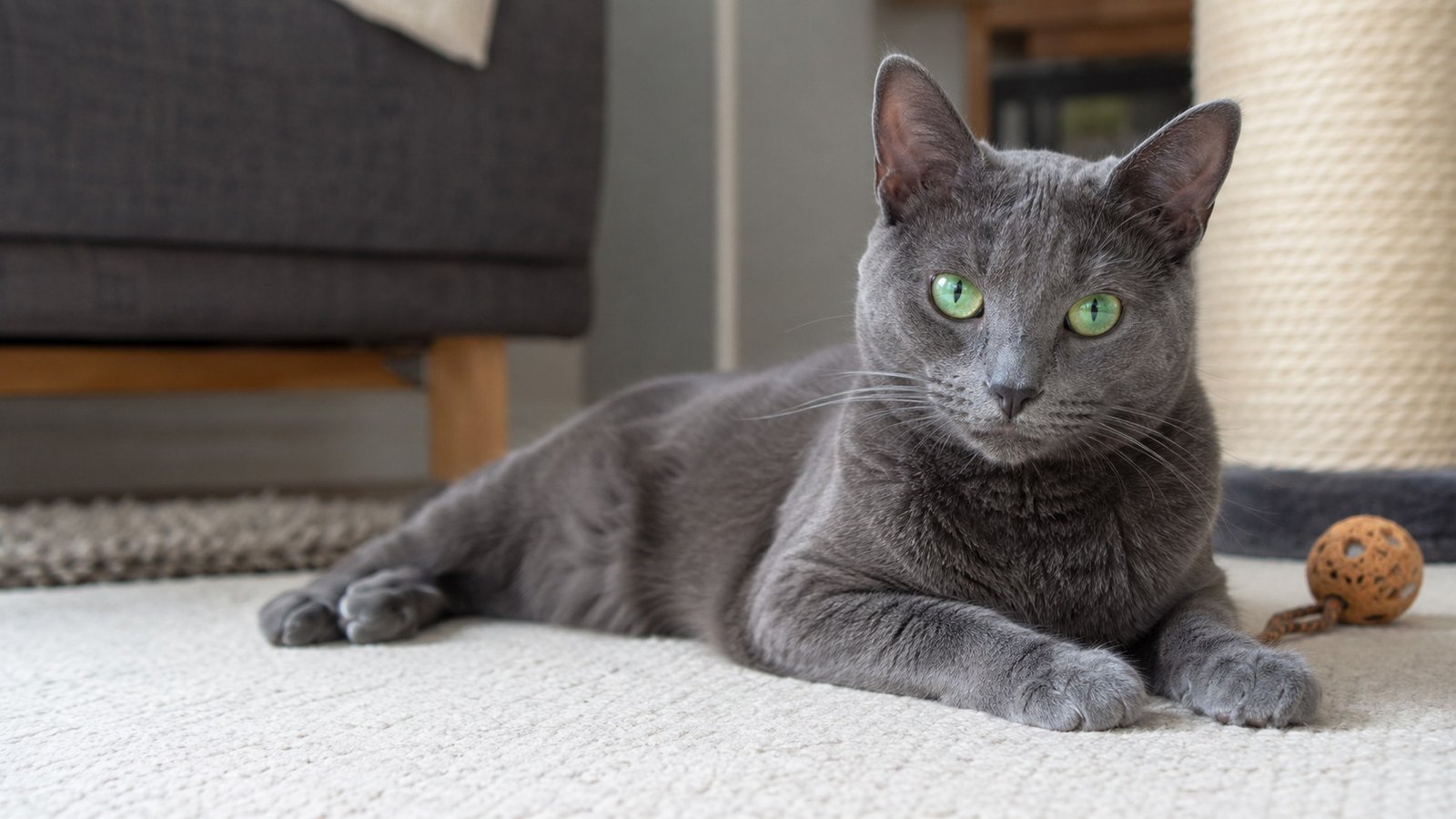
Adopting a Russian Blue cat can be one of the most rewarding decisions for cat lovers seeking an intelligent, affectionate, and elegant companion. These striking blue-gray cats are known for their emerald-green eyes, plush double coats, gentle personalities, and strong bonds with their families.
The most important tip for adopting a Russian Blue cat is to understand the breed’s temperament before bringing one home. Russian Blues thrive in calm, predictable environments and often form deep attachments to their owners. While they can be loving and playful, they may be reserved around strangers and need time to build trust.
This guide covers everything you need to know before adopting a Russian Blue, from choosing the right cat and preparing your home to understanding their care needs and avoiding common adoption mistakes.
In This Article
The Russian Blue Cat Breed
Before adopting any cat, it helps to understand what makes the breed unique.
The Russian Blue is a naturally occurring breed believed to have originated in northern Russia. They are admired for their luxurious silver-tipped blue coat, graceful appearance, and quiet intelligence.
Key Characteristics of Russian Blue Cats
| Trait | Description |
| Size | Medium-sized |
| Weight | Typically 7–15 pounds |
| Coat | Short, dense double coat |
| Shedding | Moderate |
| Energy Level | Moderate |
| Intelligence | High |
| Affection Level | High with family |
| Child-Friendly | Generally yes |
| Other Pets | Usually adapts well |
| Vocalization | Relatively quiet |
Russian Blues often combine independence with affection, making them excellent companions for individuals, couples, and families alike.
Why Adopt a Russian Blue Cat?
Many people are drawn to Russian Blues because they offer a balanced personality that fits various lifestyles.
Benefits of Owning a Russian Blue
Loyal and Affectionate
Russian Blues frequently develop strong bonds with their favorite people. Many owners describe them as devoted companions who enjoy following family members from room to room.
Intelligent and Trainable
These cats learn routines quickly and can often master:
- Clicker training
- Puzzle feeders
- Simple tricks
- Leash training
- Interactive games
Generally Quiet
Unlike some highly vocal breeds, Russian Blues tend to communicate with softer meows and body language.
Clean and Well-Groomed
Their short coat requires less maintenance than long-haired breeds, making grooming relatively simple.
Adaptable Indoor Cats
Russian Blues often thrive indoors when provided with adequate enrichment and exercise.
Things to Consider Before Adopting a Russian Blue
While Russian Blues are wonderful pets, they are not the perfect fit for every household.
They Can Be Shy Around Strangers
One of the most common surprises for new owners is how reserved Russian Blues can be.
Many will:
- Hide when guests arrive
- Observe strangers from a distance
- Warm up slowly to unfamiliar people
This behavior is normal and should not be mistaken for aggression.
They Prefer Routine
Russian Blues often appreciate consistency.
Sudden changes in:
- Feeding schedules
- Furniture placement
- Household members
- Daily routines
may temporarily cause stress.
They Need Mental Stimulation
Because they are highly intelligent, boredom can become an issue.
Without enrichment, some cats may develop unwanted behaviors such as:
- Excessive sleeping
- Scratching furniture
- Attention-seeking behavior
- Overeating
How to Find a Russian Blue Cat for Adoption
Many prospective owners assume they must purchase a kitten from a breeder, but adoption is often possible.
Check Animal Shelters
While purebred Russian Blues are less common in shelters, they do occasionally appear.
Ask local shelters about:
- Breed-specific intakes
- Waiting lists
- Upcoming adoption events
Contact Breed Rescue Organizations
Breed-focused rescues sometimes specialize in rehoming Russian Blues and Russian Blue mixes.
These organizations often:
- Evaluate temperament
- Provide medical care
- Match cats with suitable homes
Verify Breed Identification
Many gray cats are mistakenly labeled as Russian Blues.
True Russian Blues typically have:
- Solid blue-gray coats
- Green eyes in adulthood
- Dense plush fur
- Slender, elegant bodies
- Wedge-shaped heads
A shelter’s breed identification may be an educated guess rather than a guarantee.
Questions to Ask Before Adopting
Gathering information before adoption helps ensure a successful match.
Ask About Medical History
Important questions include:
- Is the cat vaccinated?
- Has the cat been spayed or neutered?
- Are there any known health conditions?
- Has the cat been microchipped?
- Has the cat received parasite treatment?
Ask About Personality
Learn about:
- Energy levels
- Social behavior
- Compatibility with children
- Reactions to other pets
- Litter box habits
Ask About Previous Living Conditions
Understanding a cat’s background can help ease the transition.
Questions may include:
- Was the cat previously indoor-only?
- Has the cat lived with dogs?
- Was the cat surrendered or rescued?
Preparing Your Home Before Adoption
Creating a safe environment before bringing your Russian Blue home reduces stress.
Essential Supplies Checklist
| Item | Purpose |
| Litter box | Bathroom area |
| Quality cat litter | Litter training support |
| Food and water bowls | Daily feeding |
| Scratching posts | Nail maintenance |
| Cat bed | Comfort and security |
| Carrier | Safe transportation |
| Toys | Mental stimulation |
| Cat tree | Climbing and exercise |
Create a Safe Room
A dedicated room helps your new cat adjust gradually.
Include:
- Food and water
- Litter box
- Hiding spots
- Soft bedding
- Toys
Allow your cat to explore the rest of the home at its own pace.
The First Week After Adoption
The adjustment period can significantly impact long-term success.
Give Your Cat Space
Many Russian Blues need time to feel secure.
Avoid:
- Constant handling
- Loud gatherings
- Forcing interactions
- Chasing or pulling them from hiding places
Establish a Routine
Consistency helps build confidence.
Try to maintain regular schedules for:
- Meals
- Play sessions
- Grooming
- Quiet time
Watch for Stress Signals
Signs of stress may include:
- Hiding excessively
- Reduced appetite
- Excessive grooming
- Litter box avoidance
- Withdrawal
Most newly adopted cats improve as they become comfortable.
Feeding Tips for Russian Blue Cats
Russian Blues are known for having healthy appetites.
Choose High-Quality Nutrition
Look for foods with:
- Animal-based protein
- Balanced nutrients
- Appropriate calorie levels
- Veterinary approval
Monitor Portion Sizes
Russian Blues can gain weight if overfed.
Helpful strategies include:
- Scheduled meals
- Measuring portions
- Using puzzle feeders
- Limiting treats
Keep Fresh Water Available
Hydration supports:
- Kidney health
- Urinary health
- Overall wellness
Many cats enjoy drinking from pet fountains.
Grooming and Maintenance
Russian Blues are relatively easy to groom.
Brushing
Weekly brushing is usually sufficient.
Benefits include:
- Removing loose fur
- Reducing shedding
- Preventing hairballs
- Strengthening your bond
Nail Care
Trim nails every few weeks or as needed.
Provide scratching posts to help maintain healthy claws naturally.
Dental Care
Dental disease is common among cats.
Good practices include:
- Veterinary dental checks
- Cat-safe toothpaste
- Dental treats approved by veterinarians
Enrichment and Exercise Tips
Mental stimulation is particularly important for Russian Blues.
Interactive Play
Engage your cat daily with:
- Wand toys
- Feather toys
- Ball toys
- Chase games
Aim for multiple short play sessions throughout the day.
Puzzle Feeders
Puzzle feeders encourage:
- Problem-solving
- Physical activity
- Slower eating
Vertical Space
Russian Blues often enjoy observing their surroundings from elevated locations.
Consider:
- Cat trees
- Wall shelves
- Window perches
Introducing a Russian Blue to Other Pets
Russian Blues can coexist peacefully with other animals when introductions are handled correctly.
Cat-to-Cat Introductions
Follow a gradual process:
- Separate initially.
- Exchange scents.
- Allow visual contact.
- Supervise interactions.
- Increase access gradually.
Introducing Dogs
Choose calm, cat-friendly dogs whenever possible.
Never force interactions.
Allow the cat to:
- Retreat safely
- Observe from elevated areas
- Set the pace
Common Mistakes New Owners Make
Avoiding these mistakes can make adoption smoother.
Rushing Socialization
Trust takes time. Let the relationship develop naturally.
Neglecting Enrichment
Even calm Russian Blues need mental challenges.
Overfeeding
Their love of food can contribute to obesity if portions are not monitored.
Ignoring Veterinary Care
Annual wellness visits remain important even for healthy cats.
Expecting Instant Affection
Some Russian Blues bond quickly, while others need weeks or months to fully settle in.
Potential Health Considerations
Russian Blues are generally considered a healthy breed.
However, all cats benefit from routine veterinary care.
Health Practices to Prioritize
- Annual examinations
- Vaccinations
- Dental care
- Weight management
- Parasite prevention
Regular monitoring helps detect issues early and supports a longer, healthier life.
Is a Russian Blue Right for You?
A Russian Blue may be an excellent fit if you:
- Want an affectionate but not overly demanding cat
- Prefer a relatively quiet pet
- Can provide a stable routine
- Enjoy interactive play and enrichment
- Have patience during adjustment periods
A different breed may be more suitable if you want a highly outgoing cat that immediately seeks attention from everyone it meets.
Frequently Asked Questions
Are Russian Blue cats good for first-time cat owners?
Yes. Russian Blues are generally intelligent, clean, and relatively easy to care for, making them a good choice for many first-time owners who can provide patience and routine.
Do Russian Blue cats get along with children?
Most Russian Blues do well with respectful children who understand how to interact gently with cats.
Can Russian Blue cats live in apartments?
Yes. Their moderate energy level and preference for indoor living often make them excellent apartment companions.
Do Russian Blue cats shed a lot?
They shed moderately. Weekly brushing usually helps keep shedding under control.
How long do Russian Blue cats live?
With proper care, many Russian Blues live into their mid-teens, and some reach 18 years or older.
Should I adopt an adult Russian Blue or a kitten?
Both can be wonderful choices. Adult cats often have established personalities, while kittens require more training, supervision, and socialization.
Final Thoughts on Tips for Adopting a Russian Blue Cat
The best tips for adopting a Russian Blue cat revolve around preparation, patience, and understanding the breed’s unique personality. These elegant cats are intelligent, loyal, and deeply devoted to their families, but they often need time to build trust and adjust to new environments.
By researching the breed, asking the right adoption questions, preparing your home carefully, and providing ongoing enrichment and veterinary care, you can create a successful transition and enjoy many years with a healthy, happy Russian Blue companion. A thoughtful adoption process not only benefits the cat but also helps build the strong bond that makes this breed so beloved among cat enthusiasts.

Passionate about pets and animal care, we shares trusted tips, fun facts, and practical advice to help pet lovers give their furry, feathered, and scaly companions the best life possible. From everyday care guides to fascinating animal insights, we’re dedicated to making pet information easy, helpful, and enjoyable for every reader.