
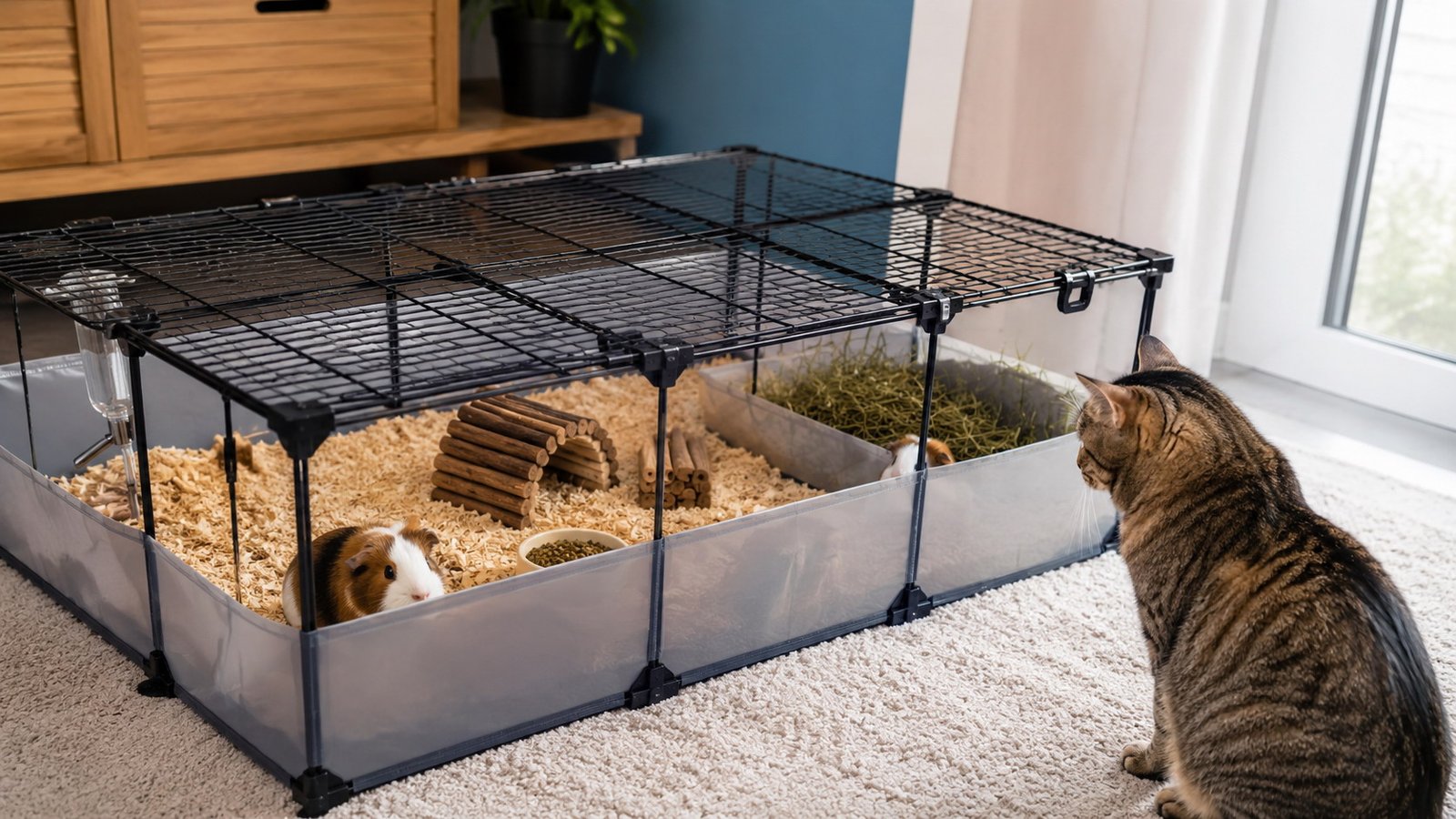
A guinea pig enclosure with a secure lid protects your guinea pigs from curious or predatory cats while also creating a safer, calmer living environment indoors. The best setups use strong metal grids, solid locks, proper ventilation, and enough floor space for guinea pigs to move comfortably without feeling trapped.
Cats and guinea pigs can live in the same home, but guinea pigs should never rely on “supervision only” for protection. Even gentle cats may paw, stalk, or stress small pets instinctively. A properly designed enclosure reduces injury risk, prevents escapes, and helps guinea pigs feel secure.
In This Article
Why Guinea Pigs Need a Cat-Proof Enclosure
Guinea pigs are prey animals. They react strongly to movement, staring, sudden sounds, and predators nearby. A cat sitting outside an open cage can create constant stress, even without direct contact.
A secure enclosure matters because it helps prevent:
- Physical injuries from paws or bites
- Stress-related health problems
- Escape attempts
- Overnight accidents when nobody is watching
- Food contamination from cats
- Cats climbing into open-top cages
Many traditional pet-store cages are not secure enough for homes with cats. Open-top habitats, low-sided cages, or lightweight wire tops can fail surprisingly easily.
What Makes an Enclosure Truly Cat-Proof?
A guinea pig enclosure with lid so cats can’t get in should include several important safety features.
1. A Strong, Rigid Lid
The lid should resist:
- Jumping
- Pawing
- Bending
- Chewing
- Weight from a cat lying on top
The safest materials include:
| Lid Material | Safety Level | Notes |
| Powder-coated metal grids | Excellent | Strong airflow and durability |
| Heavy wire mesh | Very good | Needs small spacing |
| Solid wood frame with mesh | Very good | DIY-friendly |
| Plastic snap-on tops | Moderate | Some cats can pry them open |
| Fabric covers | Poor | Not predator-proof |
Avoid flimsy wire lids that flex downward when a cat jumps on them.
2. Secure Locking Mechanisms
Cats can sometimes push lightweight lids open.
Good locking options include:
- Carabiner clips
- Cage latches
- Sliding locks
- Zip ties for fixed panels
- Cabinet-style safety latches
Simple “resting” lids without fasteners are risky in cat households.
3. Proper Ventilation
A fully enclosed plastic habitat may keep cats out, but it can trap heat and ammonia.
Guinea pigs need excellent airflow to avoid respiratory issues. Mesh or grid lids work far better than sealed tanks or aquariums.
4. Enough Space
Safety should never come at the expense of proper living space.
Minimum recommended floor space for guinea pigs:
| Number of Guinea Pigs | Recommended Minimum |
| 1 guinea pig | 7.5 sq ft |
| 2 guinea pigs | 10.5 sq ft |
| 3 guinea pigs | 13 sq ft or more |
Bigger is always better.
Many commercial cages marketed for guinea pigs are too small once a secure lid is added.
Best Types of Guinea Pig Enclosures With Lids
Different enclosure styles work better depending on your space, budget, and cat behavior.
C&C Cage With Reinforced Lid
A C&C cage (Cubes and Coroplast) is one of the most popular options among experienced guinea pig owners.
Why It Works Well
C&C cages offer:
- Large customizable layouts
- Strong metal grid structure
- Easy lid additions
- Excellent ventilation
- Affordable expansion options
How to Make It Cat-Proof
Use:
- Metal storage cube grids
- Coroplast base
- Hinged grid lid
- Multiple locking clips
For homes with highly active cats, reinforce the top with extra support bars so the lid cannot sag.
Pros
- Spacious
- Budget-friendly
- Easy DIY customization
- Great airflow
Cons
- Requires assembly
- Takes up floor space
- Not always aesthetically polished
Wooden Guinea Pig Hutch With Wire Top
Indoor wooden hutches can work very well if properly designed.
Look for models with:
- Strong mesh roofing
- Secure hinges
- Non-toxic finishes
- Easy-clean tray systems
These often blend better with furniture than metal-grid setups.
Pros
- Attractive appearance
- Sturdy structure
- Often includes storage
Cons
- Heavier
- More expensive
- Harder to expand
Metal Small-Animal Habitat With Top Access
Some metal-framed habitats designed for rabbits or guinea pigs include locking tops.
These are usually safer than small plastic starter cages.
Important features to check:
- Bar spacing
- Lid strength
- Ventilation
- Floor size
- Ease of cleaning
Avoid habitats where the top bends easily under pressure.
DIY Guinea Pig Enclosure With Lid
DIY builds are often the best option for multi-pet homes because you control the materials and dimensions.
Popular DIY Materials
- Wire storage grids
- Wood frames
- Hardware cloth mesh
- Coroplast
- Zip ties
- Hinges
- Carabiners
Basic DIY Design
A safe DIY enclosure usually includes:
- Raised side walls
- Rigid framed lid
- Locking access points
- Stable flooring
- Elevated stand if possible
Elevating the enclosure can discourage cats from hovering over guinea pigs constantly.
Should Guinea Pig Cages Be Elevated Off the Floor?
In many homes, yes.
Keeping the enclosure elevated can:
- Reduce cat access
- Lower stress for guinea pigs
- Improve visibility
- Make cleaning easier
A low cage directly on the floor may encourage stalking behavior from cats.
However, the stand must be extremely stable. Wobbly tables or lightweight furniture can create new dangers.
Can Cats and Guinea Pigs Safely Interact?
Direct interaction is generally not recommended.
Even calm cats can unintentionally injure guinea pigs through:
- Rough play
- Swatting
- Chasing
- Stress intimidation
Some cats ignore guinea pigs completely, while others become intensely fixated on them.
Signs Your Guinea Pig Feels Stressed Around Cats
Watch for:
- Freezing behavior
- Constant hiding
- Teeth chattering
- Refusing food
- Sudden running
- High alert posture
If your guinea pig rarely relaxes, the enclosure location may need adjustment.
Best Placement for a Guinea Pig Enclosure in a Home With Cats
Location matters almost as much as the enclosure itself.
Ideal Placement
Choose a spot that is:
- Quiet
- Well ventilated
- Away from direct sunlight
- Not near loud TVs or speakers
- Difficult for cats to jump onto
Avoid
- Hallways with heavy traffic
- Kitchens
- Near litter boxes
- Drafty windows
- Areas where cats patrol constantly
How to Stop Cats From Sitting on Top of the Cage
Some cats love elevated warm spots and may lounge on enclosure lids.
This creates stress for guinea pigs and may weaken the structure over time.
Helpful Solutions
- Use sloped lids
- Add harmless anti-cat barriers nearby
- Provide alternate cat perches
- Keep the cage taller
- Reinforce the top frame
- Place furniture strategically
Never place sharp deterrents or unsafe materials on the enclosure.
Common Mistakes People Make
Many guinea pig injuries happen because owners underestimate cat behavior.
Using an Open-Top Cage
Even lazy indoor cats can jump suddenly.
An open-top setup is never fully safe.
Choosing Tiny Commercial Cages
Some cages prioritize portability over welfare.
Small cages become even more cramped once hides, hay, and enrichment are added.
Using Glass Aquariums
Aquariums are poor long-term habitats for guinea pigs because airflow is inadequate.
Weak DIY Materials
Thin mesh or flexible plastic can fail under a cat’s weight.
Assuming Friendly Cats Are Safe
Predatory instincts can appear unexpectedly.
Even supervised meetings can go wrong quickly.
Best Bedding and Interior Setup for Secure Enclosures
A good enclosure is not just about protection. Guinea pigs still need enrichment and comfort.
Recommended Bedding
Popular safe options include:
- Fleece liners
- Paper bedding
- Aspen shavings
- Kiln-dried pine
Avoid cedar bedding because aromatic oils may irritate the respiratory system.
Important Interior Features
Include:
- Multiple hideouts
- Hay racks
- Water bottles
- Tunnels
- Chew toys
- Soft resting areas
Providing hiding places helps guinea pigs feel safer in homes with other pets.
How Big Should the Lid Open?
Cleaning access matters more than many people expect.
A lid should open wide enough to:
- Replace bedding
- Refill hay easily
- Handle guinea pigs safely
- Clean corners thoroughly
Small access doors often become frustrating over time.
Hinged lids usually work better than fully removable tops.
Are Multi-Level Guinea Pig Cages Safe?
Guinea pigs are not natural climbers like rats or ferrets.
Short ramps and lofts can work, but large vertical cages are not ideal.
For cat-proofing, wide single-level floor space is usually safer and easier to secure.
Quick Comparison: Best Enclosure Styles
| Enclosure Type | Cat Protection | Ventilation | Space Potential | DIY Friendly |
| C&C cage with lid | Excellent | Excellent | Excellent | Excellent |
| Wooden hutch | Very good | Good | Moderate | Moderate |
| Metal habitat | Good | Excellent | Moderate | Limited |
| Plastic starter cage | Fair | Fair | Poor | Poor |
| Aquarium/tank | Good physical barrier | Poor | Poor | No |
Step-by-Step: Building a Simple Cat-Proof Guinea Pig Cage
Step 1: Choose a Large Base
Aim for at least 10.5 square feet for two guinea pigs.
Step 2: Build Strong Walls
Use sturdy grids or wood panels tall enough to discourage reaching paws.
Step 3: Add a Reinforced Lid
Use metal grids or mesh with center supports.
Step 4: Install Locks
Secure every opening point.
Step 5: Create Hiding Areas
Add tunnels and covered hideouts so guinea pigs can retreat if startled.
Step 6: Test Stability
Push gently on all sides and top sections to ensure nothing shifts.
How to Introduce Cats to a Guinea Pig Enclosure Safely
Cats usually become less obsessed once the enclosure becomes a normal part of the environment.
Helpful Introduction Tips
- Keep initial distance
- Reward calm cat behavior
- Never allow pawing
- Supervise closely
- Cover parts of the enclosure if needed
Some cats eventually lose interest completely. Others always require management.
Best Practices for Long-Term Safety
Inspect the Enclosure Weekly
Check for:
- Loose clips
- Bent grids
- Weak hinges
- Rust
- Broken zip ties
Maintain Calm Routines
Guinea pigs thrive on predictable feeding and cleaning schedules.
Keep Emergency Supplies Ready
Have:
- Backup clips
- Extra grids
- Travel carrier
- Vet contact information
FAQ
What is the safest guinea pig enclosure for homes with cats?
A large C&C cage with a reinforced locking metal lid is often considered one of the safest and most practical options.
Can cats break into guinea pig cages?
Yes. Some cats can pry open weak lids, bend lightweight wire, or knock unsecured tops loose.
Are open-top guinea pig cages safe around cats?
No. Open-top cages are risky in homes with cats because guinea pigs remain exposed to jumping or swatting.
Can guinea pigs die from stress caused by cats?
Chronic stress can negatively affect guinea pig health. Constant fear may contribute to appetite loss, hiding behavior, and weakened wellbeing.
Is a mesh lid better than a solid lid?
Usually yes. Mesh lids provide better ventilation while still preventing cat access.
Should guinea pigs be kept in a separate room from cats?
If possible, separate spaces can reduce stress significantly. However, many households safely keep both pets using secure enclosures and careful supervision.
Quick Summary
A guinea pig enclosure with lid so cats can’t get in should prioritize both security and guinea pig welfare. Strong metal lids, reliable locks, proper ventilation, and generous floor space are essential. C&C cages with reinforced tops are among the best solutions because they combine safety, airflow, and flexibility.
Avoid open-top cages, tiny commercial habitats, and poorly ventilated tanks. Guinea pigs feel safest when they have hiding places, stable routines, and protection from constant predator stress.
With the right enclosure setup, cats and guinea pigs can safely live in the same home without putting your small pets at unnecessary risk.

Passionate about pets and animal care, we shares trusted tips, fun facts, and practical advice to help pet lovers give their furry, feathered, and scaly companions the best life possible. From everyday care guides to fascinating animal insights, we’re dedicated to making pet information easy, helpful, and enjoyable for every reader.