
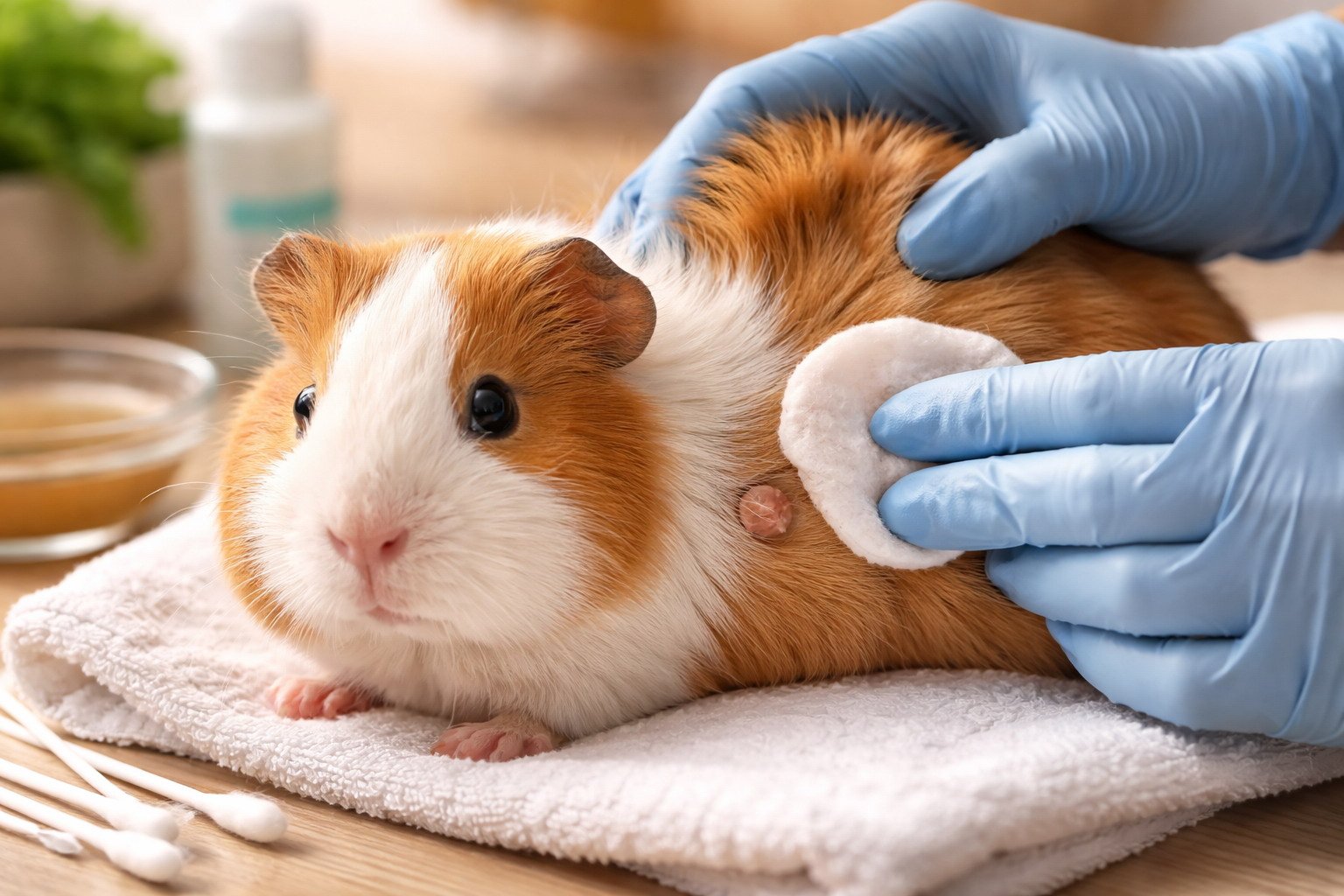
Learning how to treat guinea pig cyst at home often starts with worry. A small lump beneath the skin can feel alarming, especially when guinea pigs hide discomfort well. Home care can be appropriate in limited situations, but only when owners understand what a cyst is, why it forms, and how to recognize warning signs early. This guide focuses on safe, responsible home management, not risky shortcuts, so guinea pig welfare always stays first.
In This Article
Guinea Pig Cysts: A Home-Care Perspective
Guinea pig cysts are enclosed sacs filled with fluid, keratin, or semi-solid material that develop beneath the skin or internally. Many owners confuse cysts with tumors or abscesses, yet each condition requires a very different response. Knowing the difference determines whether home observation is reasonable or veterinary care is essential.
What Exactly Is a Guinea Pig Cyst?
Cysts form when:
- Skin glands become blocked
- Hair follicles fail to drain properly
- Hormonal imbalances stimulate abnormal growth
Common locations include:
- Neck and shoulders
- Flanks and lower abdomen
- Ovarian region in female guinea pigs
Types of Cysts Seen in Guinea Pigs
- Sebaceous cysts – usually slow-growing and painless
- Follicular cysts – linked to blocked hair follicles
- Ovarian cysts – internal and not treatable at home
- Abscesses – often mistaken for cysts but dangerous if mismanaged
“Most guinea pig skin cysts are benign, but misidentification can lead to serious complications.”
— Exotic Small Mammal Veterinary Association
Why Home Awareness Matters
Early recognition allows owners to:
- Monitor growth patterns safely
- Prevent infection through hygiene
- Avoid harmful practices like squeezing
Home care only suits small, non-infected, external cysts that cause no pain or behavior change.
Common Causes of Guinea Pig Cysts You Can Manage at Home
Understanding what leads to cyst formation helps reduce recurrence and supports gentle home management.
Primary Contributing Factors
- Poor bedding hygiene leading to blocked pores
- High-fat diets causing excess oil secretion
- Hormonal changes, especially in females over 18 months
- Minor skin trauma from rough surfaces or cage mates
Environmental Triggers
- Damp bedding increasing bacterial buildup
- Wire flooring causing skin irritation
- Limited cage cleaning schedules
Cyst vs Abscess: A Critical Difference
| Feature | Cyst | Abscess |
| Pain | Usually painless | Painful |
| Texture | Soft or rubbery | Firm |
| Contents | Thick, whitish | Pus |
| Home care | Sometimes safe | Never recommended |
Mistaking an abscess for a cyst remains one of the most common and dangerous home-care errors.
How to Identify a Guinea Pig Cyst at Home
Correct identification forms the foundation of how to treat guinea pig cyst at home safely. Observation should be calm, consistent, and stress-free for the animal.
Physical Signs Suggesting a Cyst
- Smooth, round lump beneath intact skin
- Slow growth over weeks or months
- No heat, redness, or discharge
- Normal appetite and movement
Behavioral Clues Worth Noticing
- No squealing or flinching when touched
- Normal grooming habits
- Stable weight and energy levels
Warning Signs That Home Treatment Is Unsafe
- Rapid enlargement
- Warmth or foul odor
- Hair loss or broken skin
- Lethargy or appetite changes
Important: Any cyst near the abdomen in female guinea pigs may indicate ovarian cysts, which cannot be treated at home and require veterinary diagnosis.
Quick At-Home Observation Checklist
- Size measured weekly
- Skin condition checked daily
- Guinea pig behavior monitored during handling
Accurate observation protects guinea pigs from unnecessary pain and prevents minor issues from escalating into emergencies.
How to Treat Guinea Pig Cyst at Home Safely
Understanding how to treat guinea pig cyst at home begins with knowing when home care is appropriate and when intervention could put your pet at risk. Home treatment focuses on supportive care, not removal or drainage. Gentle management can help reduce irritation and prevent infection while the cyst is monitored.
When Home Treatment Is Appropriate
Home care may be considered only if:
- The cyst is small and external
- Skin remains intact with no discharge
- The guinea pig behaves normally
- Growth progresses slowly and consistently
Situations that rule out home treatment:
- Bleeding or open wounds
- Heat or swelling
- Rapid enlargement
- Lumps near the ovaries
Creating a Safe Home-Care Environment
Successful treatment depends on cleanliness and calm handling.
Preparation essentials
- Clean towel for restraint
- Warm (not hot) water
- Soft cloth or cotton pad
- Guinea pig–safe antiseptic (vet-approved)
Stress management matters just as much as hygiene. Quiet surroundings, familiar smells, and short sessions reduce anxiety and lower cortisol levels that slow healing.
“Stress weakens immune response in small mammals, making even minor skin issues worse.”
— Journal of Exotic Animal Medicine
Home Remedies Commonly Used to Treat Guinea Pig Cysts
Home remedies for guinea pig cysts should be supportive, gentle, and non-invasive. These methods aim to soothe skin and encourage natural drainage without forcing changes.
Warm Compress Therapy
A warm compress improves circulation around the cyst.
How it helps
- Softens thick cyst material
- Reduces surface tension
- Encourages natural stabilization
Safe method
- Use warm water only
- Apply gently for 5–7 minutes
- Repeat once daily
Safe Cleaning Solutions
Only mild, guinea pig–approved products should ever touch the skin.
Suitable options
- Diluted chlorhexidine (0.05%)
- Saline solution
- Warm sterile water
Never use
- Hydrogen peroxide
- Alcohol
- Essential oils
- Human antibiotic creams
Dietary Support for Skin Health
Healthy skin supports healing from the inside.
Nutritional focus
- High vitamin C intake (20–30 mg daily)
- Unlimited grass hay
- Fresh leafy greens like romaine and cilantro
| Nutrient | Benefit for Cysts |
| Vitamin C | Supports collagen repair |
| Fiber | Maintains immune balance |
| Hydration | Encourages toxin elimination |
Step-by-Step Guide: How to Treat Guinea Pig Cyst at Home
Careful technique prevents harm. This step-by-step approach emphasizes observation rather than intervention.
Gentle Restraint Techniques
Guinea pigs spook easily.
Best practices
- Wrap loosely in a towel
- Support the hindquarters
- Keep the head exposed
Talking softly during care helps reduce fear.
Proper Cleaning and Monitoring Routine
- Inspect the cyst daily
- Clean surrounding skin every other day
- Apply warm compress once per day
- Check for changes in size or color
Consistency Over Intensity
Improvements typically appear gradually.
Expected observations
- Stable or slightly reduced size over 1–2 weeks
- No skin irritation
- Continued normal appetite
Case insight:
A 2-year-old boar with a shoulder sebaceous cyst showed no growth over six weeks when owners used warm compresses, improved cage hygiene, and increased vitamin C intake under veterinary guidance.
Simple Home Monitoring Log
| Date | Cyst Size | Skin Condition | Behavior |
| Day 1 | 1 cm | Smooth | Normal |
| Day 7 | 1 cm | No change | Normal |
| Day 14 | Slightly soft | Healthy | Normal |
Tracking patterns prevents missed warning signs and provides valuable information if veterinary help becomes necessary.
Mistakes to Avoid When Learning to Treat Guinea Pig Cyst at Home
Even with good intentions, mistakes happen. Knowing what not to do is just as important as understanding how to treat guinea pig cyst at home safely.
Dangerous Actions That Can Worsen the Condition
- Squeezing or popping the cyst
This can force bacteria deeper into the tissue and turn a cyst into a severe abscess. - Using sharp objects or needles
Puncturing skin at home introduces infection and causes unnecessary pain. - Applying human medications
Creams containing antibiotics, steroids, or painkillers may be toxic to guinea pigs.
Common Product Misuse
Products often suggested online but unsafe include:
- Tea tree oil
- Apple cider vinegar
- Aloe vera gels with additives
- Antibacterial soaps
“Guinea pig skin absorbs substances quickly, increasing the risk of toxicity from topical products.”
— Exotic Animal Formulary
Ignoring Behavioral Changes
Subtle signs often overlooked:
- Reduced interest in food
- Less movement
- Teeth grinding (sign of pain)
Mistakes usually stem from rushing. Patience protects guinea pig health far better than aggressive action.
Monitoring Healing Progress After Home Treatment
Monitoring determines whether home care is helping or quietly failing. This stage transforms observation into informed decision-making.
What Normal Healing Looks Like
- Cyst remains the same size or shrinks slightly
- Skin stays intact and cool
- No discharge or odor
- Guinea pig remains active and alert
Typical Healing Timeline
| Timeframe | What to Expect |
| Week 1 | Cyst softens or stabilizes |
| Week 2–3 | No increase in size |
| Week 4 | Consistent appearance |
Healing does not always mean disappearance. Many benign cysts remain permanently but harmlessly.
Signs Progress Is Not Normal
- Sudden growth
- Redness or heat
- Crust forming over the skin
- Change in walking or posture
Keeping a simple photo record once per week helps spot subtle differences the eye may miss.
When Home Care Is No Longer Enough
Knowing when to stop home treatment is a vital part of how to treat guinea pig cyst at home responsibly. Some conditions simply cannot be managed without professional help.
Immediate Veterinary Attention Is Needed If
- The cyst bursts on its own
- Pus or blood appears
- Weight loss occurs
- The lump is near the abdomen in females
- Pain responses appear during handling
Conditions That Require Professional Care
- Ovarian cysts
- Abscesses
- Recurrent or rapidly growing cysts
- Cysts interfering with movement
Preventing Future Cysts
Long-term prevention focuses on daily care.
Key prevention practices
- Clean bedding at least twice weekly
- Provide smooth, solid flooring
- Maintain vitamin C–rich diet
- Schedule annual exotic vet checkups
Responsible ownership means recognizing limits. Home care supports health, but professional treatment saves lives when conditions escalate.
For additional medically reviewed guidance on guinea pig skin conditions and cyst care, consult the Merck Veterinary Manual, a trusted global reference for animal health information.
Final Thoughts
Knowing how to treat guinea pig cyst at home means choosing gentle management over risky intervention, observation over force, and welfare over convenience. With patience, hygiene, and informed judgment, many guinea pigs live comfortably even with minor cysts—while serious cases receive the expert care they deserve.

Passionate about pets and animal care, we shares trusted tips, fun facts, and practical advice to help pet lovers give their furry, feathered, and scaly companions the best life possible. From everyday care guides to fascinating animal insights, we’re dedicated to making pet information easy, helpful, and enjoyable for every reader.