
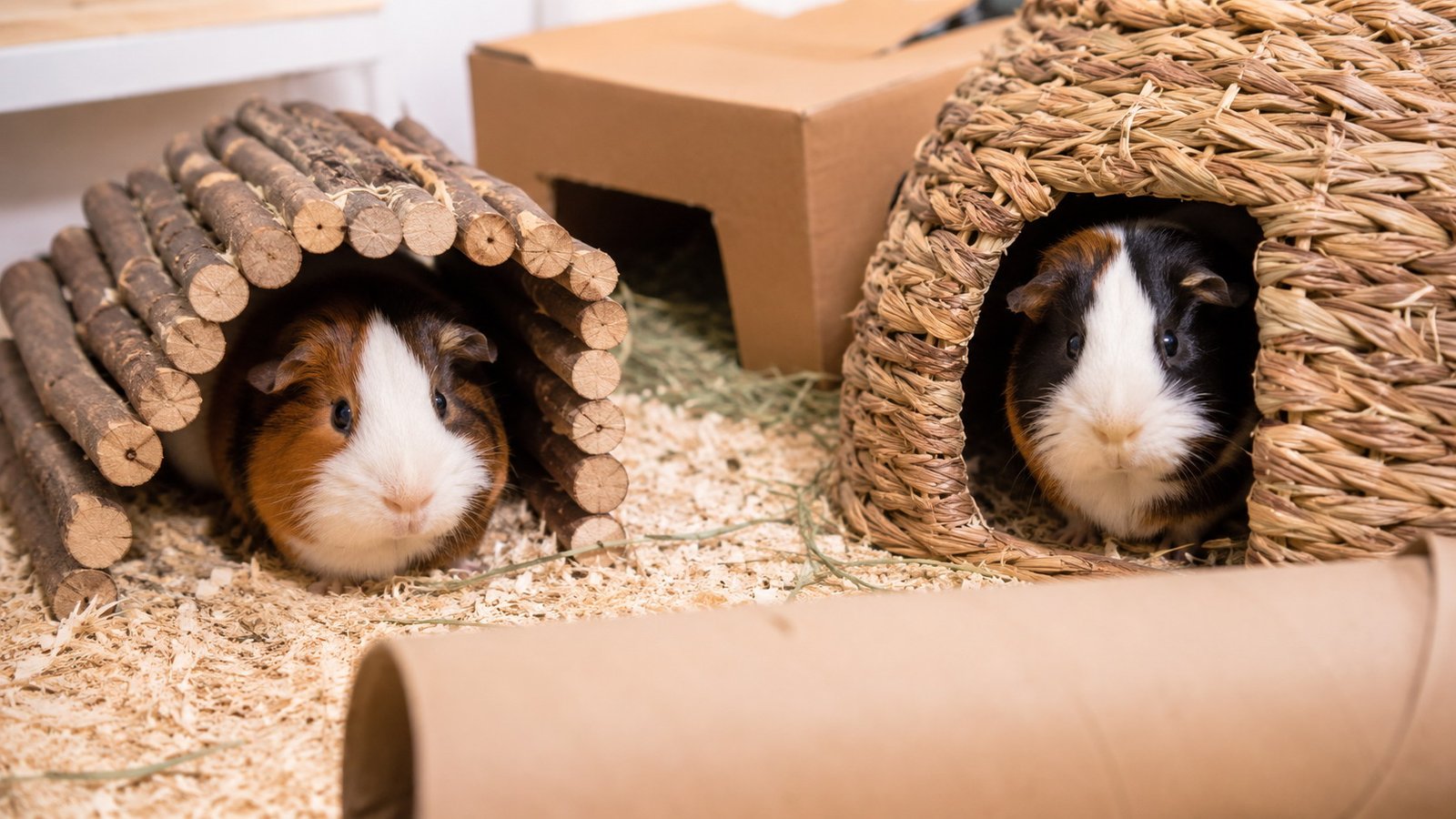
Guinea pigs are prey animals by nature, which means they instinctively look for safe places to hide when they feel nervous, tired, overstimulated, or simply want privacy. Providing easy access guinea pig hiding places is one of the most important parts of creating a healthy, low-stress habitat.
A good hiding spot should be:
- Easy for your guinea pig to enter and exit
- Large enough to prevent getting stuck
- Safe to chew
- Comfortable and secure
- Accessible for cleaning and health checks
Without proper hideouts, guinea pigs may become stressed, territorial, or anxious. The right setup helps them feel secure, encourages natural behavior, and can even improve social bonding between cage mates.
This guide covers everything you need to know about guinea pig hiding places, including the best materials, ideal designs, common mistakes, DIY options, and how to create a stress-free cage layout.
In This Article
Why Guinea Pigs Need Hiding Places
In the wild, guinea pigs survive by staying close to cover such as tall grass, tunnels, and sheltered spaces. Domestic guinea pigs still carry those instincts.
Hiding places help guinea pigs:
- Feel protected from perceived danger
- Sleep and rest comfortably
- Reduce stress and anxiety
- Avoid conflict with cage mates
- Adjust to new environments
- Build confidence over time
A guinea pig without adequate shelter may:
- Freeze frequently
- Hide in corners excessively
- Become skittish around humans
- Show signs of stress-related behavior
- Refuse to explore the cage
Even friendly and social guinea pigs need personal spaces throughout the day.
What Makes a Good Easy Access Guinea Pig Hiding Place?
Not all hideouts are equally safe or practical. Some commercial products look appealing but create problems for larger guinea pigs or bonded pairs.
Key Features to Look For
The best guinea pig hiding places typically include:
| Feature | Why It Matters |
| Wide entrance | Prevents getting stuck |
| Multiple exits | Reduces territorial trapping |
| Low entry height | Easier for older or injured guinea pigs |
| Good ventilation | Prevents overheating |
| Smooth interior | Avoids injuries |
| Chew-safe materials | Essential for dental safety |
| Easy cleaning | Helps maintain hygiene |
Ideal Hideout Size
A hideout should allow your guinea pig to:
- Turn around comfortably
- Enter without squeezing
- Stretch naturally
- Rest without crowding
For pairs or groups, provide multiple shelters rather than forcing guinea pigs to share one small space.
Best Types of Easy Access Guinea Pig Hiding Places
Different hideouts serve different purposes. Combining several styles often creates the best environment.
Open-Ended Wooden Hideouts
Wooden hideouts are among the most popular choices because they feel natural and are generally safe to chew.
Benefits
- Durable
- Natural appearance
- Good airflow
- Comfortable texture
- Encourages chewing behavior
Best Design Features
- Two entrances
- Wide openings
- Flat roof for lounging
- Untreated wood
Look for kiln-dried pine or aspen products designed specifically for small animals.
Avoid:
- Cedar wood
- Chemically treated lumber
- Painted surfaces
- Sharp edges
Fleece Forests and Curtain Hideaways
A fleece forest uses strips of soft fleece hanging from a frame, creating partial cover without trapping the guinea pig inside.
These are excellent easy access guinea pig hiding places because:
- Guinea pigs can move through them freely
- They reduce stress without complete isolation
- Timid guinea pigs often feel safer exploring
- They work well in smaller cages
Best Uses
- Transitional hiding spots
- Nervous guinea pigs
- Multi-pig setups
- Enrichment zones
Choose anti-pill fleece and wash it regularly to prevent odor buildup.
Tunnel Systems
Guinea pigs naturally enjoy running through tunnels and enclosed pathways.
Popular Tunnel Materials
- Fleece tunnels
- Collapsible fabric tunnels
- Cardboard tunnels
- Grass tunnels
- Flexible plastic tunnels with wide diameters
Important Safety Tips
Avoid narrow tubes designed for hamsters or rats. Guinea pigs are much larger and can easily get stuck.
A safe tunnel should:
- Allow full turning movement
- Have airflow
- Stay stable during movement
- Be easy to clean
Tunnels also help reduce social tension by allowing guinea pigs to avoid each other without confrontation.
Cardboard Box Hideouts
Simple cardboard boxes remain one of the best budget-friendly guinea pig shelters.
Why Guinea Pigs Love Them
- Soft enough to chew
- Replaceable
- Customizable
- Lightweight
- Naturally insulating
DIY Ideas
You can easily make:
- Two-door hideouts
- Tunnel-box combinations
- Multi-room shelters
- Window openings for ventilation
Use plain cardboard only.
Avoid:
- Heavy ink coatings
- Glossy finishes
- Tape residue
- Staples
Replace boxes regularly if they become soaked or heavily chewed.
Soft Fabric Caves
Fabric caves provide warmth and comfort, especially in cooler environments.
Good for:
- Senior guinea pigs
- Hairless breeds
- Cold climates
- Quiet resting areas
Potential Downsides
Some fabric caves collapse too easily or trap heat.
Choose caves with:
- Reinforced openings
- Breathable fabric
- Machine-washable materials
- Wide entrances
Monitor for chewing damage, loose threads, or moisture buildup.
Grass and Hay Hideouts
Edible hideouts combine shelter with enrichment.
These are usually made from:
- Timothy hay
- Woven grass
- Natural straw
Advantages
- Encourages foraging
- Reduces boredom
- Safe chewing outlet
- Mimics natural behavior
Drawbacks
- Short lifespan
- Harder to sanitize
- May mold if wet
These work best as temporary enrichment rather than permanent shelters.
Best Cage Layout for Guinea Pig Hideouts
Placement matters just as much as the hideouts themselves.
A poorly arranged cage can create territorial stress even with multiple shelters.
Ideal Hideout Placement Strategy
A balanced layout typically includes:
- One primary hideout per guinea pig
- One extra shelter
- Open pathways between shelters
- Separate food and resting areas
- Multiple escape routes
Example Layout
| Cage Area | Recommended Feature |
| Corner zone | Wooden hide |
| Middle area | Tunnel |
| Feeding area | Open fleece cover |
| Quiet side | Soft bed or cave |
| Activity area | Chew toys and enrichment |
Avoid placing all hideouts in one crowded corner.
How Many Hiding Places Do Guinea Pigs Need?
A common guideline is:
Provide at least one hideout per guinea pig, plus one extra.
For example:
- 2 guinea pigs = 3 hiding spots
- 3 guinea pigs = 4 hiding spots
This helps reduce:
- Dominance behavior
- Resource guarding
- Stress during feeding
- Competition for resting areas
Multiple exits are especially important in bonded groups.
Best Materials for Guinea Pig Hideouts
Material safety matters because guinea pigs chew frequently.
Safe Materials
Generally safe options include:
- Untreated wood
- Anti-pill fleece
- Cardboard
- Timothy hay
- Natural grass fiber
- Aspen wood
Materials to Avoid
Avoid hideouts made from:
- Cedar wood
- Treated lumber
- Toxic glue
- Fragile plastic
- Sharp metal
- Foam padding
- Synthetic fibers that unravel easily
If a hideout has strong chemical odors, avoid using it.
Easy DIY Guinea Pig Hiding Place Ideas
DIY hideouts can be inexpensive, safe, and highly customizable.
Simple Cardboard House
Materials
- Plain cardboard box
- Scissors
- Non-toxic glue (optional)
Steps
- Cut two large entrances
- Add ventilation holes
- Remove loose tape
- Place fleece inside
- Replace when worn
Fleece Drape Shelter
Materials
- Small stool or grid frame
- Fleece blanket
Setup
Drape fleece loosely over the frame, leaving wide openings.
This creates a low-stress shelter with excellent accessibility.
Paper Bag Hideout
Large untreated paper bags can become temporary shelters.
Cut:
- One large entrance
- One side escape hole
Replace immediately if wet or heavily chewed.
Common Mistakes With Guinea Pig Hiding Places
Even caring owners sometimes create hideout problems unintentionally.
Using Only One Hideout
A single shelter can increase competition and bullying.
Dominant guinea pigs may block access, especially in smaller cages.
Choosing Small Openings
Tiny entrances may:
- Trap larger guinea pigs
- Cause panic
- Lead to injuries
- Discourage use
Always prioritize wide, open access.
Overcrowding the Cage
Too many large hideouts reduce exercise space.
Guinea pigs still need:
- Running paths
- Open visibility
- Exploration zones
Balance shelter with mobility.
Ignoring Cleaning Needs
Hideouts collect:
- Urine
- Hair
- Food debris
- Moisture
Dirty shelters can contribute to odor and bacterial growth.
Clean washable items weekly and spot-clean daily.
Using Unsafe Chew Materials
Guinea pigs explore with their teeth.
Avoid:
- Painted wood
- Toxic dyes
- Glue-heavy products
- Decorative craft materials
Natural, pet-safe materials are always the better choice.
Best Practices for Stress-Free Guinea Pig Hideouts
Small setup changes can make a huge difference in guinea pig comfort.
Use Multiple Escape Routes
Two-door hideouts reduce feelings of entrapment.
This is especially important in:
- Bonded pairs
- Male groups
- Multi-level cages
Combine Covered and Open Areas
Guinea pigs feel safest when they can move between:
- Full shelter
- Partial cover
- Open space
A varied environment encourages healthy exploration.
Rotate Enrichment Items
Changing tunnels or hideout locations occasionally helps prevent boredom.
Avoid major cage rearrangements too frequently, though, since guinea pigs also value familiarity.
Observe Individual Preferences
Some guinea pigs prefer:
- Dark enclosed caves
- Soft fleece areas
- Elevated platforms
- Tunnel systems
Watch where your guinea pig naturally rests most often.
Easy Access Hideouts for Senior or Disabled Guinea Pigs
Older guinea pigs may struggle with:
- High entrances
- Slippery surfaces
- Narrow tunnels
- Steep ramps
Senior-Friendly Features
Look for:
- Low step-in height
- Wide doors
- Soft flooring
- Stable construction
- Warm resting materials
Soft fleece pads and open-front wooden shelters often work best.
Are Store-Bought or DIY Hideouts Better?
Both can work well if designed safely.
| Store-Bought Hideouts | DIY Hideouts |
| More durable | Lower cost |
| Professional design | Highly customizable |
| Easier cleaning | Easy to replace |
| Better appearance | Creative flexibility |
The best choice depends on:
- Cage size
- Budget
- Cleaning preferences
- Guinea pig behavior
Many owners use a combination of both.
Quick Summary: Best Easy Access Guinea Pig Hiding Places
Here are some of the safest and most practical options:
| Hideout Type | Best For | Main Benefit |
| Wooden shelters | Everyday use | Durable and chew-safe |
| Fleece forests | Nervous guinea pigs | Encourages exploration |
| Tunnels | Active guinea pigs | Exercise and enrichment |
| Cardboard boxes | Budget setups | Easy customization |
| Fabric caves | Senior pigs | Warmth and comfort |
| Hay hideouts | Enrichment | Edible stimulation |
FAQ About Easy Access Guinea Pig Hiding Places
What is the best hideout for guinea pigs?
The best hideout is one with wide openings, safe materials, good airflow, and enough room for comfortable movement. Wooden shelters with two entrances are often the most practical option.
Can guinea pigs have too many hiding places?
Yes. Too many large hideouts can reduce exercise space and limit movement. The goal is balance between shelter and open running areas.
Do guinea pigs need hideouts at night?
Yes. Guinea pigs benefit from constant access to hiding places both day and night. Shelter helps them feel secure while resting.
Are plastic hideouts safe for guinea pigs?
Some large, smooth plastic hideouts are safe, but they can trap heat and may become heavily chewed. Avoid sharp edges and narrow designs.
Should bonded guinea pigs share one hideout?
Sometimes, but each guinea pig should still have access to its own shelter. Shared hideouts should never be the only option available.
How often should guinea pig hideouts be cleaned?
Spot-clean daily and fully clean weekly. Replace cardboard and heavily chewed materials regularly.
Final Thoughts on Easy Access Guinea Pig Hiding Places
Creating safe, comfortable, and easy access guinea pig hiding places is one of the simplest ways to improve your pet’s quality of life. The right hideouts reduce stress, encourage natural behavior, and help guinea pigs feel secure in their environment.
Focus on:
- Wide entrances
- Safe chew-friendly materials
- Multiple shelters
- Easy movement pathways
- Regular cleaning
A thoughtful cage setup doesn’t need to be expensive or complicated. Even simple cardboard boxes and fleece-covered spaces can provide the safety and comfort guinea pigs instinctively seek every day.

Passionate about pets and animal care, we shares trusted tips, fun facts, and practical advice to help pet lovers give their furry, feathered, and scaly companions the best life possible. From everyday care guides to fascinating animal insights, we’re dedicated to making pet information easy, helpful, and enjoyable for every reader.