
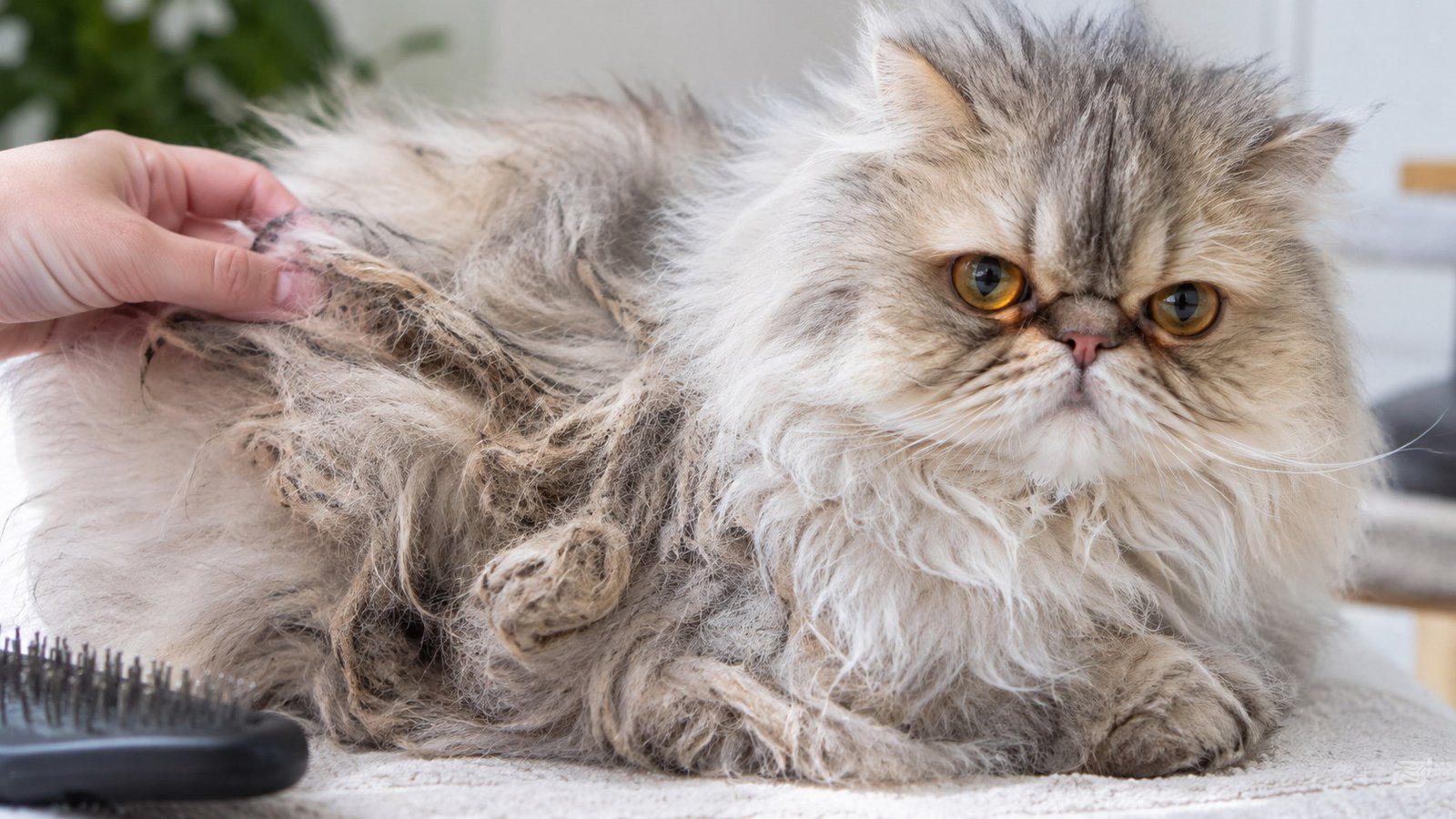
Persian cat matted fur is a common grooming problem that can quickly turn a beautiful, fluffy coat into a tangled, uncomfortable mess. Because Persian cats have long hair and a dense undercoat, loose fur can become trapped, twist together, and form stubborn mats that are difficult to remove without causing discomfort.
The good news is that most matting problems can be reduced with consistent grooming and early attention. Understanding why mats form, recognizing when they become painful, and knowing how to handle them safely can make a significant difference in your cat’s comfort and overall health.
This guide explains the main causes of matted fur in Persian cats, the warning signs every owner should recognize, and practical ways to keep your cat’s coat soft, clean, and manageable. You’ll also learn when home grooming is appropriate and when it is safer to seek professional help.
In This Article
Why Is Persian Cat Matted Fur Such a Common Problem?
Persian cats are known for their luxurious coats, rounded faces, and fluffy appearance. However, maintaining that beautiful fur requires more attention than grooming many short-haired breeds.
Their long outer coat and dense undercoat create the perfect conditions for tangles when loose hairs are not removed regularly. Once several strands twist together, they can form small knots that gradually become tighter and more difficult to manage.
Long Hair and a Dense Undercoat Create the Perfect Conditions for Mats
Persian cats shed loose hairs throughout the year, with shedding patterns often changing seasonally. Instead of falling away from the body, some of these hairs become trapped beneath the surrounding coat.
When trapped hairs mix with healthy fur, they can form tangles that become denser with movement. Everyday activities such as walking, stretching, sleeping, and grooming can cause these tangles to tighten.
Regular combing is essential because brushing only the visible surface may leave hidden knots in the undercoat. A Persian cat’s coat can look smooth from above while small mats are developing closer to the skin.
Where Do Persian Cats Develop Mats Most Often?
Certain areas of a Persian cat’s body are more likely to develop tangles because the fur experiences friction, collects debris, or is difficult for the cat to groom.
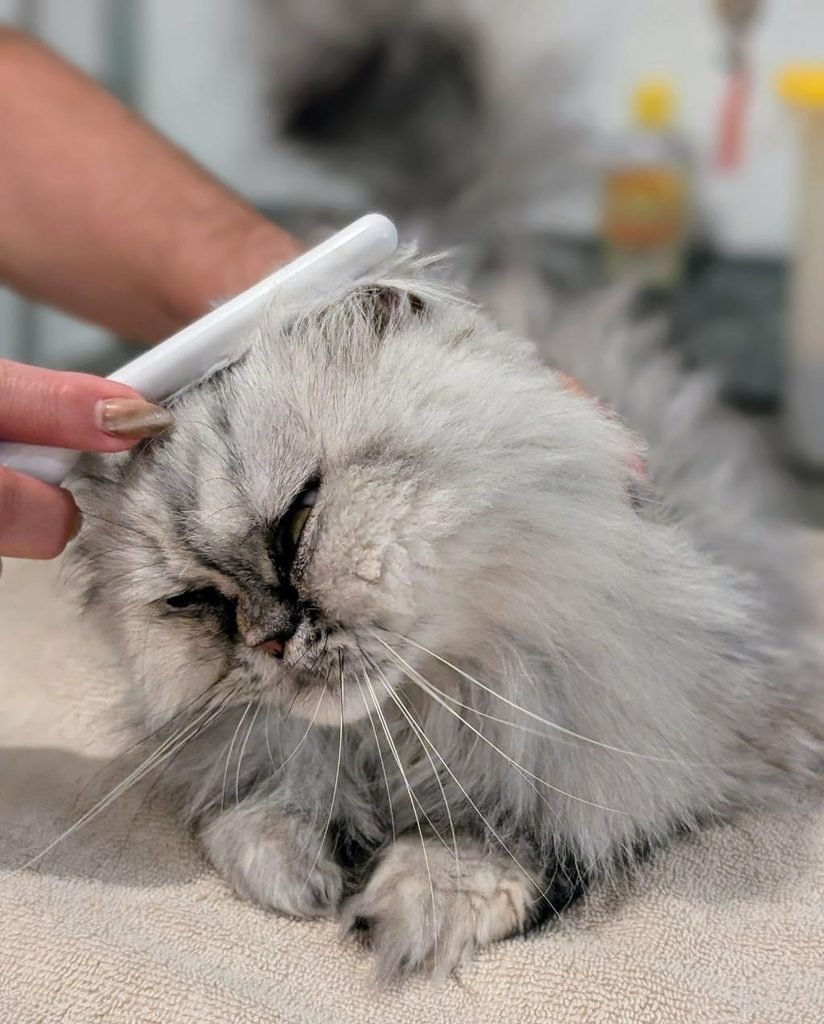
Behind the ears and under the chin
Fine hairs can knot easily in these areas, especially when the cat rubs its face against furniture or scratches around its ears.
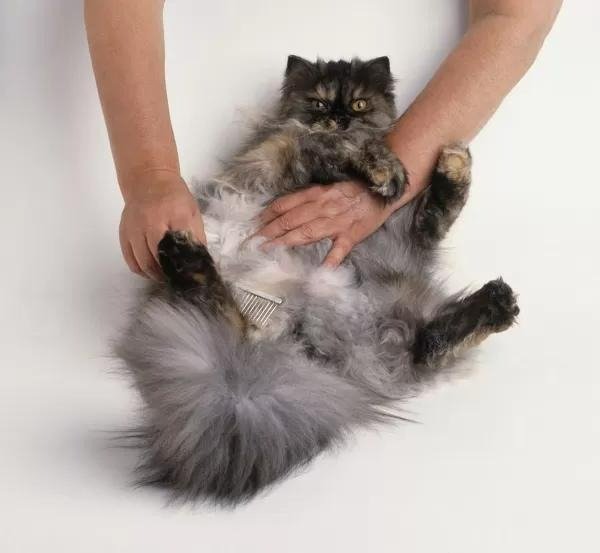
Armpits and belly
These areas experience frequent friction when your cat walks, stretches, or curls up to sleep. The skin is also delicate, making tight mats particularly difficult to remove safely.
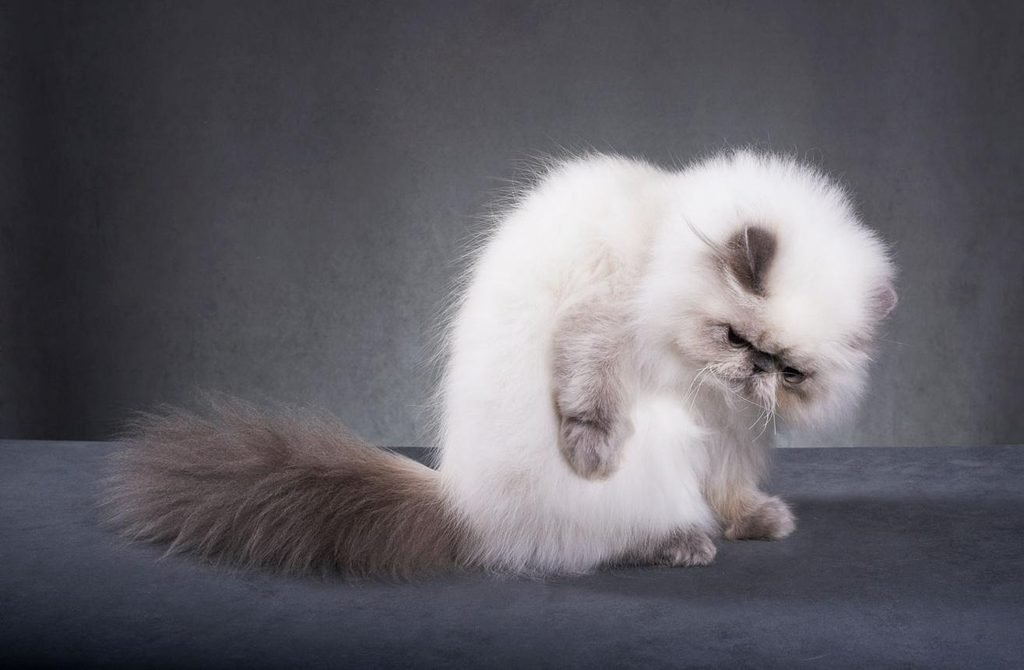
Hind legs and around the tail
Loose undercoat, litter debris, and friction can cause tangles around the rear legs and tail. Longer fur near the hindquarters may also collect dirt after using the litter box.
Make a habit of checking these areas during daily grooming. Finding a small knot early is much easier than dealing with a dense mat that pulls on the skin.
How to Tell the Difference Between a Tangle and a Serious Mat
Not every knot requires professional treatment. The important difference is how tightly the hair has become tangled and how close the knot sits to the skin.
| Coat condition | What it looks like | What to do |
| Loose tangle | A few hairs twisted together that move easily | Gently work through it with a suitable comb |
| Small, shallow mat | A compact knot that remains loose at the edges | Try gentle grooming only if your cat is comfortable and the skin is not being pulled |
| Tight mat | A firm clump that resists combing or pulls on the skin | Stop pulling and contact an experienced cat groomer |
| Severe matting | Multiple dense mats, large clumps, or fur tightly attached near the skin | Arrange professional assessment; seek veterinary care if the skin is painful or damaged |
Never assume a mat is harmless simply because your cat is not crying or resisting. Cats often hide discomfort, and a tight knot can pull on delicate skin even when the animal appears calm.
What Causes Persian Cat Fur to Become Matted Overnight?
It may seem as though your Persian cat’s coat becomes tangled suddenly, but most mats develop gradually. A small knot can remain hidden beneath the topcoat until it becomes large enough to notice.
Several everyday habits and health-related factors can speed up the process.
Infrequent or Incomplete Brushing
Skipping grooming sessions is one of the most common reasons Persian cats develop matted fur. Loose hairs accumulate within the coat, particularly in areas that are difficult to reach with a regular brush.
Brushing only the back and sides can also create a false sense of security. The belly, armpits, chest, and areas behind the ears may still contain tangles.
For most Persian cats, daily gentle combing is a useful starting point. Adjust the routine according to your cat’s coat condition, shedding, tolerance, and advice from a professional groomer.
A metal comb designed for cats can help you check whether you have reached the undercoat. Work in small sections rather than rushing a brush over the entire body.
Seasonal Shedding and Trapped Loose Hair
Persian cats may shed more noticeably during seasonal coat changes. When large amounts of loose undercoat remain trapped in the longer hair, tangles can form more quickly than usual.
This is especially noticeable in cats that spend time lounging on warm bedding or grooming themselves frequently. Loose hairs may combine with the surrounding coat instead of separating naturally.
During heavier shedding periods, inspect your cat’s coat every day and pay particular attention to areas where the fur is thickest.
Moisture, Dirt, and Friction
Moisture and debris can make an already difficult coat harder to maintain. Water, food residue, saliva, and litter debris may cause strands to stick together, while friction encourages them to twist into knots.
Common problem areas include:
- The chest and chin, where food or water may collect.
- The belly and armpits, where fur rubs against the body.
- The hindquarters, where litter debris may become trapped.
- Areas that remain damp after cleaning or bathing.
If your cat gets wet, gently dry the coat with a towel and allow it to dry thoroughly in a comfortable, well-ventilated area. Avoid vigorous rubbing, which can create additional tangles.
Do not bathe a heavily matted Persian cat in an attempt to loosen the knots. Wetting tangled fur can make mats tighter and more difficult to remove. Have severe mats assessed before bathing.
Skin Problems and Changes in Coat Condition
Excessive oiliness, flaky skin, irritation, or parasites may affect the condition of your cat’s coat. A cat that scratches frequently can also create tangles and break hairs while disturbing the fur.
These changes deserve attention if they appear alongside persistent itching, redness, an unusual odor, hair loss, or visible sores.
Avoid trying to solve unexplained skin problems with human shampoos, essential oils, or household remedies. Products that are safe for people are not necessarily suitable for cats.
Reduced Self-Grooming Due to Pain or Illness
Persian cats may develop more mats when they can no longer groom themselves effectively. This is particularly important when a cat that previously maintained a healthy coat suddenly becomes tangled.
Possible contributing factors include:
- Excess body weight: A cat may struggle to reach its lower back, belly, or hindquarters.
- Arthritis or reduced mobility: Bending and twisting may become uncomfortable.
- Dental discomfort: Mouth pain can interfere with normal grooming behavior.
- Other illnesses: Weakness or general discomfort may cause a cat to groom less often.
If matting appears suddenly or spreads despite your usual grooming routine, consider whether your cat’s behavior, appetite, movement, or grooming habits have changed.
A veterinary examination can help identify problems that brushing alone cannot fix. Maintaining a healthy coat involves more than removing loose hair; it also means understanding why your cat may be struggling to care for itself.
How to Tell Whether Persian Cat Matted Fur Is Painful
Matted fur is not always just a cosmetic issue. Small, loose tangles may cause little discomfort, but tight mats can pull continuously on the skin whenever your cat moves.
Severe matting may also trap dirt and moisture, conceal skin injuries, and make normal grooming uncomfortable. Recognizing the warning signs early can prevent a manageable grooming problem from becoming a more serious welfare concern.
Behavioral Signs Your Cat May Be in Pain
Your Persian cat may not show obvious signs of discomfort. Instead, you might notice subtle changes during grooming or everyday interaction.
Watch for these behaviors:
- Flinching or suddenly turning around when you touch a particular area.
- Growling, hissing, swatting, or trying to bite during brushing.
- Hiding or avoiding you when the grooming tools appear.
- Excessively licking or chewing one part of the body.
- Becoming unusually irritable when picked up.
- Resisting movements that were previously comfortable.
- Spending less time grooming independently.
A cat that suddenly dislikes being touched may be experiencing pain rather than simply being difficult to groom. Never punish or force your cat to tolerate brushing when it shows clear signs of distress.
Skin Changes That Should Never Be Ignored
Carefully inspect the visible skin around a mat without pulling or forcing the hair apart. Look for redness, swelling, scabs, damp patches, unpleasant odors, or areas where the fur appears unusually thin.
Seek veterinary advice if you notice:
- Bleeding or open wounds beneath the fur.
- Swollen, hot, or painful skin.
- Pus, discharge, or a strong abnormal odor.
- Severe itching or persistent licking.
- Sudden hair loss or widespread skin irritation.
- A mat that appears to be tightly attached to damaged skin.
Do not pull apart a painful mat just to inspect what is underneath. If the skin is difficult to see or your cat reacts painfully, let a veterinary professional assess the area.
When Does Matted Fur Require Urgent Veterinary Attention?
Some situations call for more than a routine grooming appointment. Contact a veterinarian promptly if your cat has painful mats accompanied by wounds, swelling, discharge, or significant skin irritation.
Seek urgent veterinary care if your cat has severe pain, marked weakness, difficulty walking, or other sudden, serious symptoms. Extensive matting may also require veterinary assessment when the cat cannot be handled safely or the condition of the skin is unknown.
For additional guidance on recognizing discomfort and arranging appropriate care, consult the American Veterinary Medical Association.
The main priority is to keep your Persian cat comfortable while avoiding further injury. If a mat is tight, painful, or close to the skin, professional help is safer than trying to remove it yourself.
How to Remove Persian Cat Matted Fur Safely at Home
Removing Persian cat matted fur requires patience, gentle handling, and the right tools. Small, loose tangles can sometimes be managed at home, but tight mats can pull on the skin and cause significant pain if you try to force them apart.
The most important rule is to remove only the tangles that loosen easily without pulling on your cat’s skin. If a mat feels solid, sits close to the skin, or causes your cat to react painfully, stop and seek professional help.
Prepare Your Cat and Grooming Tools
Before starting, choose a quiet room where your cat feels comfortable. Avoid grooming immediately after an upsetting experience or when your cat is already agitated.
Gather a few suitable supplies:
- A wide-tooth metal cat comb: Useful for checking the coat and gently working through loose tangles.
- A soft slicker brush: Helps maintain the coat and remove loose hair when used gently.
- Cat-safe grooming products: Use only products specifically formulated for cats and appropriate for the particular grooming problem.
- Small treats: Reward your cat for remaining calm during short grooming sessions.
- A soft towel: Provides a comfortable place for your cat to sit and helps absorb moisture if necessary.
You do not need every tool for every situation. A suitable comb and a calm approach are often enough to assess a minor tangle.
Avoid using household scissors, razor blades, or human hair-removal products. A mat can pull the skin upward into the tangled hair, making it extremely easy to cut the skin accidentally.
Follow These Steps to Loosen Small Mats
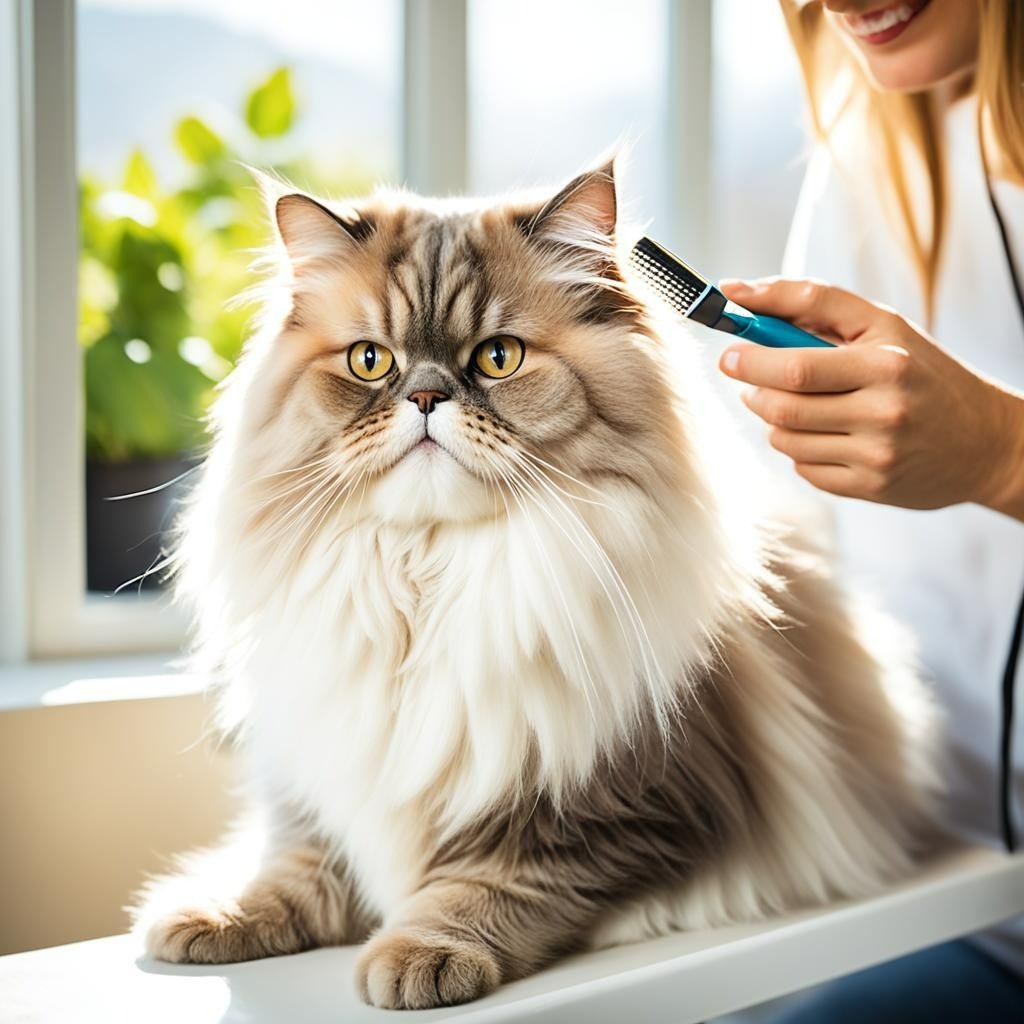
Start when your cat is relaxed
Let your Persian cat settle in a familiar place. Begin with a few gentle strokes in an area the cat enjoys being touched, such as the shoulders or upper back. Keep the first session short.
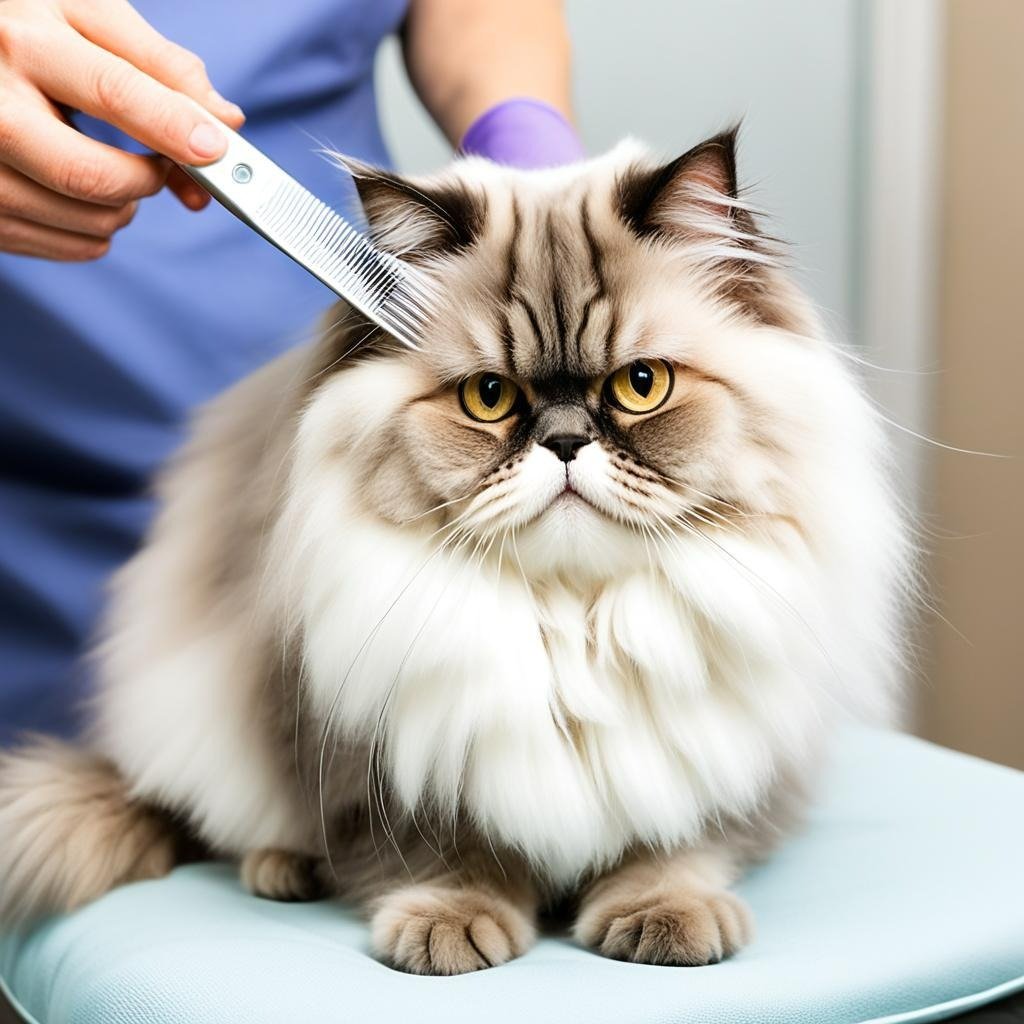
Inspect the tangle before touching it
Look at the mat’s size, firmness, and distance from the skin. If it is tight, widespread, or impossible to separate from the surrounding hair without pulling, do not attempt to remove it at home.
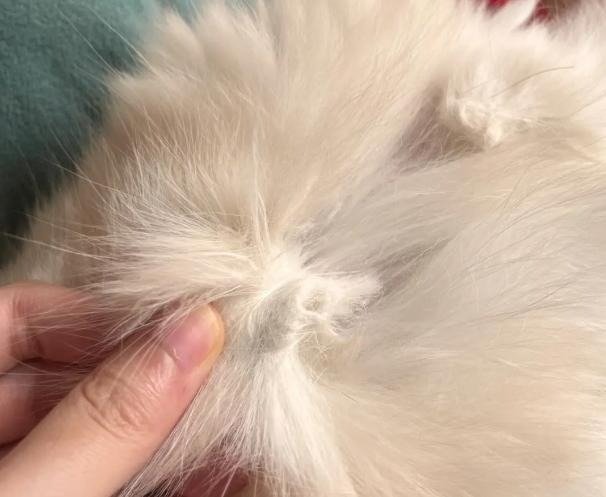
Work gently from the outer edges
For a small, loose tangle, use your fingers to separate a few strands at a time. Hold the surrounding hair near the base to reduce tension on the skin, and work only where the hair separates easily.
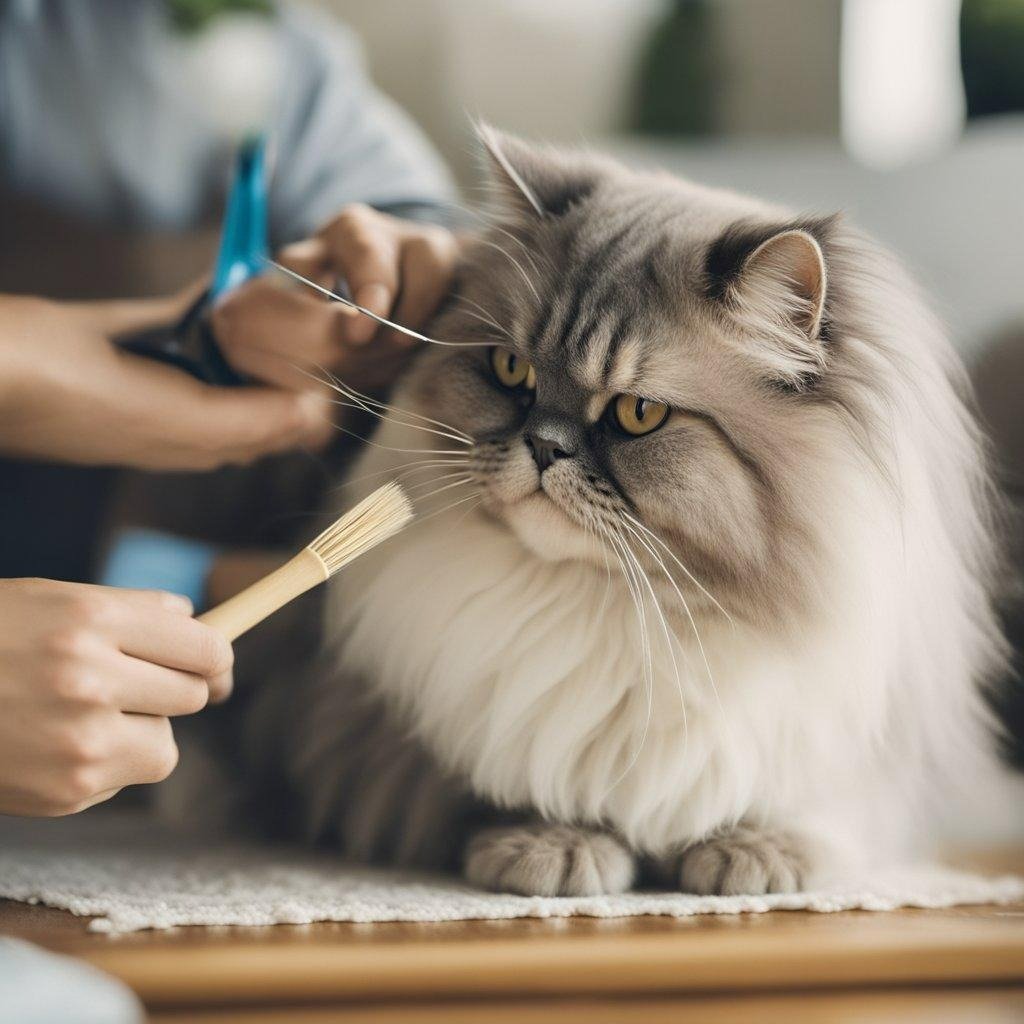
Check your progress without forcing the comb
Once the tangle begins to loosen, gently comb through the separated hair. Never yank the comb through a knot or repeatedly brush the same painful area.
Finish with a positive experience
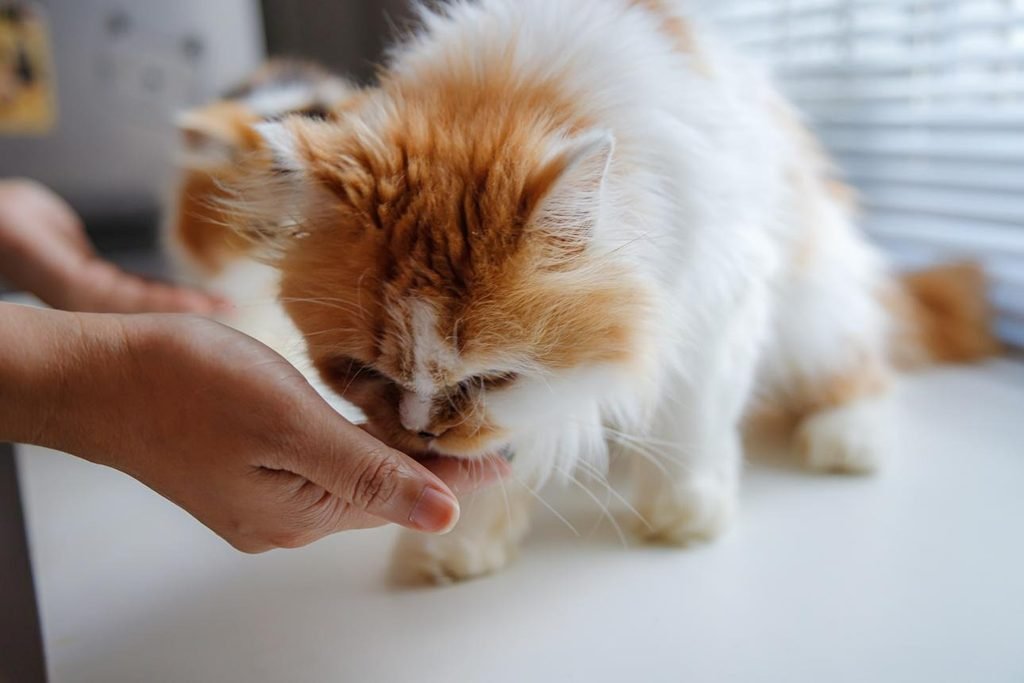
Stop while your cat is still comfortable and offer praise or a small treat. Several short sessions are preferable to one long session that leaves your cat frightened or irritated.
What If the Mat Will Not Come Loose?
Some mats are too dense to separate safely with a comb. Continuing to pull can damage the skin, break healthy hair, and make your cat associate grooming with pain.
Stop home grooming if:
- The comb cannot pass through the tangle without force.
- The mat is tightly packed against the skin.
- Your cat cries, growls, bites, repeatedly tries to escape, or shows other signs of distress.
- The skin underneath looks red, swollen, damp, or damaged.
- Several mats cover a large area of the body.
Never cut a mat out with scissors, even if it appears to be sticking away from the body. Cat skin is thin and flexible, and the tangled hair may conceal a fold of skin that you cannot see.
A professional cat groomer can assess whether clipping is appropriate. If the matting is severe, painful, associated with skin disease, or impossible to handle safely, a veterinarian should evaluate your cat.
Should You Use Detangling Spray or Oil?
A cat-specific detangling product may help with minor tangles when its label indicates that it is suitable for the situation. However, no spray or oil can reliably make a severe, tightly compacted mat safe to comb out.
Avoid applying human hair conditioners, essential oils, or kitchen oils as improvised treatments. Cats may ingest products while grooming, and some ingredients can irritate their skin or be harmful if swallowed.
If you are unsure whether a product is safe for your Persian cat, ask your veterinarian before using it.
When Should You Stop DIY Grooming and Call a Professional?
Knowing when to stop is just as important as knowing how to brush. While gentle home grooming can maintain a healthy Persian coat, severe matting often requires specialized tools and experience.
Trying to remove every mat yourself can unintentionally cause more harm than leaving the tangled hair untouched until a professional can assess it.
Minor Tangles vs. Severe Matting: What Is the Difference?
| Situation | Recommended action |
| A few loose hairs tangled together | Try gentle combing if your cat remains comfortable |
| A small knot that loosens without pulling | Carefully work through the outer edges |
| A firm mat that resists the comb | Stop and contact an experienced cat groomer |
| Multiple mats across the belly, legs, or back | Arrange professional assessment |
| Tight mats near the skin or around sensitive areas | Seek professional help; avoid cutting or pulling |
| Mats accompanied by wounds, swelling, or significant pain | Contact a veterinarian |
This distinction matters because matting severity is not determined by appearance alone. A relatively small knot can still be painful if it pulls tightly on the skin.
Why Professional Grooming Is Safer for Severe Mats
Experienced cat groomers understand how to handle long-haired coats and use appropriate equipment to remove tangled hair. They can assess the coat, identify areas that should not be combed forcibly, and determine whether clipping is necessary.
Professional grooming may be particularly helpful when:
- Your Persian cat has extensive matting that cannot be managed with routine brushing.
- The mats are concentrated around the belly, armpits, or hindquarters.
- Your cat becomes distressed whenever you approach the affected areas.
- You are unfamiliar with grooming a dense undercoat.
- The coat has repeatedly become severely matted despite your efforts.
Choose someone with experience handling cats, preferably long-haired breeds such as Persians. Ask how they manage fearful cats, what equipment they use, and whether they will recommend veterinary care if they discover irritated or injured skin.
A responsible groomer should not insist on forcibly combing out dense mats simply to preserve coat length.
When Is Shaving a Persian Cat the Better Option?
Shaving may be necessary when mats are too dense to remove safely by combing. Depending on the severity and location of the tangles, a professional may recommend clipping some areas or removing much of the coat.
Although Persian cats are famous for their fluffy appearance, comfort and skin safety should take priority over maintaining coat length.
Keep these points in mind:
- Do not attempt to shave your cat with household clippers or scissors.
- Let an experienced professional assess the coat before deciding how much hair needs to be removed.
- Consult a veterinarian when the skin is painful, damaged, infected, or hidden beneath extensive matting.
- Understand that coat regrowth takes time and the new coat may initially look different.
- Avoid assuming that shaving will prevent future mats; regular grooming is still important as the hair grows back.
Some severely matted cats may need veterinary-supervised sedation or other support to allow safe treatment. Sedation should only be considered and administered by a veterinarian after assessing the cat’s individual needs and risks.
How to Find a Groomer Who Understands Persian Cats
Not every grooming professional has the same experience with dense, long-haired feline coats. Before booking, ask a few practical questions.
- Do you regularly groom Persian cats or other long-haired breeds?
- How do you handle mats close to the skin?
- What happens if the cat becomes frightened or aggressive?
- Will you stop and recommend veterinary care if you find wounds or skin irritation?
- Do you use cat-appropriate clipping equipment and handling techniques?
Be cautious of anyone who promises to remove every mat by force or suggests using scissors close to the skin.
A good professional will explain the available options, prioritize the cat’s welfare, and recognize when a veterinarian should become involved.
The Best Brushes and Grooming Tools for Persian Cat Matted Fur
The right grooming tools can make maintaining a Persian cat’s coat much easier. However, a tool that works well for loose hair may not be suitable for a tight mat.
The goal is to prevent tangles, remove loose hair gently, and identify knots before they become difficult to manage—not to force every mat out with a stronger brush.
Wide-Tooth Metal Comb: Essential for Checking the Undercoat
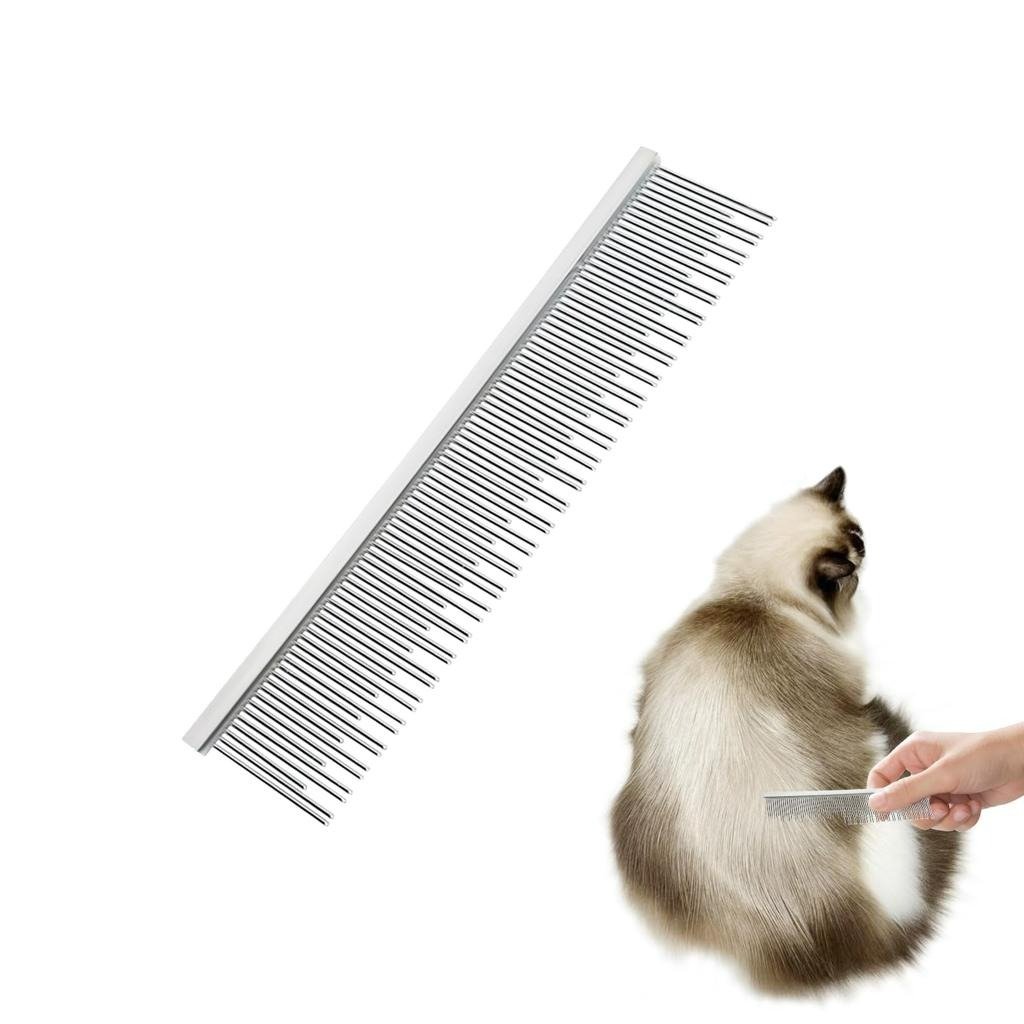
Best for: Checking the coat and gently separating loose tangles.
A metal comb with rounded, smooth teeth can help you reach through the longer hair and assess the undercoat. Use it in small sections, moving gently rather than dragging it through resistance.
A comb is especially useful for checking behind the ears, under the chin, and around the hindquarters after brushing.
Soft Slicker Brush: Useful for Everyday Coat Maintenance
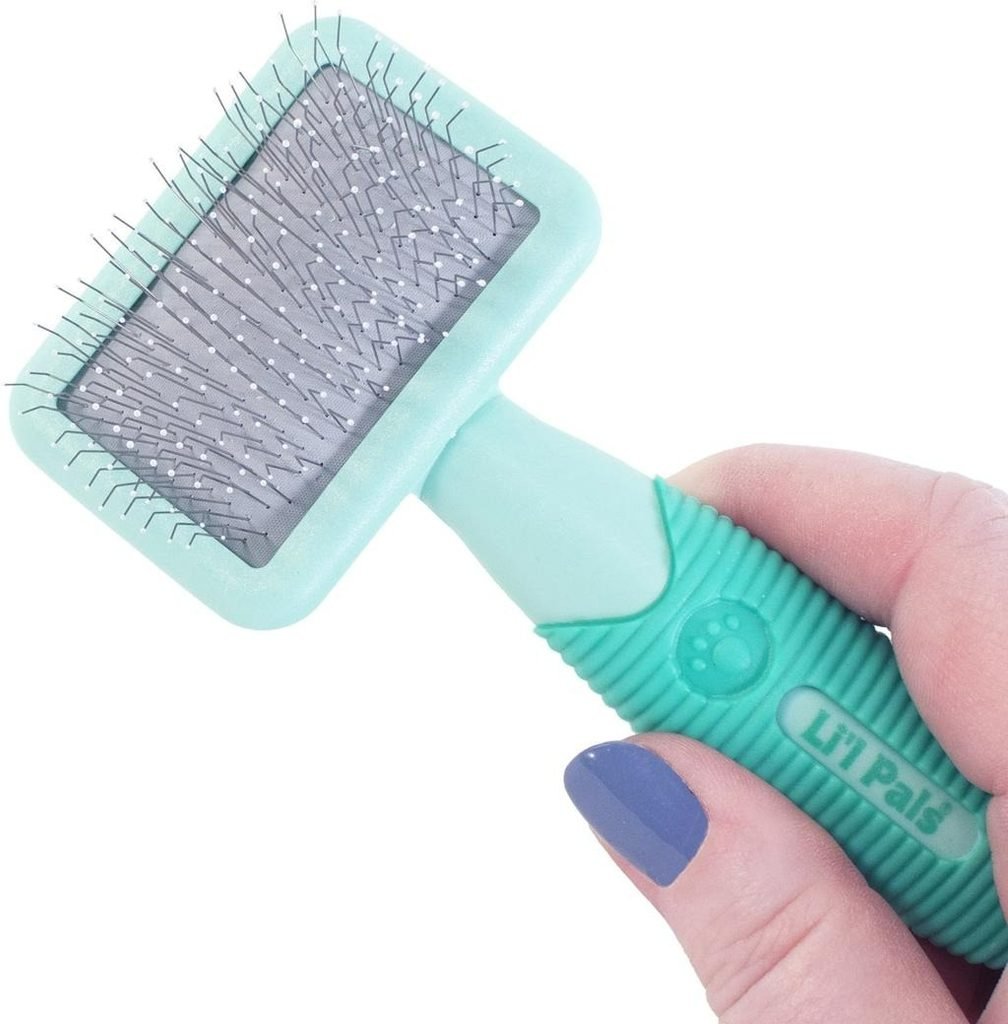
Best for: Removing loose hair and maintaining the outer coat.
A cat-appropriate slicker brush can help keep the coat neat when used with a light touch. Avoid pressing hard or repeatedly brushing one area, as the fine pins can irritate skin.
Use the brush for routine maintenance, then check the coat with a comb to identify hidden tangles.
Cat-Safe Detangling Products: Helpful for Minor Knots
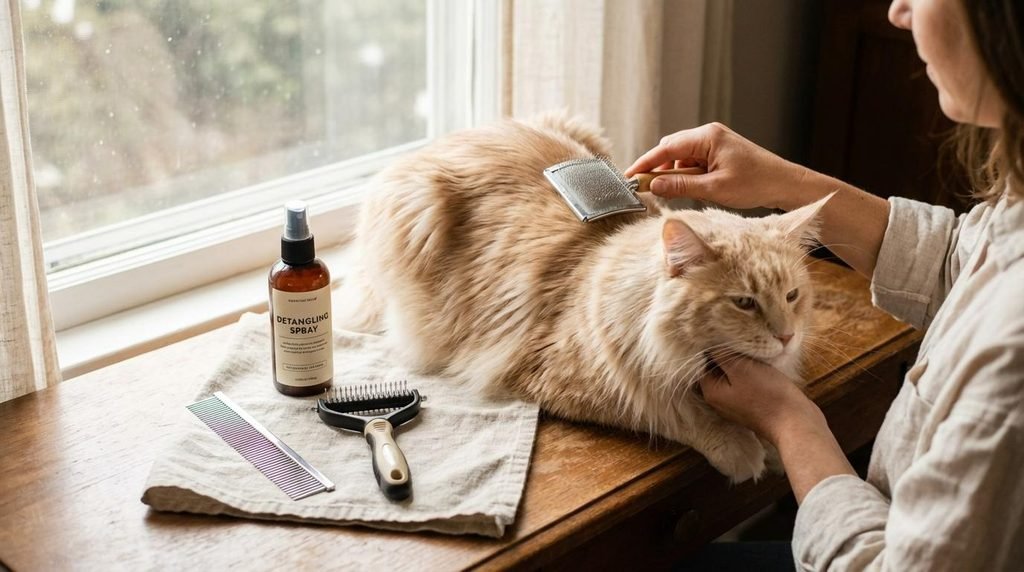
Best for: Minor tangles when the product is specifically suitable for cats.
A suitable detangling spray may help reduce friction during grooming. Follow the label directions and avoid spraying near the eyes, nose, or mouth.
These products are not a substitute for professional removal of tight mats.
Grooming Wipes and Towels: For Small Messes

Best for: Cleaning minor surface dirt and drying damp fur.
Cat-safe wipes can help with small messes around the coat, while a soft towel is useful for gently absorbing moisture.
Avoid rubbing vigorously or leaving the fur damp, particularly in areas where tangles tend to form.
What About Clippers and Dematting Tools?
Professional clippers can be useful when dense mats need to be removed, but they require suitable equipment and careful handling. The skin beneath a mat may be stretched, folded, or difficult to see, making clipping risky for inexperienced owners.
Specialized dematting tools can also have sharp edges that may cut skin or pull painfully on the hair when used incorrectly.
For most Persian cat owners, a suitable comb and a gentle brush are better everyday investments than aggressive dematting tools. If you need to cut through a mat rather than gently separate it, leave the job to an experienced professional.
How to Choose Grooming Products That Actually Help
When comparing grooming products for Persian cats, look for these features:
- Cat-specific design: The tool should be intended for feline coats, not simply marketed for pets in general.
- Comfortable construction: Rounded comb teeth and appropriately soft brush pins help reduce irritation when used correctly.
- Easy cleaning: Tools that release trapped hair easily are more convenient for regular grooming.
- Suitable size: A tool that fits comfortably in your hand makes it easier to work in small sections.
- Clear product instructions: Grooming sprays and other coat products should clearly identify their intended use and safe application.
You do not need an elaborate grooming kit to maintain your cat’s coat. A few suitable tools, regular checks, and a gentle routine are usually more useful than a drawer full of products.
The best approach is to prevent Persian cat matted fur from developing in the first place. With consistent care, early detection, and professional assistance when needed, you can keep your cat’s coat healthier while making grooming a calmer, more comfortable experience.
A Simple Daily and Weekly Grooming Routine That Prevents Mats
Preventing Persian cat matted fur is much easier than removing dense tangles after they have formed. The secret is consistency. A few minutes of gentle grooming each day can help remove loose hair, reveal hidden knots, and keep your cat’s coat in better condition.
Persian cats generally benefit from daily combing because their long coats and dense undercoats can tangle quickly. However, the amount of grooming needed varies depending on coat density, shedding, age, and lifestyle.
Your Daily Persian Cat Grooming Routine
Set aside a few minutes each day to check your cat’s coat. Choose a time when your Persian is relaxed, such as after a meal or a quiet play session.
Follow this simple routine:
- Start with the high-risk areas. Check behind the ears, under the chin, around the armpits, and across the belly.
- Comb in small sections. Work gently through the coat, checking that the comb moves without pulling.
- Inspect the hindquarters. Look for litter debris, dried residue, and tangles around the rear legs and tail.
- Remove loose hair. Use a suitable cat comb or brush to maintain the coat without irritating the skin.
- Finish with a reward. Offer praise or a small treat to make grooming a positive experience.
Pay particular attention to the undercoat. Brushing only the top layer may leave loose hairs trapped underneath, where they can develop into mats.
Weekly Coat and Skin Check
Daily combing helps prevent tangles, while a more thorough weekly check helps you spot changes that may need attention.
| Area to check | What to look for |
| Behind the ears | Small knots, redness, or scratching |
| Chest and belly | Hidden mats and skin irritation |
| Armpits and legs | Friction-related tangles |
| Hindquarters and tail | Debris, stuck hair, or difficult-to-reach knots |
| Skin throughout the coat | Flaking, unusual odor, sores, or hair loss |
| Overall behavior | Reduced grooming, sensitivity, or discomfort |
If your cat has a particularly dense coat or sheds heavily, you may need to inspect certain areas more often than once a week.
What If Your Persian Cat Hates Daily Brushing?
Do not try to complete the entire grooming routine in one sitting if your cat becomes restless or uncomfortable.
Start with short sessions lasting a minute or two. Gently brush an area your cat tolerates, stop before frustration develops, and gradually increase the duration as your cat becomes more comfortable.
For cats that strongly resist grooming, a professional groomer or veterinarian can help you develop a safer approach.
Consistency matters more than the length of any single session. A brief, positive routine is more useful than an occasional long session that leaves your cat frightened.
Common Grooming Mistakes That Make Persian Cat Mats Worse
Even caring owners can accidentally make matting worse by using unsuitable tools or waiting too long between grooming sessions. Understanding these mistakes can help protect your Persian cat’s coat and skin.
Brushing Only the Top Layer
A Persian cat’s outer coat may appear smooth while loose hairs and small tangles remain underneath.
What to do instead: Work through the coat in small sections and use a suitable comb to check the undercoat. Pay special attention to areas where the hair is thick or frequently rubbed.
Waiting Until Mats Become Visible
Small tangles can develop beneath the surface before they become noticeable. By the time a mat forms a large, obvious clump, it may already be pulling on the skin.
What to do instead: Check high-friction areas daily and gently address minor tangles before they tighten.
Pulling Harder When a Knot Will Not Come Loose
Forcing a comb through a mat can hurt your cat, break healthy hairs, and irritate the skin. Repeated pulling may also make your cat increasingly fearful of grooming.
What to do instead: Stop when you encounter resistance. If the knot cannot be loosened gently, arrange professional removal.
Cutting Mats With Household Scissors
This is one of the most dangerous grooming mistakes. Matted hair can hold folds of skin tightly within the knot, making it difficult to distinguish hair from skin.
What to do instead: Never cut a mat close to your cat’s body. Have a professional groomer or veterinarian assess it, particularly if it is tight or extensive.
Bathing a Heavily Matted Cat
Water can cause tangled hair to contract and become more difficult to separate. Shampooing a severely matted coat may therefore complicate removal rather than solve the problem.
What to do instead: Assess the coat before bathing. Have tight mats removed safely first, and follow appropriate grooming advice before introducing water.
Using Human Hair Products or Unapproved Home Remedies
Human conditioners, essential oils, and homemade mixtures are not automatically safe for cats. Some ingredients can irritate feline skin or cause problems if swallowed during self-grooming.
What to do instead: Choose products specifically formulated for cats and follow the label directions. Ask your veterinarian if you are unsure whether a product is appropriate.
Ignoring Signs of Stress
Flattened ears, tail flicking, tense muscles, growling, and repeated attempts to escape can indicate that grooming has become uncomfortable.
What to do instead: Pause the session and give your cat space. If grooming consistently causes distress, seek professional guidance instead of forcing the process.
Can Diet and Health Affect Your Persian Cat’s Coat Condition?
Although grooming is the main way to prevent Persian cat matted fur, your cat’s general health also plays an important role. A healthy coat depends on appropriate nutrition, normal skin function, and the ability to groom comfortably.
Sudden changes in coat quality may sometimes indicate a problem that requires more than a new brush.
Nutrition Supports Healthy Skin and Fur
Cats need a complete and balanced diet that supplies the nutrients required for normal skin and coat maintenance. Protein, essential fatty acids, vitamins, and minerals all contribute to overall health when provided in appropriate amounts.
Choose a nutritionally complete cat food suitable for your cat’s age and individual needs. Fresh drinking water should also be available at all times.
Keep in mind that supplements cannot replace regular grooming. Adding oils or supplements without identifying a nutritional need may be unnecessary and, in some cases, inappropriate.
If your Persian cat has persistent dry skin, excessive shedding, or an unusually poor coat, ask your veterinarian whether dietary changes or further investigation are warranted.
Weight and Mobility Can Affect Grooming Habits
Persian cats need to reach different parts of their bodies to maintain their coats. Excess body weight or painful movement can make this difficult.
For example, a cat that struggles to bend may stop cleaning its lower back or hindquarters properly. Over time, loose hair and debris can accumulate in these areas.
Watch for signs such as:
- Increasing mats around the lower back or rear legs.
- Difficulty jumping onto familiar surfaces.
- Reduced activity or reluctance to stretch.
- Less frequent self-grooming.
- Changes in appetite or body weight.
If your cat appears uncomfortable when bending or grooming, arrange a veterinary checkup rather than assuming the problem is simply a lack of grooming.
Skin Conditions and Other Health Problems
Parasites, allergies, skin irritation, dental discomfort, and other illnesses can interfere with normal coat maintenance. Some conditions cause excessive licking or scratching, while others make a cat less willing to groom itself.
Seek veterinary advice if matting occurs alongside persistent itching, bald patches, redness, sores, unusual odors, or a sudden change in behavior.
A veterinarian can assess whether the problem is related to skin health, discomfort, nutrition, or another underlying condition.
For further reading on feline nutrition, the Cornell Feline Health Center offers educational information about cat health and care.
How to Help a Persian Cat That Hates Being Brushed
Some Persian cats tolerate grooming from the beginning, while others become nervous as soon as they see a comb. Previous painful experiences, sensitive skin, or unfamiliar handling can make brushing stressful.
The solution is to build trust gradually rather than trying to hold your cat still until the job is finished.
Introduce Grooming One Step at a Time
Start by placing the brush near your cat without immediately using it. Allow your cat to sniff the tool and investigate it at its own pace.
Once your cat appears relaxed, gently touch an area it enjoys being petted. Introduce a single brush stroke, reward calm behavior, and stop if your cat becomes uncomfortable.
Over several sessions, gradually increase the amount of grooming your cat accepts.
Choose the Right Time and Place
A quiet room with minimal distractions can make grooming easier. Avoid chasing your cat around the house or cornering it when it is trying to leave.
Try grooming when your cat is naturally calm rather than during energetic play or immediately after an upsetting event.
A nonslip surface can also help your cat feel more secure. Never suspend your cat by its legs, pull its tail, or restrain it forcefully to reach a knot.
Learn to Recognize Your Cat’s Limits
Cats often communicate discomfort through body language before they vocalize.
Watch for:
- Ears turning sideways or flattening backward.
- A tense body or sudden freezing.
- Repeated head-turning toward the brush.
- Tail flicking or rapid tail movements.
- Growling, hissing, swatting, or attempts to escape.
These signals are reasons to pause. If your cat suddenly reacts painfully to being touched in a particular area, arrange a veterinary assessment to rule out an injury or other health problem.
Never punish a cat for resisting grooming. Building a calm association with brushing is more effective than forcing compliance.
Persian Cat Matted Fur: Myths vs. Facts
Several common misconceptions can make coat care more difficult than it needs to be. Understanding what actually helps can save time and prevent unnecessary discomfort.
Myth: Indoor Persian Cats Do Not Develop Serious Mats
Fact: Indoor cats can develop severe matting even when they rarely go outside. Long hair, trapped loose fur, friction, and reduced grooming are enough to create tangles.
Indoor living does not eliminate the need for regular coat maintenance.
Myth: A Stronger Brush Will Remove Every Knot
Fact: A firmer brush is not necessarily more effective. Applying more pressure can irritate the skin and cause pain without loosening a dense mat.
Use gentle tools for routine grooming and seek professional help when a knot resists.
Myth: Matted Fur Is Only a Cosmetic Problem
Fact: Tight mats can pull on the skin, restrict comfortable movement, trap moisture and debris, and conceal skin damage.
Severe matting deserves attention even when the cat’s overall appearance seems otherwise normal.
Myth: Bathing Will Automatically Loosen Matted Fur
Fact: Wetting a tangled coat can make mats tighter and more difficult to remove. A heavily matted cat should be assessed before bathing.
Bathing may be appropriate for some cats as part of a broader grooming routine, but it is not a substitute for safely removing severe tangles.
Myth: Shaving Is Always the Best Solution
Fact: Clipping may be necessary for extensive matting, but not every tangle requires shaving. The safest option depends on the mat’s severity, location, and the condition of the skin.
A qualified groomer or veterinarian can help determine the most appropriate approach.
Myth: A Cat Will Always Cry if a Mat Hurts
Fact: Cats can hide discomfort. A cat may continue eating and moving normally while avoiding touch, grooming less often, or becoming unusually irritable.
Look for subtle behavioral changes instead of relying on vocalization alone.
Frequently Asked Questions About Persian Cat Matted Fur
How often should you brush a Persian cat to prevent mats?
Daily gentle combing is a sensible starting point for most Persian cats. Check the undercoat and high-friction areas regularly, adjusting the routine according to shedding, coat density, and your cat’s tolerance.
Can I remove matted fur from my Persian cat myself?
You may be able to loosen a small, superficial tangle if it separates easily and your cat remains comfortable. Tight, painful, or skin-level mats should be handled by an experienced groomer or veterinarian.
Should I shave my Persian cat if its fur is severely matted?
Shaving or professional clipping may be necessary when the mats are extensive or too tight to remove safely. Have a professional assess the coat rather than attempting to shave your cat at home.
Does matted fur hurt Persian cats?
Tight mats can pull on the skin, cause irritation, and make movement uncomfortable. Severe matting may also trap moisture and debris or conceal wounds, so it should be addressed promptly.
Why is my Persian cat suddenly getting more mats than usual?
Possible causes include seasonal shedding, missed grooming sessions, changes in coat condition, obesity, reduced mobility, dental discomfort, or another health problem. Sudden or widespread matting warrants a veterinary check, especially if your cat’s behavior has changed.
Can coconut oil or conditioner loosen cat mats?
Household oils and human conditioners are not reliable solutions for matted fur and may be unsuitable for cats. Use only products specifically intended for feline grooming, and do not attempt to force a tight mat apart with any product.
Will Persian cat fur grow back after shaving?
Persian cat fur generally grows back after clipping, but the time required varies with the individual cat, its health, and the condition of its coat. Regrowth may initially look uneven, and regular grooming will still be necessary.
What is the safest way to remove a tight mat close to a Persian cat’s skin?
Do not cut, pull, or force a comb through it. Contact an experienced cat groomer or veterinarian, especially if the mat is painful, extensive, or covering irritated skin.
Can matted fur indicate that my Persian cat is sick?
Yes, sometimes. Reduced grooming caused by pain, obesity, arthritis, dental problems, or other illnesses can lead to matting. Persistent skin irritation, sudden coat changes, or reduced activity are good reasons to arrange a veterinary examination.
Keep Your Persian Cat’s Coat Healthy With Consistent Care
Persian cat matted fur can be frustrating to manage, but a regular grooming routine makes a significant difference. Daily combing, careful checks of the undercoat, and early attention to small tangles can prevent many knots from becoming painful mats.
Remember that the goal is not simply to keep your cat looking fluffy. It is to protect the skin, maintain comfort, and make grooming a positive part of everyday care.
Start today with a gentle coat check, focusing on the belly, armpits, areas behind the ears, and hindquarters. If you discover a tight mat that will not loosen easily, leave it to a professional rather than risking an injury.
With patience, suitable grooming tools, and attention to changes in your cat’s health, you can help your Persian enjoy a cleaner, more comfortable coat.

Passionate about pets and animal care, we shares trusted tips, fun facts, and practical advice to help pet lovers give their furry, feathered, and scaly companions the best life possible. From everyday care guides to fascinating animal insights, we’re dedicated to making pet information easy, helpful, and enjoyable for every reader.