
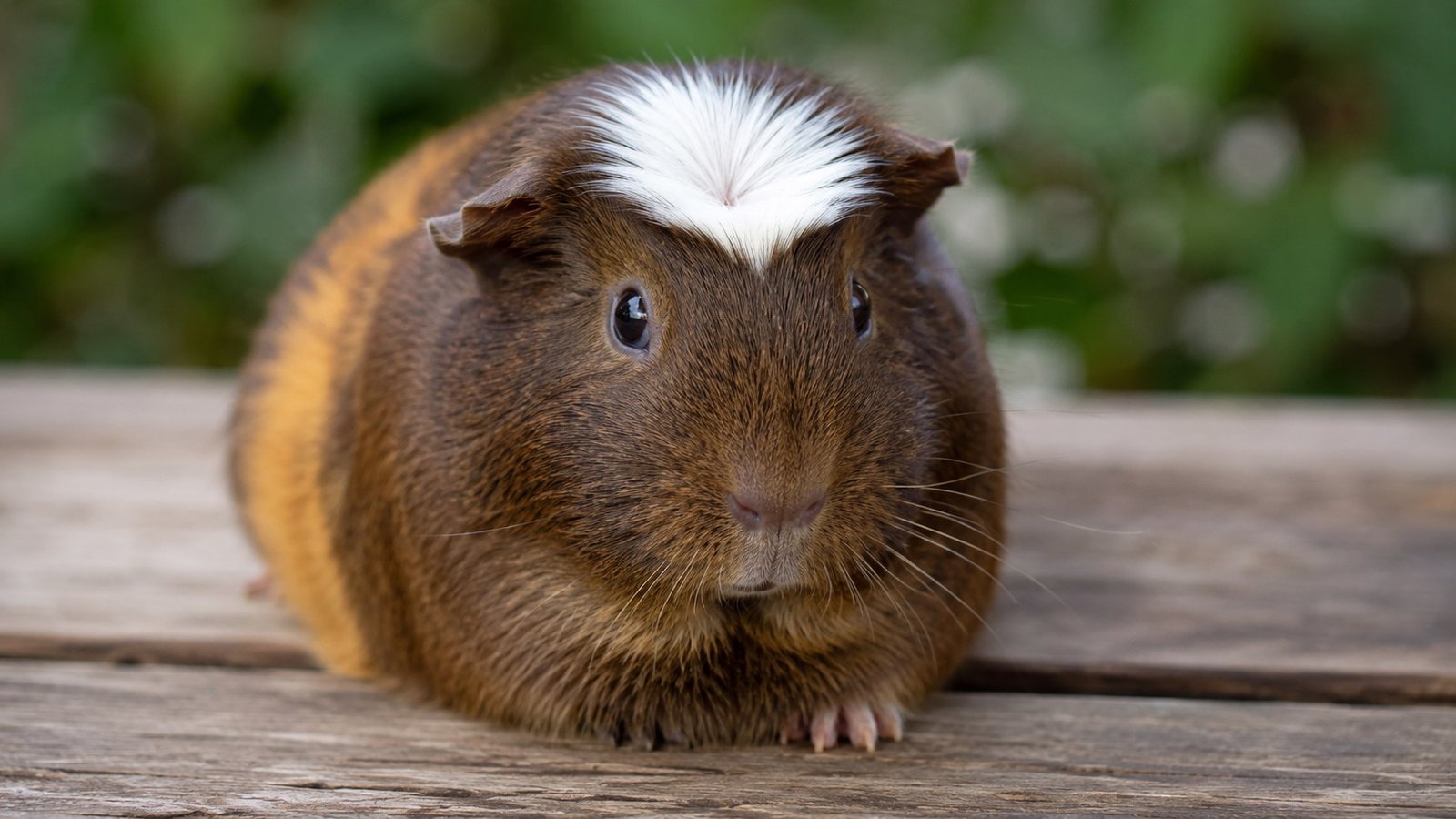
The White Crested guinea pig breed is a popular and distinctive guinea pig known for the single white rosette, or “crest,” located on the top of its head. Unlike other guinea pigs that may have multiple rosettes or long coats, the White Crested has a smooth, short coat and a neatly defined white crown that contrasts with the rest of its body color.
Friendly, easy to care for, and visually striking, White Crested guinea pigs make excellent pets for beginners, families, and experienced guinea pig owners alike. Understanding their appearance, personality, care requirements, and potential health concerns can help ensure they thrive throughout their lives.
In This Article
What Is a White Crested Guinea Pig?
A White Crested guinea pig is a breed of domestic guinea pig characterized by:
- A short, smooth coat
- A single white crest on the forehead
- No additional rosettes elsewhere on the body
- A compact, well-rounded body shape
The white crest is the breed’s defining feature. It appears as a circular swirl of hair growing outward from a central point on the forehead.
White Crested guinea pigs belong to the broader category of crested guinea pigs, but they differ from other crested varieties because the crest must be white regardless of the body’s primary color.
Quick Breed Overview
| Trait | White Crested Guinea Pig |
| Breed Type | Short-haired |
| Size | 8–12 inches |
| Weight | 1.5–2.6 pounds |
| Lifespan | 5–8 years |
| Temperament | Friendly, calm, social |
| Grooming Needs | Low |
| Exercise Needs | Moderate |
| Beginner Friendly | Yes |
| Distinctive Feature | White crest on forehead |
History and Origin of the White Crested Guinea Pig
Guinea pigs were first domesticated in the Andes region of South America thousands of years ago. Over time, selective breeding produced numerous coat types, colors, and patterns.
The White Crested emerged through careful breeding programs designed to create guinea pigs with:
- Uniform coat texture
- Symmetrical body structure
- A clearly defined white crest
The breed gained popularity among guinea pig enthusiasts and breeders because of its elegant appearance and relatively easy maintenance compared to long-haired breeds.
Today, White Cresteds are commonly exhibited in guinea pig shows and are recognized by various cavy organizations around the world.
Physical Characteristics
The Signature White Crest
The most recognizable feature is the white crest centered on the forehead.
An ideal crest should:
- Be perfectly round
- Have a clearly defined center
- Be pure white
- Sit symmetrically on the head
The crest creates a crown-like appearance that distinguishes the breed from standard smooth-coated guinea pigs.
Coat Type
White Cresteds have a short, smooth coat that lies flat against the body.
Benefits of this coat type include:
- Easy grooming
- Less shedding than some long-haired breeds
- Lower maintenance requirements
- Reduced risk of tangles and mats
Body Structure
White Cresteds typically have:
- Broad shoulders
- Compact bodies
- Rounded heads
- Short ears
- Bright, alert eyes
A healthy adult usually weighs between 700 and 1,200 grams depending on age, sex, and genetics.
Coat Colors
Although the crest must be white, the body may display various colors, including:
- Black
- Red
- Golden
- Buff
- Chocolate
- Lilac
- Cream
- Mixed patterns
The contrast between the body color and white crest often enhances the breed’s visual appeal.
White Crested vs American Guinea Pig
Many new owners confuse White Cresteds with American guinea pigs because both have short coats.
Comparison Table
| Feature | White Crested | American |
| Coat Length | Short | Short |
| Crest | White crest present | No crest |
| Grooming | Low | Low |
| Temperament | Friendly | Friendly |
| Show Standards | Crest evaluated | No crest requirement |
| Appearance | Distinctive crown | Smooth head |
Apart from the crest, their care requirements are very similar.
Temperament and Personality
White Crested guinea pigs are widely appreciated for their pleasant personalities.
Common Personality Traits
Many owners describe them as:
- Gentle
- Curious
- Social
- Affectionate
- Intelligent
- Adaptable
Individual temperament can vary, but most White Cresteds enjoy interacting with people and other guinea pigs.
Social Nature
Guinea pigs are herd animals by nature.
A White Crested generally thrives when housed with:
- Another compatible guinea pig
- Daily human interaction
- Regular environmental enrichment
Living alone can contribute to boredom and stress.
Are They Good Pets for Children?
Yes, White Cresteds can make excellent family pets.
However, children should learn:
- Proper handling techniques
- Gentle interaction
- Respect for the animal’s boundaries
Adult supervision is recommended, especially with younger children.
Housing Requirements
Providing an appropriate habitat is one of the most important aspects of guinea pig care.
Cage Size
A spacious enclosure allows healthy movement and exercise.
Recommended minimums:
| Number of Guinea Pigs | Minimum Cage Space |
| One | 7.5 square feet |
| Two | 10.5 square feet |
| Three | 13 square feet or more |
Larger habitats are always preferable.
Bedding Options
Suitable bedding materials include:
- Paper-based bedding
- Aspen shavings
- Fleece liners
- Hemp bedding
Avoid cedar and untreated pine shavings because their aromatic oils may irritate the respiratory system.
Environmental Conditions
White Cresteds are sensitive to extreme temperatures.
Ideal conditions:
- Temperature: 65–75°F (18–24°C)
- Low humidity
- Good ventilation
- No direct sunlight
Heat stress can become life-threatening quickly in guinea pigs.
Diet and Nutrition
A balanced diet is essential for long-term health.
Unlimited Hay
Hay should make up most of the diet.
Suitable options include:
- Timothy hay
- Orchard grass hay
- Meadow hay
Hay supports:
- Dental health
- Digestive function
- Natural foraging behavior
Fresh Vegetables
Daily vegetables provide important nutrients.
Good choices include:
- Bell peppers
- Romaine lettuce
- Cilantro
- Cucumber
- Zucchini
- Endive
Vitamin C Requirements
Unlike many animals, guinea pigs cannot produce their own vitamin C.
Deficiency may cause:
- Weakness
- Joint pain
- Poor healing
- Dental issues
Vitamin C-rich foods include:
- Bell peppers
- Parsley
- Small amounts of kale
Pellets
Choose high-quality guinea pig pellets that:
- Contain stabilized vitamin C
- Are formulated specifically for guinea pigs
- Do not include colorful treats or seeds
Foods to Avoid
Never feed:
- Chocolate
- Onions
- Garlic
- Potatoes
- Avocado
- Rhubarb
- Dairy products
Grooming and Maintenance
One advantage of the White Crested breed is its low-maintenance coat.
Brushing
Most White Cresteds only require:
- Weekly brushing
- Occasional removal of loose fur
A soft-bristle brush works well.
Crest Care
The white crest should be checked regularly for:
- Dirt accumulation
- Skin irritation
- Parasites
Gentle brushing helps maintain its appearance.
Nail Trimming
Nails generally need trimming every 4–6 weeks.
Overgrown nails can:
- Alter walking posture
- Cause discomfort
- Increase injury risk
Bathing
Routine baths are usually unnecessary.
Frequent bathing can strip natural skin oils and contribute to dryness.
Exercise and Enrichment
White Cresteds benefit from daily opportunities to explore.
Floor Time
Supervised floor time allows guinea pigs to:
- Exercise naturally
- Explore new environments
- Reduce boredom
Use a safe, escape-proof area.
Enrichment Ideas
Provide:
- Tunnels
- Hideouts
- Cardboard boxes
- Chew toys
- Foraging activities
Mental stimulation is just as important as physical exercise.
Common Health Issues
Although generally hardy, White Crested guinea pigs can experience several health problems.
Dental Overgrowth
Guinea pig teeth grow continuously.
Warning signs include:
- Difficulty eating
- Weight loss
- Drooling
Unlimited hay helps maintain proper tooth wear.
Respiratory Infections
Symptoms may include:
- Sneezing
- Nasal discharge
- Labored breathing
- Reduced appetite
Prompt veterinary attention is essential.
Vitamin C Deficiency
A lack of vitamin C can lead to scurvy.
Signs often include:
- Swollen joints
- Lethargy
- Rough coat
- Pain while moving
Parasites
Mites and lice may cause:
- Itching
- Hair loss
- Skin irritation
Regular health checks help identify problems early.
Heat Stress
Guinea pigs are particularly vulnerable to overheating.
Symptoms include:
- Panting
- Lethargy
- Weakness
- Collapse
Immediate cooling and veterinary care may be necessary.
Lifespan and Longevity
A White Crested guinea pig typically lives between 5 and 8 years.
Some individuals may live longer with exceptional care.
Factors affecting lifespan include:
- Genetics
- Diet quality
- Veterinary care
- Housing conditions
- Stress levels
Providing proper nutrition and preventive care greatly improves the chances of a long, healthy life.
How to Choose a Healthy White Crested Guinea Pig
When selecting a guinea pig, look for:
- Bright, clear eyes
- Clean ears
- Smooth coat
- Healthy weight
- Normal breathing
- Active behavior
Avoid animals showing:
- Crusty eyes
- Nasal discharge
- Hair loss
- Diarrhea
- Labored breathing
A healthy start often leads to fewer health problems later.
White Crested Guinea Pig Pros and Cons
Advantages
- Distinctive appearance
- Easy grooming
- Friendly personality
- Beginner-friendly
- Social and interactive
- Suitable for families
Disadvantages
- Requires companionship
- Needs daily care and cleaning
- Sensitive to heat
- Requires ongoing vitamin C supplementation through diet
- Veterinary care can be specialized in some areas
Frequently Asked Questions
Are White Crested guinea pigs rare?
They are less common than standard American guinea pigs but are not considered extremely rare. Availability varies by region and breeder.
Do White Crested guinea pigs need special grooming?
No. Their short coat is easy to maintain and usually requires only weekly brushing and routine health checks.
Can White Crested guinea pigs live alone?
They can survive alone, but most thrive with a compatible guinea pig companion because they are naturally social animals.
How big do White Crested guinea pigs get?
Most adults reach 8–12 inches in length and weigh between 1.5 and 2.6 pounds.
Do White Crested guinea pigs have a different personality from other breeds?
Individual personalities vary, but White Cresteds are generally known for being calm, friendly, and sociable.
What is the difference between a White Crested and a Coronet guinea pig?
A White Crested has a short coat with a white crest, while a Coronet has a long flowing coat combined with a crest.
Final Thoughts on the White Crested Guinea Pig Breed
The White Crested guinea pig breed stands out thanks to its charming white crown, smooth coat, and friendly temperament. Its combination of attractive appearance and straightforward care requirements makes it one of the best guinea pig breeds for both beginners and experienced owners.
With a spacious habitat, a hay-based diet, regular health monitoring, and social interaction, a White Crested guinea pig can enjoy a long, active, and rewarding life. Whether you’re researching your first guinea pig or expanding an existing herd, this distinctive breed offers a wonderful balance of beauty, personality, and manageability.

Passionate about pets and animal care, we shares trusted tips, fun facts, and practical advice to help pet lovers give their furry, feathered, and scaly companions the best life possible. From everyday care guides to fascinating animal insights, we’re dedicated to making pet information easy, helpful, and enjoyable for every reader.