
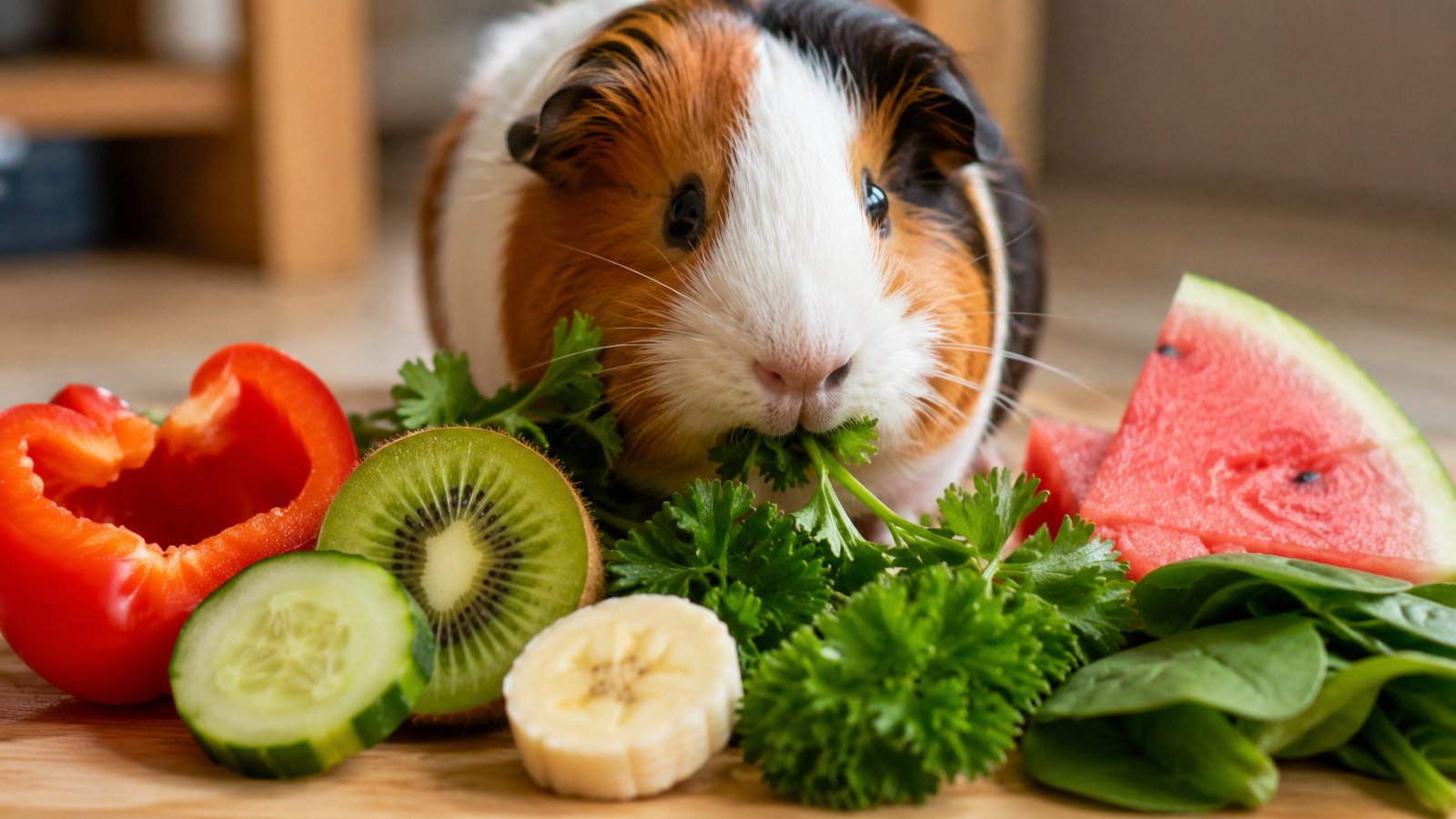
Guinea pig potassium rich treats can support healthy muscle function, hydration, nerve signaling, and overall wellness when offered in the right amounts. Safe options include small portions of banana, kiwi, spinach, bell peppers, parsley, cucumber, and melon. The key is balance: guinea pigs need a diet centered on hay, while potassium-rich treats should remain occasional additions rather than daily staples.
Many guinea pig owners search for healthy snacks that provide extra nutrients without upsetting digestion. Potassium is one of those nutrients that matters more than people realize, yet too much sugar or calcium from certain treats can create problems. Choosing the right foods — and serving them correctly — helps your guinea pig stay healthy while still enjoying variety.
This guide explains the best potassium-rich treats for guinea pigs, which foods to avoid, proper serving sizes, and how to safely introduce new snacks into your pet’s diet.
In This Article
What Is Potassium and Why Do Guinea Pigs Need It?
Potassium is an essential mineral that helps regulate several important body functions in guinea pigs, including:
- Muscle contractions
- Heart function
- Fluid balance
- Nerve communication
- Digestive function
Like humans, guinea pigs rely on a balanced intake of minerals to stay healthy. Potassium works alongside sodium and magnesium to maintain normal body processes.
A healthy guinea pig eating quality hay, pellets, and vegetables usually gets enough potassium naturally. Treats rich in potassium are not necessary every day, but they can provide nutritional variety and enrichment when fed properly.
Quick Summary: Best Potassium Rich Treats for Guinea Pigs
| Treat | Potassium Level | Safe Frequency | Important Notes |
| Banana | High | Occasional | Very sugary |
| Kiwi | High | 1–2 times weekly | Also rich in vitamin C |
| Bell Pepper | Moderate | Daily safe | Excellent staple veggie |
| Parsley | Moderate | Small amounts | High calcium |
| Spinach | Moderate | Occasionally | Oxalates may contribute to stones |
| Cucumber | Mild | Several times weekly | Hydrating snack |
| Watermelon | Moderate | Occasionally | High water and sugar |
| Romaine Lettuce | Mild | Regularly | Safer than iceberg |
| Celery | Moderate | Small portions | Remove stringy fibers |
| Tomato | Moderate | Occasionally | Avoid leaves and stems |
The Best Guinea Pig Potassium Rich Treats
Bananas
Bananas are among the most potassium-rich fruits guinea pigs can eat. They also contain vitamin B6 and natural sugars.
Because bananas are sugary and starchy, they should only be offered occasionally.
Safe serving size
- 1–2 small slices
- Once weekly or less
Benefits
- High potassium content
- Soft texture for older guinea pigs
- Good enrichment treat
Drawbacks
- Very high sugar
- Can contribute to obesity
- May upset digestion if overfed
Banana peels are technically edible if thoroughly washed and pesticide-free, but many owners avoid them because of residue concerns.
Kiwi
Kiwi is one of the best fruit treats for guinea pigs because it combines potassium with high vitamin C content.
Guinea pigs cannot produce their own vitamin C, so foods containing this nutrient are especially valuable.
Safe serving size
- 1–2 bite-sized pieces
- Once or twice weekly
Benefits
- Rich in vitamin C
- Good potassium source
- Usually well accepted by guinea pigs
Drawbacks
- Acidic fruit may irritate sensitive mouths
- Too much can cause loose stools
Remove seeds only if unusually large, though kiwi seeds are generally harmless in small amounts.
Bell Peppers
Bell peppers are one of the healthiest vegetables for guinea pigs overall. While not as potassium-dense as bananas, they provide moderate potassium alongside extremely high vitamin C.
Red bell peppers contain the most vitamin C, though green peppers contain less sugar.
Safe serving size
- Several thin slices daily
Benefits
- Excellent daily vegetable
- Low sugar
- Supports immune health
Drawbacks
- Some guinea pigs dislike green peppers initially
Bell peppers are often considered one of the safest daily vegetables for guinea pigs.
Parsley
Parsley contains potassium, vitamin C, and antioxidants, but it also contains high calcium levels.
That calcium content means parsley should be treated more like a supplement vegetable than a daily staple.
Safe serving size
- Small sprig once or twice weekly
Benefits
- Nutrient-dense herb
- Encourages foraging behavior
- Aromatic and appealing
Drawbacks
- Excess calcium may contribute to bladder stones in susceptible guinea pigs
Rotate parsley with lower-calcium greens instead of feeding it every day.
Spinach
Spinach provides potassium, iron, and other nutrients, but it also contains oxalates. Excessive oxalates may increase the risk of urinary stones in some guinea pigs.
Safe serving size
- One or two leaves occasionally
Benefits
- Nutrient-rich leafy green
- Adds variety
Drawbacks
- High oxalate content
- Not ideal as a frequent food
Spinach works best as an occasional addition to a varied vegetable rotation.
Cucumber
Cucumber is not extremely high in potassium, but it contributes hydration and mild mineral support.
It is especially useful during warmer weather when guinea pigs may benefit from extra moisture.
Safe serving size
- Several thin slices
- A few times weekly
Benefits
- Hydrating
- Low calorie
- Easy to digest
Drawbacks
- Too much may cause soft stools
Watermelon
Watermelon contains potassium and lots of water, making it a refreshing occasional treat.
Safe serving size
- Small cube without seeds
- Occasionally only
Benefits
- Hydrating
- Refreshing in hot weather
Drawbacks
- High sugar
- Can cause diarrhea if overfed
Avoid feeding watermelon rind unless thoroughly washed and served in tiny amounts.
How Much Potassium Do Guinea Pigs Need?
Exact potassium requirements vary depending on age, health status, and diet composition. Most healthy guinea pigs receive adequate potassium from:
- Timothy hay
- Guinea pig pellets
- Fresh vegetables
Treats should complement the diet rather than serve as the main nutrient source.
A balanced guinea pig diet should generally include:
- Unlimited hay (about 80% of diet)
- Fresh vegetables daily
- Limited pellets
- Small treats occasionally
Signs Your Guinea Pig Is Getting Too Many Treats
Many potassium-rich foods are also sugary or high in calcium. Overfeeding treats can lead to health issues even if the foods themselves are nutritious.
Watch for signs such as:
- Weight gain
- Loose stools
- Reduced hay intake
- Bloating
- Selective eating
- Less interest in pellets or vegetables
Hay consumption should always remain the priority. If treats reduce hay intake, cut back immediately.
Common Mistakes When Feeding Potassium Rich Treats
Feeding Too Much Fruit
This is the most common issue among guinea pig owners.
Bananas, watermelon, and kiwi contain beneficial nutrients, but their sugar content means they should stay occasional.
Ignoring Calcium Levels
Some potassium-rich greens are also high in calcium.
Examples include:
- Parsley
- Spinach
- Kale
Too much calcium may increase the risk of urinary sludge or bladder stones in susceptible guinea pigs.
Changing Diets Too Quickly
Guinea pigs have sensitive digestive systems.
Introducing large amounts of unfamiliar foods suddenly can trigger:
- Gas
- Diarrhea
- Appetite loss
Always introduce new treats slowly.
Feeding Unsafe Foods
Some foods rich in potassium are unsafe for guinea pigs.
Avoid:
- Avocado
- Potato
- Onion
- Garlic
- Rhubarb
- Fruit pits or seeds from stone fruits
Best Practices for Feeding Guinea Pig Treats
Wash Produce Thoroughly
Pesticides and residues can harm small pets. Rinse fruits and vegetables carefully before feeding.
Rotate Vegetables
A varied diet helps prevent excesses of:
- Sugar
- Calcium
- Oxalates
Rotating greens also keeps mealtime interesting.
Prioritize Hay
No treat should replace unlimited hay access.
Hay supports:
- Dental health
- Digestion
- Natural chewing behavior
Use Treats for Enrichment
Instead of handing treats directly every time, try:
- Hiding small vegetable pieces in hay
- Using forage toys
- Scatter feeding
- Offering leafy greens clipped safely around the enclosure
This encourages natural exploration and activity.
Are Potassium Supplements Necessary for Guinea Pigs?
In most cases, no.
Healthy guinea pigs eating a balanced diet rarely need potassium supplements. Giving supplements without veterinary guidance may disrupt mineral balance.
A veterinarian may recommend supplementation only in specific medical situations, such as:
- Illness
- Dehydration
- Appetite loss
- Certain metabolic conditions
Never use human electrolyte drinks or supplements unless specifically directed by an exotic veterinarian.
Potassium Rich Treats vs Vitamin C Rich Foods
Many guinea pig owners focus primarily on vitamin C because guinea pigs cannot make it themselves.
That concern is valid, but the best foods often provide multiple nutrients at once.
Here’s how some common foods compare:
| Food | Potassium | Vitamin C | Sugar Level |
| Bell Pepper | Moderate | Very high | Low |
| Kiwi | High | High | Moderate |
| Banana | High | Low | High |
| Parsley | Moderate | High | Low |
| Watermelon | Moderate | Low | High |
| Romaine Lettuce | Mild | Mild | Low |
Bell peppers are often considered one of the best all-around daily vegetables because they balance nutrients without excessive sugar.
Step-by-Step: Introducing New Treats Safely
1. Start Small
Offer a tiny piece about the size of your thumbnail.
2. Observe for 24 Hours
Watch for:
- Soft stools
- Gas
- Reduced appetite
- Behavioral changes
3. Increase Slowly
If tolerated well, slightly increase portions over time.
4. Rotate Foods
Avoid feeding the same fruit daily.
5. Monitor Weight
Treats should not contribute to obesity.
Can Baby Guinea Pigs Eat Potassium Rich Treats?
Young guinea pigs can eat many vegetables safely, but sugary fruits should remain very limited.
Baby guinea pigs benefit more from:
- Hay
- High-quality pellets
- Leafy greens
- Bell peppers
Rich fruits should be introduced cautiously and in tiny amounts.
FAQ About Guinea Pig Potassium Rich Treats
What fruit has the most potassium for guinea pigs?
Bananas are among the highest-potassium fruits safe for guinea pigs, but they should only be fed in small amounts because of their sugar content.
Can guinea pigs eat bananas every day?
No. Daily banana feeding may contribute to obesity and digestive issues. Offer bananas only occasionally.
Are bell peppers high in potassium?
Bell peppers contain moderate potassium and are one of the healthiest daily vegetables for guinea pigs due to their high vitamin C content.
Is spinach safe for guinea pigs?
Yes, but only occasionally. Spinach contains oxalates that may contribute to urinary problems if fed excessively.
Do guinea pigs need potassium supplements?
Most healthy guinea pigs do not need supplements if they eat a balanced diet with hay, pellets, and fresh vegetables.
What is the healthiest treat for guinea pigs?
Bell peppers are often considered one of the healthiest options because they are low in sugar and rich in vitamin C.
Quick Takeaways
- Potassium supports muscle, nerve, and hydration functions in guinea pigs.
- Healthy potassium-rich treats include banana, kiwi, bell peppers, parsley, cucumber, and watermelon.
- Fruit should remain occasional because of sugar content.
- Some greens high in potassium are also high in calcium or oxalates.
- Unlimited hay should always remain the foundation of the diet.
- Introduce new treats slowly to avoid digestive upset.
Final Thoughts on Guinea Pig Potassium Rich Treats
Guinea pig potassium rich treats can add variety, enrichment, and useful nutrients to your pet’s diet when chosen carefully. The safest approach is moderation: small portions, balanced vegetable rotation, and limited sugary fruit.
Bell peppers, cucumber, romaine lettuce, and occasional kiwi tend to offer the best balance between nutrition and safety. High-sugar fruits like bananas and watermelon work best as rare treats rather than routine snacks.
A healthy guinea pig diet does not depend on any single “superfood.” Consistency, hay intake, fresh water, and balanced vegetables matter far more than chasing one nutrient. When treats are offered thoughtfully, they become a healthy part of keeping guinea pigs happy, stimulated, and well nourished.

Passionate about pets and animal care, we shares trusted tips, fun facts, and practical advice to help pet lovers give their furry, feathered, and scaly companions the best life possible. From everyday care guides to fascinating animal insights, we’re dedicated to making pet information easy, helpful, and enjoyable for every reader.
1 thought on “Guinea Pig Potassium Rich Treats: Safe Fruits and Vegetables Your Guinea Pig Can Enjoy”