
Trending exotic pets care has become one of the fastest-growing topics among pet lovers—and for good reason. From colorful reptiles to tiny, curious mammals, exotic pets offer a unique companionship that traditional pets simply can’t match.
This guide breaks down everything you need to know before diving in. You’ll learn what qualifies as an exotic pet, which animals are currently trending, and what it really takes to care for them responsibly. Expect practical tips, honest insights, and important warnings to help you avoid costly or harmful mistakes.
In This Article
Why “Trending Exotic Pets Care” Is Gaining Massive Attention in 2026
Exotic pets are no longer niche. Scroll through social media and you’ll see everything from geckos perched on shoulders to sugar gliders bonding with their owners. This surge in visibility has sparked curiosity—and a wave of new pet owners.
Several factors are driving this trend:
- Unique appeal: Exotic pets stand out. Their colors, behaviors, and personalities feel “new” compared to cats and dogs.
- Space-friendly options: Many species require less room, making them ideal for apartment living.
- Social media influence: Viral videos often make exotic pets look easy to care for—which isn’t always true.
That last point is important. While these pets look fascinating, their care can be far more complex than expected.
Who should read this guide?
- Beginners exploring exotic pet ownership
- Pet owners considering switching to something different
- Curious readers wanting to understand the responsibilities
Owning an exotic pet isn’t just trendy—it’s a commitment that requires knowledge and preparation.
What Counts as an Exotic Pet? (And Why Care Is Different)
The term “exotic pet” refers to animals that are not traditionally domesticated. These animals often come with specific environmental, dietary, and behavioral needs that differ significantly from cats or dogs.
What is considered an exotic pet?
Common categories include:
- Reptiles: Geckos, snakes, turtles
- Small mammals: Hedgehogs, sugar gliders, ferrets
- Amphibians: Frogs, salamanders
- Invertebrates: Tarantulas, stick insects
Why exotic pets require specialized care
Unlike domesticated animals, exotic pets often rely on conditions that closely mimic their natural habitat.
Key differences include:
- Temperature & humidity control: Many species need precise environmental conditions to survive.
- Specialized diets: Some require live insects, fresh plants, or carefully balanced nutrients.
- Stress sensitivity: Improper handling or environment can quickly lead to health issues.
A small mistake—like incorrect humidity—can cause serious problems such as dehydration or respiratory illness.
Legal and ethical considerations
Before bringing home an exotic pet, always check local regulations. Some species are restricted or require permits.
For ethical guidance on responsible ownership, refer to trusted organizations like the
👉 https://www.aspca.org/pet-care/general-pet-care/exotic-pets
Important reminder:
Not every exotic pet is suitable for every home. Research always comes first.
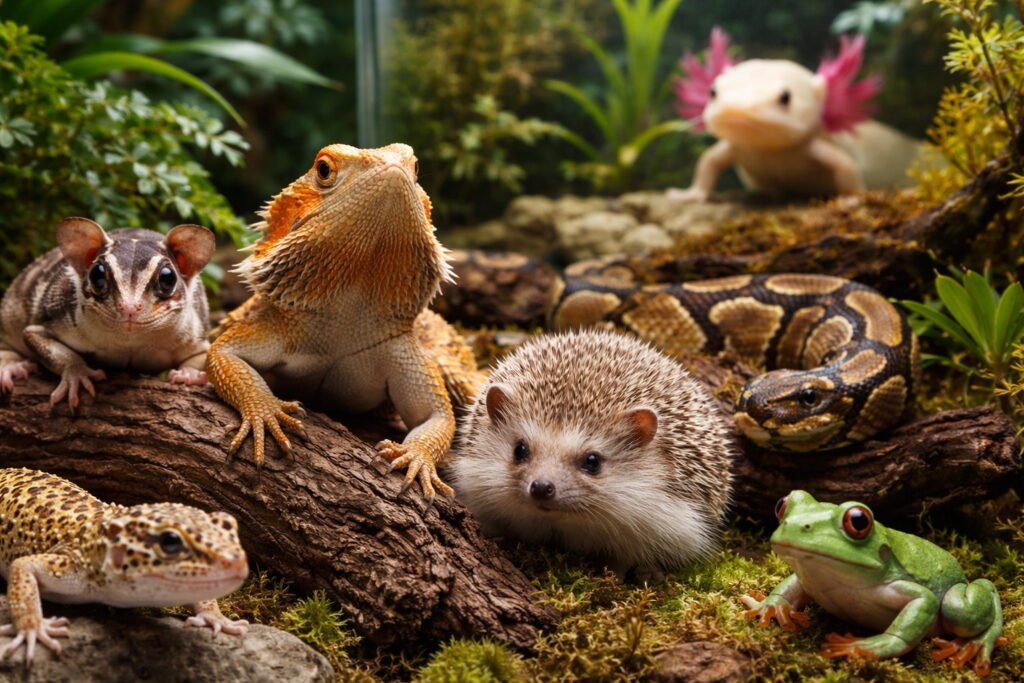
Most Popular Trending Exotic Pets Right Now (And Their Care Needs)
Curiosity often starts with “What exotic pet should I get?” The answer depends on your experience level, time, and budget.
Here’s a quick look at some of the most popular choices in trending exotic pets care today:
Reptiles (Low to Moderate Maintenance)
- Leopard geckos: Beginner-friendly, require simple heating setups
- Ball pythons: Calm temperament but need precise humidity
- Bearded dragons: Interactive but require UVB lighting and varied diets
Small Mammals (Moderate to High Maintenance)
- Sugar gliders: Social animals that need companionship and bonding time
- Hedgehogs: Low interaction but require temperature control
- Ferrets: Playful but demand supervision and training
Amphibians & Invertebrates (Specialized Care)
- Tree frogs: Sensitive to environmental changes
- Axolotls: Require clean, cool water conditions
- Tarantulas: Minimal handling but specific enclosure needs
Quick Comparison Table
| Pet Type | Difficulty Level | Interaction Level | Key Challenge |
| Leopard Gecko | Easy | Low | Temperature regulation |
| Sugar Glider | Hard | High | Social needs & bonding |
| Bearded Dragon | Moderate | Medium | Lighting & diet balance |
| Axolotl | Moderate | Low | Water quality maintenance |
Key takeaway:
The more “unique” the pet, the more specific the care requirements.
Choosing the wrong pet for your lifestyle is one of the biggest mistakes beginners make. Start with a species that matches your experience level—not just your interest.
Trending Exotic Pets Care Basics: What Every Owner Must Get Right
Getting the basics right is the difference between a thriving exotic pet and one that struggles. Many health issues trace back to simple mistakes in daily care.
Habitat essentials you can’t ignore
Exotic pets depend heavily on their environment. Unlike cats or dogs, they can’t adapt easily.
Focus on these core elements:
- Temperature control: Use heat lamps, pads, or regulated systems depending on species
- Humidity levels: Critical for reptiles and amphibians—too low or too high can be dangerous
- Lighting: UVB lighting is essential for many reptiles to process calcium properly
Skipping proper lighting or temperature setup is one of the fastest ways to harm your pet.
Feeding fundamentals made simple
Each species has unique dietary needs, but a few rules apply across the board:
- Avoid guessing—research exact dietary requirements
- Use fresh, high-quality food sources
- Never rely on a single food type unless it’s specifically recommended
For example, feeding only mealworms to a reptile that needs variety can lead to nutrient deficiencies over time.
Cleanliness and hygiene routines
A clean habitat isn’t just about appearance—it directly impacts your pet’s health.
- Remove waste daily
- Replace substrate regularly
- Disinfect enclosures safely (avoid harsh chemicals)
Dirty enclosures can lead to infections, parasites, and respiratory issues.
Time commitment: more than you think
Some exotic pets are low-interaction, but that doesn’t mean low effort.
- Daily checks (temperature, food, behavior)
- Weekly cleaning routines
- Ongoing monitoring for signs of stress or illness
Consistency matters more than intensity. Small daily care goes a long way.
Setting Up the Perfect Habitat for Exotic Pets (Step-by-Step)
Creating the right environment is one of the most important parts of trending exotic pets care. A well-designed habitat mimics nature and keeps your pet comfortable and stress-free.
Choosing the right enclosure
Start with the correct enclosure size and type:
- Glass terrariums for reptiles and amphibians
- Wire cages for small mammals
- Aquatic tanks for species like axolotls
Bigger is usually better, as long as the environment remains controlled.
Step-by-step habitat setup
Follow this simple process:
- Step 1: Install heating and lighting equipment
- Step 2: Add substrate (soil, sand, bark, or water depending on species)
- Step 3: Include hiding spots for security
- Step 4: Add climbing or enrichment elements
- Step 5: Test temperature and humidity before introducing your pet
Never place your pet into an untested enclosure.
Natural vs artificial setups
Both options can work well:
- Natural setups: Look realistic and support natural behaviors
- Artificial setups: Easier to clean and maintain
Choose based on your experience level and available time.
Common beginner mistakes to avoid
- Using the wrong substrate (can cause impaction or injury)
- Placing the enclosure in direct sunlight
- Ignoring ventilation needs
Quick tip:
Always research your specific species—there’s no “one-size-fits-all” habitat.
Budget vs premium setups
You don’t need the most expensive setup—but cutting corners can backfire.
- Budget setups can work if essentials are covered
- Premium setups offer better durability and control
Focus your budget on heating, lighting, and safety first.
Exotic Pet Nutrition Guide: Feeding for Health and Longevity
Nutrition plays a major role in trending exotic pets care, yet it’s often misunderstood. Many new owners accidentally underfeed, overfeed, or provide the wrong diet entirely.
Understanding species-specific diets
Every exotic pet has evolved to eat a very specific diet.
Examples include:
- Insectivores (e.g., geckos) → live insects
- Herbivores (e.g., some reptiles) → leafy greens and vegetables
- Omnivores (e.g., bearded dragons) → mix of plants and protein
Feeding the wrong diet can lead to serious health problems within weeks.
Live food vs commercial food
This is a common debate among owners.
Live food benefits:
- Encourages natural hunting behavior
- Often higher in nutrients
Commercial food benefits:
- Convenient and easy to store
- Balanced when high-quality brands are used
The best approach is often a combination of both.
Supplementation: small detail, big impact
Many exotic pets need additional nutrients:
- Calcium supplements: Prevent bone disorders
- Vitamin D3: Supports calcium absorption
- Multivitamins: Fill nutritional gaps
Improper supplementation can cause as many problems as deficiencies, so follow recommended guidelines carefully.
Feeding schedules and portion control
Consistency is key:
- Young animals usually eat more frequently
- Adults often require less frequent feeding
- Overfeeding can lead to obesity, especially in captive environments
Simple feeding guide example:
| Pet Type | Feeding Frequency | Portion Tip |
| Gecko | Daily | Small insects per feeding |
| Snake | Weekly | Prey size = body width |
| Hedgehog | Daily | Controlled portion, avoid excess |
Pro tip from experienced owners
Observe your pet, not just the feeding chart.
Changes in appetite often signal underlying issues. If your pet suddenly stops eating or overeats, it’s worth investigating further—or consulting an exotic vet.
Health Care for Exotic Pets: Signs You Should Never Ignore
Health issues in exotic animals can escalate quickly—and many species instinctively hide illness. That’s why early detection is critical in trending exotic pets care.
Subtle warning signs most owners miss
Exotic pets rarely show obvious symptoms until a condition becomes serious.
Watch closely for:
- Loss of appetite or sudden overeating
- Unusual lethargy or reduced movement
- Changes in skin, scales, or fur (discoloration, shedding problems)
- Difficulty breathing or open-mouth breathing
- Swelling, lumps, or abnormal posture
A small behavioral change is often the first red flag.
Why exotic veterinarians matter
Not all vets are trained to treat exotic species. Finding a qualified exotic veterinarian should be a priority before you even get your pet.
- Specialized knowledge in reptiles, amphibians, or small mammals
- Proper diagnostic tools for non-traditional pets
- Safer, species-specific treatments
For guidance on finding and caring for exotic animals, check this trusted resource:
👉 https://www.avma.org/resources-tools/pet-owners/petcare/exotic-pets
Preventive care that actually works
Prevention is far easier—and cheaper—than treatment.
Build these habits:
- Regular habitat cleaning and monitoring
- Proper nutrition and supplementation
- Routine observation of behavior and appetite
Some experienced owners even keep a simple log of feeding, shedding, and activity.
Quarantine practices for new pets
Bringing home a new exotic pet? Never skip quarantine.
- Keep new animals separate for at least 2–4 weeks
- Monitor for signs of illness
- Avoid sharing equipment between enclosures
This simple step can prevent disease from spreading to other pets.
When to see a vet immediately
- Refusal to eat for several days (species-dependent)
- Visible injuries or bleeding
- Severe breathing issues
- Rapid weight loss
When in doubt, act early. Waiting too long is one of the most common—and costly—mistakes.
Common Mistakes in Trending Exotic Pets Care (And How to Avoid Them)
Even well-meaning owners make mistakes, especially in the beginning. Understanding these pitfalls can save you time, money, and stress—while protecting your pet’s health.
Impulse buying without research
Exotic pets often look easy to care for online, but reality is very different.
Better approach:
- Research care requirements thoroughly
- Understand lifespan, costs, and daily needs
- Prepare the habitat before bringing your pet home
Buying first and researching later almost always leads to problems.
Incorrect temperature and humidity levels
Environmental mistakes are the number one cause of illness in exotic pets.
- Too cold → slowed metabolism, poor digestion
- Too hot → stress and dehydration
- Incorrect humidity → shedding issues or respiratory problems
Always use reliable thermometers and hygrometers.
Overhandling and stress
Not all exotic pets enjoy human interaction.
- Excessive handling can cause chronic stress
- Some species prefer minimal contact
Learn your pet’s tolerance level and respect it.
Feeding the wrong diet
Many beginners rely on outdated or incorrect advice.
- Feeding only one food source
- Skipping supplements
- Offering unsafe or toxic foods
Nutrition mistakes often show up as long-term health issues.
Ignoring early warning signs
Small issues can quickly become serious if ignored.
- Delayed treatment
- Misinterpreting behavior as “normal”
- Waiting until symptoms worsen
Trust your instincts—if something feels off, investigate.
Handling & Bonding: Can Exotic Pets Be Affectionate?
One of the biggest questions in trending exotic pets care is whether these animals can form bonds with humans. The answer depends heavily on the species—and your expectations.
Which exotic pets tolerate handling?
Some species are more interaction-friendly than others:
- More tolerant: Bearded dragons, some geckos, ferrets
- Moderate tolerance: Hedgehogs, certain snakes
- Low tolerance: Amphibians, many insects
Important: Tolerance doesn’t always mean affection. Many exotic pets simply accept handling rather than seek it.
Safe handling techniques
Handling should always be calm and controlled.
- Wash your hands before and after
- Support the animal’s body fully
- Avoid sudden movements or loud noises
Improper handling can cause injury or long-term stress.
Building trust over time
Bonding with exotic pets requires patience.
- Start with short, gentle interactions
- Let the pet become familiar with your presence
- Maintain a consistent routine
Trust builds slowly—but it’s rewarding when done right.
Understanding stress signals
Recognizing stress is essential for responsible care.
Common signs include:
- Hissing, puffing up, or defensive posture
- Attempting to escape or hide constantly
- Refusal to eat after handling
If you notice these signs, reduce interaction and allow your pet to settle.
Reality check for new owners
Exotic pets are not replacements for cats or dogs in terms of affection.
Their value comes from observing unique behaviors and providing specialized care—not cuddling.
Cost Breakdown: Is Owning an Exotic Pet Expensive?
One of the most overlooked aspects of trending exotic pets care is the true cost. Many new owners focus on the purchase price, but the real expenses come afterward.
Initial setup vs ongoing costs
Your upfront investment can vary widely depending on the species.
Initial costs may include:
- Enclosure or tank
- Heating and lighting equipment
- Substrate and decor
- First veterinary check
Ongoing expenses include:
- Food (live insects, fresh produce, or specialized diets)
- Electricity (heating lamps, UVB lights)
- Replacement supplies (substrate, bulbs, filters)
- Vet visits
Typical cost comparison
| Expense Type | Budget Range (Monthly) | Notes |
| Food | Low–Moderate | Depends on species and diet |
| Electricity | Moderate | Heating and lighting run daily |
| Supplies | Low | Substrate and cleaning materials |
| Vet Care | Variable | Can be expensive for exotic specialists |
Hidden costs most owners don’t expect
- Emergency veterinary care
- Replacing faulty equipment
- Upgrading enclosures as pets grow
- Travel or pet-sitting arrangements
Ethical Considerations: Should You Own a Trending Exotic Pet?
Before committing, it’s worth asking a bigger question: Should you own an exotic pet at all?
Wild-caught vs captive-bred animals
This is one of the most important ethical factors.
- Captive-bred pets: Safer, healthier, and better adapted to captivity
- Wild-caught animals: Often stressed, harder to care for, and harmful to ecosystems
Always choose captive-bred whenever possible.
Environmental and conservation impact
Some exotic pet trades contribute to declining wild populations.
- Overharvesting in certain regions
- Disruption of ecosystems
- Illegal wildlife trade concerns
Responsible ownership means being aware of where your pet comes from.
Responsibility beyond the trend
Trends come and go—but your pet depends on you for years.
- Many exotic pets have long lifespans
- Some require daily specialized care
- Rehoming can be difficult
Owning an exotic pet is a long-term responsibility, not a short-term curiosity.
When NOT to get an exotic pet
- You don’t have time for daily care
- You’re unsure about long-term commitment
- You’re relying only on social media information
Sometimes the most responsible choice is choosing not to own one.
Expert Tips for First-Time Exotic Pet Owners
Starting your journey with the right mindset makes everything easier—and safer for your pet.
Start with beginner-friendly species
Choose pets known for manageable care requirements:
- Leopard geckos
- Corn snakes
- Certain species of frogs
Avoid high-maintenance animals until you gain experience.
Research beyond the basics
Go deeper than quick online guides.
- Read multiple sources
- Watch experienced keepers
- Join reputable communities
The more you learn before buying, the fewer problems you’ll face later.
Build a support network
Exotic pet ownership becomes easier with support.
- Online forums and groups
- Local exotic vets
- Experienced hobbyists
You’ll always have questions—having trusted sources helps.
Keep a simple care routine
Consistency is key:
- Feed at the same times
- Monitor environment daily
- Track behavior changes
Routine creates stability, which reduces stress for your pet.
Frequently Asked Questions About Trending Exotic Pets Care
Are exotic pets good for beginners?
Some are, but many require specialized care. Beginner-friendly species like leopard geckos are a better starting point.
Which exotic pet is the easiest to care for?
Generally, reptiles like geckos or certain snakes are considered easier due to simpler routines.
Do exotic pets recognize their owners?
Some species can become familiar with their owners, especially through consistent interaction, but recognition varies widely.
How long do exotic pets live?
Lifespans vary greatly—some reptiles can live 10–20 years or more, while smaller species may live only a few years.
Is it legal to own exotic pets everywhere?
No, laws vary by region. Always check local regulations before getting an exotic pet.
Final Thoughts: Is Exotic Pet Ownership Right for You?
Exotic pets can be fascinating, rewarding, and truly unique companions—but they come with responsibilities that go far beyond trends. Proper trending exotic pets care means understanding your pet’s needs, committing to consistent routines, and always putting their well-being first.
If you’re willing to invest the time, effort, and research, exotic pet ownership can be an incredibly fulfilling experience.
Thinking about getting one? Start by choosing a beginner-friendly species, set up the perfect habitat in advance, and continue learning every step of the way.
For more practical guides on pet care, nutrition, and health, explore more articles on MyPetInfoo.com—your pet will thank you for it. 🐾