
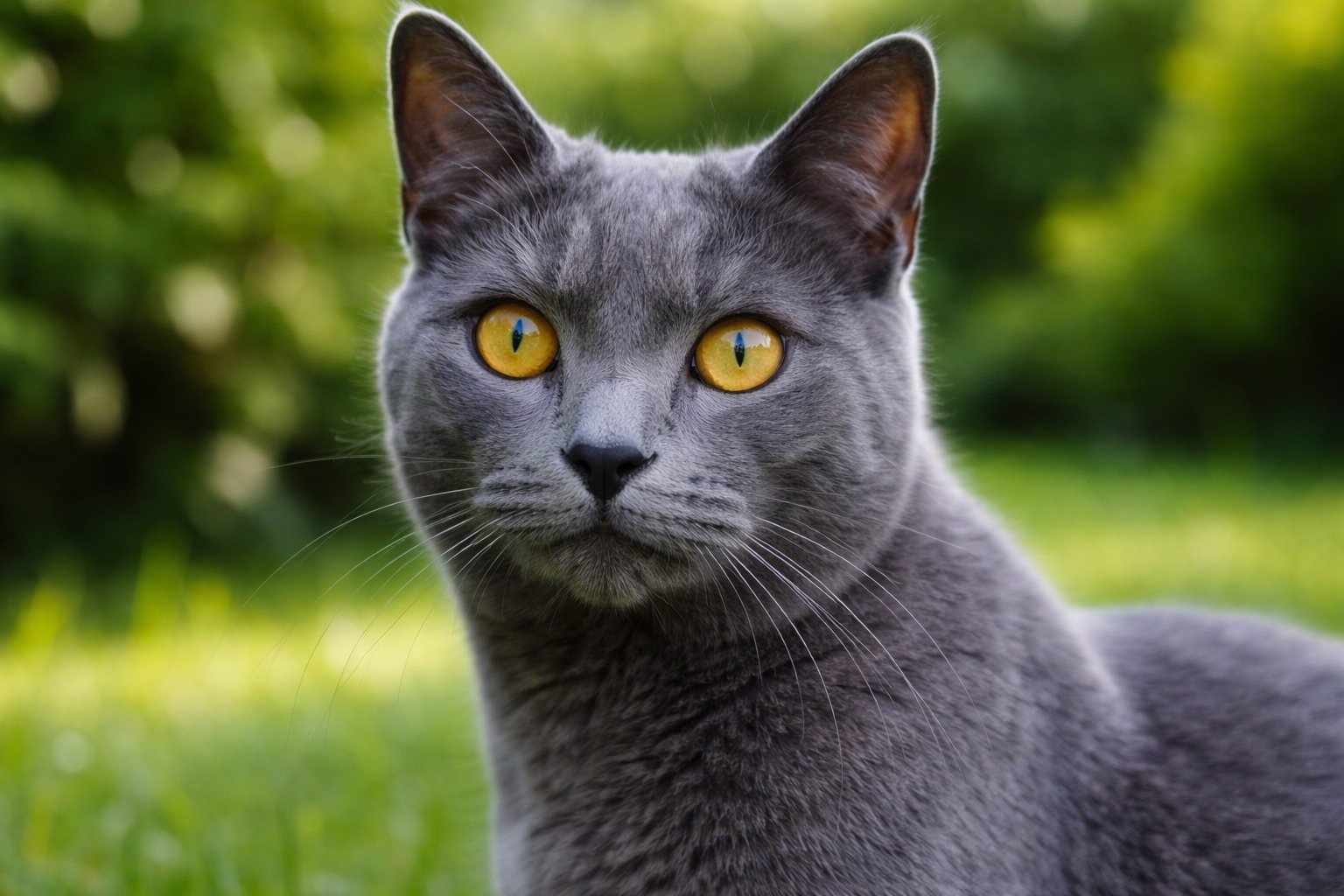
Russian Blue with yellow eyes sparks curiosity because it challenges what many cat lovers believe about this elegant breed. The Russian Blue is famously associated with vivid emerald-green eyes paired with a plush blue-gray coat. Still, real-world observations show that some Russian Blue cats display yellow, amber, or golden eye tones, especially at certain life stages.
Interest in Russian Blue with yellow eyes has grown for three main reasons:
- Increased visibility of non-show-line Russian Blues
- Greater awareness of kitten eye color development
- Confusion between breed standards and natural variation
This article focuses exclusively on Russian Blue with yellow eyes, explaining where this trait comes from, whether it is acceptable, and how it compares to the classic green-eyed look—without drifting into other breeds or unrelated cat topics.
In This Article
Eye Color Genetics in Russian Blue Cats
Eye color in cats is governed by melanin concentration and light reflection within the iris. Russian Blues inherit genes that typically reduce pigment, leading to green eyes, yet genetics never operate in isolation.
How Eye Color Develops
Russian Blue kittens are always born with blue eyes, a universal feline trait. Over time, pigment begins to form.
Typical timeline:
- 0–6 weeks: Blue eyes in all kittens
- 2–4 months: Blue fades to yellowish or pale green
- 6–12 months: Final color settles
Yellow eyes often appear as a transitional phase, though some Russian Blues retain yellow permanently.
Genetic Factors Behind Yellow Eyes
Several elements influence eye color outcome:
- Polygenic inheritance – multiple genes interacting rather than a single dominant gene
- Lower melanin suppression in some bloodlines
- Non-show-line breeding, where strict emerald-green selection is not enforced
| Eye Color | Pigment Level | Light Reflection |
| Green | Low melanin + high refraction | Bright emerald glow |
| Yellow | Moderate melanin | Warm amber tone |
Yellow eyes do not automatically mean mixed breeding. Genetics can naturally allow variation.
“Eye color in Russian Blues is influenced by selective breeding more than absolute genetic restriction.”
— Feline Genetics Journal
Russian Blue with Yellow Eyes vs Green-Eyed Russian Blues
Comparing Russian Blue with yellow eyes to their green-eyed counterparts helps clear misconceptions about quality and authenticity.
Breed Standards vs Real Cats
Cat fancier associations such as CFA and FIFe prefer vivid green eyes for show competitions. Standards represent ideals—not the full reality of the breed population.
Key differences:
- Show lines: Strict green-eye selection
- Pet lines: Natural variation, including yellow eyes
Visual and Personality Comparison
| Trait | Yellow-Eyed Russian Blue | Green-Eyed Russian Blue |
| Coat color | Blue-gray, silver-tipped | Blue-gray, silver-tipped |
| Eye color | Yellow to amber | Emerald green |
| Temperament | Gentle, loyal, intelligent | Gentle, loyal, intelligent |
| Health | No difference | No difference |
Personality traits remain identical, since eye color has no behavioral impact.
Does Eye Color Affect Authenticity?
Authenticity depends on:
- Coat texture and color
- Body structure
- Head shape and ear placement
Eye color alone does not disqualify a Russian Blue from being genuine, especially outside competitive shows.
Are Russian Blue with Yellow Eyes Purebred?
Questions about purity often follow any Russian Blue with yellow eyes, mainly because popular imagery highlights only green-eyed examples. Purity, however, depends on lineage and physical traits, not a single aesthetic characteristic.
Can Purebred Russian Blues Have Yellow Eyes?
Yes. Purebred Russian Blues can have yellow eyes, particularly when they come from:
- Pet-quality breeding lines rather than show-focused programs
- Bloodlines where eye color was not strictly selected across generations
- Russian Blues bred for temperament and health over appearance
Breeders concentrating on companionship traits often allow natural variation to remain rather than narrowing the gene pool solely to achieve show standards.
Why Breed Registries Still Prefer Green Eyes
Registry preferences exist to standardize appearance, not to define biological legitimacy. Green eyes were historically emphasized because they:
- Complement the silver-tipped blue coat visually
- Became a distinguishing marker from similar blue-coated breeds
A Russian Blue with yellow eyes may fail a show ring requirement, yet remains genetically Russian Blue.
Signs of a Purebred Russian Blue Beyond Eye Color
Eye color should never be assessed in isolation. Strong purity indicators include:
- Dense double coat with soft, plush texture
- Silver-tipped hairs creating a frosted appearance
- Long, fine-boned body
- Wedge-shaped head with large upright ears
When these traits align, yellow eyes do not negate breed authenticity.
Russian Blue with Yellow Eyes at Different Life Stages
Eye color in a Russian Blue with yellow eyes often evolves, which explains why many owners feel uncertain during the first year.
Eye Color Changes from Kitten to Adult
Most Russian Blue kittens pass through a yellow-eye phase before reaching maturity.
Typical progression:
- Blue → pale yellow
- Pale yellow → greenish yellow
- Greenish yellow → green or stable amber
Some cats never complete the final transition.
| Age | Common Eye Color |
| 8 weeks | Blue |
| 4 months | Yellow |
| 6–9 months | Yellow-green |
| 12+ months | Green or yellow |
When Yellow Eyes Remain Permanent
Yellow eyes often stay when:
- Both parents carried yellow-eye genes
- Green pigmentation genes are incomplete
- The cat reaches 14–16 months without color shift
Stable amber or golden eyes after adulthood indicate a permanent trait rather than delayed development.
“If green pigment hasn’t emerged by the end of adolescence, it’s unlikely to appear later.”
— Veterinary Ophthalmology Review
Health Implications of Yellow Eyes in Russian Blue Cats
Healthy concern arises when people confuse eye color variation with illness. A Russian Blue with yellow eyes is usually perfectly healthy.
Normal vs Abnormal Yellow Eyes
Natural eye color:
- Clear, bright, evenly pigmented
- Symmetrical between both eyes
- Present from early development
Potential health warning signs:
- Sudden yellowing in adulthood
- Cloudiness or discharge
- Redness or swelling
Yellow eyes from birth or kittenhood are not linked to disease.
When to Consult a Veterinarian
Immediate vet attention is advised if yellow eyes appear alongside:
- Lethargy
- Appetite loss
- Yellowing of gums or ears
These could indicate jaundice or liver issues, unrelated to natural pigmentation.
Preventive Eye Care Tips
- Annual veterinary exams
- Balanced diet rich in taurine
- Clean, dust-free living space
Eye color itself has no known correlation with lifespan, vision quality, or genetic weakness in Russian Blues.
Aesthetic Appeal of Russian Blue with Yellow Eyes
Visual contrast plays a powerful role in the growing fascination with the Russian Blue with yellow eyes. Against the breed’s signature blue-gray coat, yellow or amber eyes create a striking and memorable appearance.
Why Yellow Eyes Stand Out
Yellow eyes introduce warmth and intensity that differs from the cool elegance of green. This contrast makes facial expressions appear more pronounced and often gives the cat a regal, owl-like gaze.
Key visual advantages include:
- High contrast with silver-tipped fur
- Eyes that appear brighter in low light
- A unique look rarely seen in show rings
| Eye Color | Visual Effect |
| Green | Cool, refined elegance |
| Yellow | Bold, dramatic contrast |
| Amber | Warm, luxurious appearance |
Many owners describe yellow-eyed Russian Blues as more expressive, even though the personality remains unchanged.
“The amber eyes give my Russian Blue a soulful look that photos rarely capture with green-eyed cats.”
— Russian Blue Owner Testimonial
Rising Popularity Among Pet Owners
Pet enthusiasts increasingly value individuality over conformity. Search trends and breeder inquiries reflect rising interest in non-standard features, especially Russian Blue with yellow eyes that still retain the breed’s classic temperament.
Breeder and Owner Experiences with Russian Blue with Yellow Eyes
Direct breeder and owner experiences help separate fact from internet myths surrounding Russian Blue with yellow eyes.
Breeder Perspectives
Ethical breeders acknowledge that yellow eyes appear when:
- Breeding emphasis prioritizes health and behavior
- Genetic diversity is preserved
- The line is not intentionally “tightened” for show standards
Many reputable breeders disclose eye color early, emphasizing transparency over appearance-driven marketing.
Owner Observations
Owners consistently report that Russian Blues with yellow eyes display:
- Strong loyalty to family members
- High intelligence and problem-solving ability
- Quiet vocalization and gentle demeanor
No behavioral differences exist between yellow-eyed and green-eyed Russian Blues.
Market Demand and Pricing Reality
| Factor | Impact |
| Eye color | Minimal effect on pet value |
| Coat quality | High importance |
| Health testing | High importance |
| Breeder reputation | Highest importance |
In many regions, Russian Blue with yellow eyes are priced similarly or slightly lower than green-eyed counterparts, not due to quality but due to misunderstanding.
Caring for a Russian Blue with Yellow Eyes
Day-to-day care for a Russian Blue with yellow eyes is identical to that of any Russian Blue, though mindful eye monitoring remains essential.
Eye Care Best Practices
Healthy yellow eyes should be:
- Clear and shiny
- Free from excessive tearing
- Evenly colored
Care tips include:
- Gently wiping corners with a damp cotton pad
- Avoiding dusty litter brands
- Monitoring any sudden color change
Nutrition and Eye Health
Diet strongly supports eye clarity. Essential nutrients include:
- Taurine for retinal function
- Omega-3 fatty acids for inflammation control
- Vitamin A for overall eye health
High-quality protein diets contribute to vibrant coat sheen and eye brightness.
Veterinary Monitoring
Annual wellness visits help distinguish between:
- Normal genetic pigmentation
- Environmental irritation
- Rare medical conditions
Preventive care ensures that eye color remains a beautiful trait rather than a misunderstood concern.
Myths and Misconceptions About Russian Blue with Yellow Eyes
Misunderstandings surrounding the Russian Blue with yellow eyes persist largely due to oversimplified breed descriptions online. Clearing these myths helps prospective owners make informed decisions.
Myth: Russian Blue with Yellow Eyes Are Mixed Breeds
This belief stems from show-standard imagery rather than genetic reality. While crossing with other breeds can produce yellow eyes, purebred Russian Blues can naturally display yellow or amber eyes, particularly outside championship lines.
Fact: Eye color alone cannot determine whether a Russian Blue is mixed.
Myth: Yellow Eyes Mean Lower Quality
Quality in cats is measured by:
- Structural integrity
- Coat density and texture
- Overall health and temperament
Eye color is a cosmetic preference, not a quality indicator. Many companion-quality Russian Blues with yellow eyes exhibit exceptional health and temperament.
Myth: Yellow Eyes Always Signal Health Problems
Permanent yellow eyes from kittenhood are harmless. Health-related concerns arise only when:
- Eye color changes suddenly in adulthood
- Yellowing appears with lethargy or appetite loss
In such cases, the issue is medical, not genetic.
“Natural eye pigmentation should never be confused with disease when no other symptoms are present.”
— Feline Veterinary Association Commentary
Conclusion: Embracing the Russian Blue with Yellow Eyes
The Russian Blue with yellow eyes represents a genuine, naturally occurring variation within an already elegant breed. While green eyes dominate official standards and show imagery, yellow and amber eyes reflect the broader genetic diversity seen in real-world Russian Blues.
Key takeaways:
- Yellow eyes can appear in purebred Russian Blues
- Eye color does not influence temperament, health, or lifespan
- Visual uniqueness adds to the breed’s appeal rather than diminishing it
Choosing a Russian Blue should always focus on health, behavior, and ethical breeding, not just eye color. For owners who value individuality, a Russian Blue with yellow eyes offers the same loyal companionship—paired with a rare and captivating gaze.
For more information on official standards and breed history, visit the Cat Fanciers’ Association Russian Blue profile: https://cfa.org/russian-blue/

Passionate about pets and animal care, we shares trusted tips, fun facts, and practical advice to help pet lovers give their furry, feathered, and scaly companions the best life possible. From everyday care guides to fascinating animal insights, we’re dedicated to making pet information easy, helpful, and enjoyable for every reader.