
If you’ve noticed faint stripes or shadowy patterns on your cat, you’re probably wondering about the Russian Blue cat ghost tabby phenomenon. It can be surprising—especially when you expect a perfectly solid blue-gray coat.
Here’s the good news: this is completely normal in many cases.
This guide will help you understand what ghost tabby markings are, why they appear, how to identify them, and whether they affect your cat’s health or pedigree. By the end, you’ll feel confident about what you’re seeing—and know exactly when it’s worth a closer look.
In This Article
What Is a Russian Blue Cat Ghost Tabby? (And Why It Confuses So Many Owners)
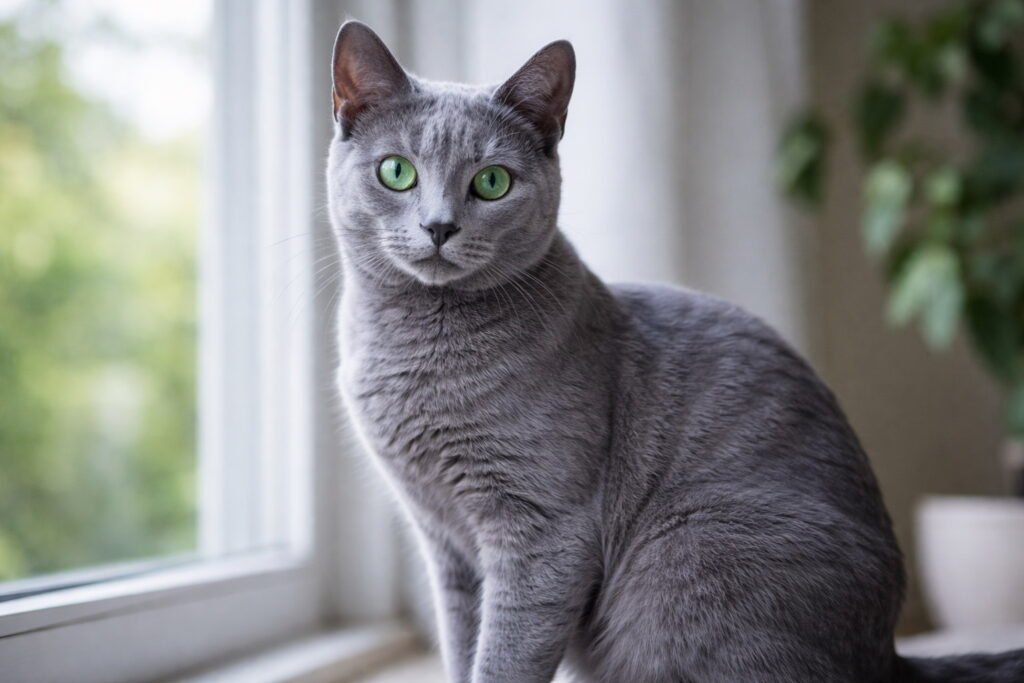
A Russian Blue cat ghost tabby refers to a Russian Blue that shows faint, barely visible tabby markings beneath its solid-colored coat.
These markings often appear as:
- Subtle stripes on the legs or tail
- A faint “M” shape on the forehead
- Light banding that becomes visible in certain lighting
What makes it confusing is that Russian Blue cats are known for their solid blue-gray coats. So when these patterns show up, many owners assume something is wrong—or that their cat isn’t purebred.
Here’s the reality:
Ghost tabby markings are hidden genetic patterns that can appear even in cats that look solid-colored.
Why the Name “Ghost Tabby”?
The term “ghost” comes from how subtle these markings are. They:
- Appear only in certain lighting
- Fade in and out depending on coat condition
- Often disappear as the cat matures
Key takeaway:
Ghost tabby markings are not a defect—they’re a natural genetic trait that can show through in some Russian Blue cats.
The Genetics Behind the Russian Blue Ghost Tabby Pattern
Understanding the Russian Blue cat ghost tabby starts with a bit of simple genetics—don’t worry, we’ll keep it easy.
Hidden Tabby Genes in Solid Cats
Even cats that appear solid-colored often carry tabby pattern genes. In Russian Blues:
- The coat looks solid due to specific pigment expression
- The underlying tabby pattern is still genetically present
This is controlled by what’s known as the agouti gene.
How the Agouti Gene Works
- Agouti ON: Produces visible tabby patterns
- Agouti OFF (non-agouti): Produces a solid coat
Russian Blue cats are typically non-agouti, meaning their coat appears solid. However, the tabby pattern doesn’t disappear—it’s just hidden.
Why Ghost Markings Become Visible
Ghost tabby markings can show up due to:
- Light reflecting off the coat
- Variations in hair pigment density
- Coat development stages (especially in kittens)
Why Kittens Show It More
Young Russian Blue kittens often display more noticeable ghost tabby patterns because:
- Their coat hasn’t fully developed yet
- Pigmentation deepens as they grow
Important insight:
Most ghost tabby markings fade or become less visible as the cat reaches adulthood.
How to Identify Ghost Tabby Markings on a Russian Blue Cat
Not sure if what you’re seeing is a Russian Blue cat ghost tabby or something else? Here’s how to tell.
Common Areas Where Ghost Markings Appear
Check these spots first:
- Tail: faint rings or bands
- Legs: subtle striping
- Forehead: soft “M” marking
- Sides of body: barely visible stripes under certain light
Lighting Makes a Big Difference
Ghost markings are often:
- Visible in natural sunlight
- Less noticeable indoors
- More obvious when the coat is freshly groomed
Try observing your cat:
- Near a window
- During different times of day
- After brushing
Ghost Tabby vs True Tabby: Quick Comparison
| Feature | Ghost Tabby | True Tabby |
| Visibility | Very faint | Bold and clear |
| Coat Type | Appears solid | Clearly patterned |
| Consistency | Changes with light | Always visible |
| Breed Standard | Acceptable in some cases | Not typical for Russian Blue |
A Practical Tip
Run your hand gently over your cat’s coat under bright light.
If the pattern seems to “appear and disappear,” it’s almost certainly a ghost tabby effect.
Do All Russian Blue Cats Have Ghost Tabby Markings?
Not every Russian Blue will show ghost tabby markings—but many carry the genetic potential for them.
Why Some Cats Show It More Than Others
Several factors influence how visible ghost markings are:
- Genetic variation: Some cats express the hidden pattern more strongly
- Coat density: Thicker coats can reflect light differently
- Age: Kittens often show more visible markings than adults
- Lighting conditions: Sunlight can reveal patterns that indoor lighting hides
Some owners never notice these markings at all, while others spot them right away—especially during the kitten stage.
Breed Standards vs Real-Life Cats
According to breed standards, Russian Blue cats should have:
- A uniform blue-gray coat
- A silvery sheen with no obvious patterns
However, real-life cats don’t always match textbook perfection.
Important:
Faint ghost tabby markings are generally considered normal, especially if they are subtle and not clearly defined.
Could It Mean Mixed Lineage?
This is one of the most common concerns.
Ghost tabby markings do NOT automatically mean your cat is mixed breed. Still, there are a few things to consider:
- Very bold or clearly defined stripes may suggest mixed ancestry
- Subtle, fading markings are usually completely normal
- If your cat came from a reputable breeder, pedigree documentation matters more than coat quirks
Bottom line:
A faint ghost tabby pattern alone isn’t a red flag.
Russian Blue Cat Ghost Tabby vs Purebred Standards: Should You Be Concerned?
Seeing unexpected markings can make any owner question their cat’s purity—but in most cases, there’s no reason to worry.
What Breed Standards Actually Say
Cat associations typically expect:
- A solid, even coat color
- No visible tabby striping in adult cats
However, standards are mainly used for show competitions, not everyday pet ownership.
Does It Affect Pedigree Status?
In most situations:
- No, it does not affect pedigree if the markings are faint
- Registration and lineage depend on parentage, not minor coat variations
Breeders and judges usually understand that:
- Ghost markings can appear in kittens
- Some may linger subtly into adulthood
When It Might Be Worth Investigating
Consider digging deeper if:
- The stripes are dark, bold, and permanent
- The coat lacks the signature silvery tipping
- Other breed traits (eye shape, body structure) don’t match
In those cases, it might be helpful to:
- Contact your breeder
- Request pedigree papers
- Consult a veterinarian or feline specialist
Helpful tip:
Focus on overall traits—not just coat patterns—when evaluating breed authenticity.
Why Your Russian Blue Kitten Looks Like a Tabby (But Isn’t)
Many first-time owners are surprised when their Russian Blue kitten looks… well, like a tabby.
This stage is completely normal.
The Kitten Coat Transformation Timeline
Russian Blue coats go through noticeable changes:
| Age | What You’ll See |
| 0–3 months | Visible ghost tabby markings, softer coat |
| 3–6 months | Coat begins to deepen in color |
| 6–12 months | Markings start fading significantly |
| 12+ months | Mature, uniform blue-gray coat develops |
Why This Happens
Kittens haven’t fully developed:
- Pigment intensity
- Coat thickness and texture
As they grow:
- The blue-gray color becomes richer
- The signature silvery sheen becomes more pronounced
- Ghost markings gradually fade into the background
What You Should (and Shouldn’t) Do
Do:
- Monitor coat changes over time
- Maintain good nutrition for healthy coat development
- Groom regularly to support coat quality
Don’t:
- Panic or assume your cat isn’t purebred
- Try to “fix” the markings—they’re genetic, not a problem
- Compare your kitten too closely to adult show cats
Reassurance for owners:
That tabby-like look in your kitten is usually just a phase—not a flaw.
Do Ghost Tabby Markings Affect Personality or Behavior?
It’s easy to assume that a unique coat pattern might come with unique behavior—but that’s simply not how cats work.
Coat Pattern vs Personality: The Truth
Ghost tabby markings have zero impact on temperament.
Behavior is influenced by:
- Genetics (breed traits)
- Early socialization
- Environment and daily interaction
What Russian Blue Cats Are Actually Known For
Regardless of coat variations, Russian Blues tend to be:
- Gentle and reserved around strangers
- Loyal and affectionate with their owners
- Quiet and observant, rather than overly playful
- Highly intelligent, often forming strong routines
Some owners even describe them as “dog-like” because of their attachment to one person.
Why the Myth Exists
People often associate patterns with personality (like orange cats being “wild”), but these are just stereotypes.
Important reminder:
Your cat’s personality comes from how they’re raised and cared for—not from faint stripes in their fur.
Grooming Tips to Enhance Your Russian Blue’s Signature Silvery Coat
A well-maintained coat can make a huge difference—not just in appearance, but also in how visible ghost tabby markings are.
Understanding the Russian Blue Coat
Russian Blues have:
- A dense double coat
- A naturally plush, velvety texture
- A unique silvery sheen caused by light-reflecting tips
Proper grooming helps keep this coat looking its best.
Simple Grooming Routine That Works
Brush once or twice a week
- Removes loose hair
- Enhances natural shine
- Helps even out the coat’s appearance
Use the right tools
- Soft bristle brush or rubber grooming brush
- Avoid harsh tools that can damage the fine coat
Keep grooming sessions short and calm
- Russian Blues prefer gentle handling
- Stress can lead to shedding or dullness
How Grooming Affects Ghost Tabby Visibility
- A clean, well-brushed coat reflects light more evenly, making markings less noticeable
- A dull or uneven coat can make patterns stand out more
Extra Coat Care Tips
- Wipe the coat occasionally with a slightly damp cloth to remove dust
- Maintain a clean living environment to prevent buildup
- Ensure hydration—dry skin affects coat quality
Pro tip:
Healthy grooming habits don’t remove ghost markings—but they help your cat’s coat look smoother and more uniform.
Nutrition Secrets for a Healthy Russian Blue Coat
What your cat eats directly impacts how their coat looks—and that includes how visible ghost tabby markings may appear.
Key Nutrients for Coat Health
Focus on these essentials:
- High-quality protein → supports strong hair structure
- Omega-3 & Omega-6 fatty acids → enhance shine and softness
- Vitamins A and E → promote healthy skin
- Zinc → supports coat repair and growth
Wet vs Dry vs Raw: What Works Best?
| Diet Type | Benefits | Considerations |
| Wet food | Hydration, softer coat | Needs proper storage |
| Dry food | Convenient, cost-effective | May lack moisture |
| Raw diet | High protein, natural oils | Requires careful balance |
A balanced combination often works best for most owners.
Common Diet Mistakes That Dull the Coat
- Feeding low-quality, filler-heavy food
- Lack of essential fatty acids
- Inconsistent feeding routines
- Overfeeding treats instead of balanced meals
When Supplements Help
In some cases, adding:
- Fish oil
- Omega supplements
can improve coat condition—but always consult a vet first.
For trusted nutritional guidance, check out this resource from the Association of American Feed Control Officials (AAFCO): 👉 https://www.aafco.org/pet-food-consumers/
What to Expect with Proper Nutrition
With the right diet, you’ll notice:
- A richer blue-gray color
- A more pronounced silvery sheen
- A smoother, healthier coat overall
Common Myths About Russian Blue Ghost Tabby Cats (Debunked)
Misinformation around the Russian Blue cat ghost tabby is everywhere. Let’s clear up the most common myths so you don’t second-guess your cat.
Myth: “Ghost markings mean the cat isn’t purebred”
Truth:
Faint ghost tabby markings can appear in purebred Russian Blues, especially in kittens. Pedigree is determined by lineage—not subtle coat variations.
Myth: “The markings will stay forever”
Truth:
Most ghost markings fade significantly with age. Some may remain faintly visible under certain lighting, which is completely normal.
Myth: “It’s a sign of poor breeding”
Truth:
Responsible breeders can still produce kittens with temporary ghost patterns. Genetics aren’t always perfectly predictable.
Myth: “You can groom or bathe them away”
Truth:
Ghost tabby markings are genetic, not dirt or discoloration. Grooming improves coat quality—but won’t remove the pattern.
Bottom line:
Ghost tabby traits are a natural variation—not a flaw or warning sign.
When Ghost Tabby Markings Might Signal Something Else
Most of the time, ghost tabby markings are harmless. Still, there are rare cases where a closer look is worth it.
Signs It Might Not Be Typical Ghost Tabby
Watch for these differences:
- Bold, high-contrast stripes that don’t fade over time
- Markings that look like a true tabby pattern, not subtle shadows
- Lack of the classic silvery sheen
- Coat color that appears uneven or off-tone
Other Possibilities to Consider
- Mixed breed ancestry
- Coat discoloration due to nutritional imbalance
- Skin or coat conditions affecting pigment
When to Seek Professional Advice
Reach out to a vet if you notice:
- Sudden coat changes
- Patchy fur or hair loss
- Skin irritation along with color changes
Important:
Healthy ghost tabby markings should never come with skin issues or discomfort.
Pros and Cons of Owning a Russian Blue Cat with Ghost Tabby Traits
Many owners grow to love this subtle feature once they understand it.
Pros
- Unique appearance: Your cat has a one-of-a-kind look
- Conversation starter: Visitors often notice the faint patterns
- Natural variation: Adds depth to the coat under different lighting
Cons
- Initial confusion: Many owners worry unnecessarily
- Breeder misconceptions: Some people may question purity
- Less “show-perfect” appearance: If you’re aiming for competitions
The Reality for Most Owners
For everyday pet owners, ghost tabby markings are:
- Harmless
- Often temporary
- Part of what makes your cat unique
Perspective shift:
What seems like a flaw at first often becomes a favorite feature.
FAQ: Russian Blue Cat Ghost Tabby Explained Simply
Do ghost tabby markings go away completely?
In many cases, they fade significantly as the cat matures. Some may remain faintly visible under certain lighting.
Can adult Russian Blues develop ghost patterns later?
It’s uncommon. Most ghost markings are more noticeable in kittens and become less visible with age.
Is a Russian Blue cat ghost tabby rare?
Not extremely rare. It’s fairly common in kittens, though less noticeable in adults.
Does it affect price or adoption value?
Generally no for pet owners. Show-quality cats may be evaluated more strictly, but faint markings rarely matter in typical adoptions.
How can I tell if it’s ghost tabby or a mixed breed?
Look at overall traits—body shape, eye color, coat texture, and pedigree documentation—not just faint markings.
Final Thoughts: Embracing the Unique Beauty of Russian Blue Ghost Tabby Cats
Owning a Russian Blue cat ghost tabby can feel confusing at first—but once you understand it, there’s nothing to worry about.
Those faint markings are simply a glimpse into your cat’s genetics—a subtle, almost hidden layer that makes them even more interesting.
Focus on what truly matters:
- A healthy coat
- Proper nutrition
- Gentle grooming
- Regular vet care
Every Russian Blue has its own charm, and ghost tabby markings are just one more way your cat stands out.
If you’re curious about improving your cat’s coat or overall health, explore more guides on MyPetInfoo.com—and give your feline the care they deserve.