
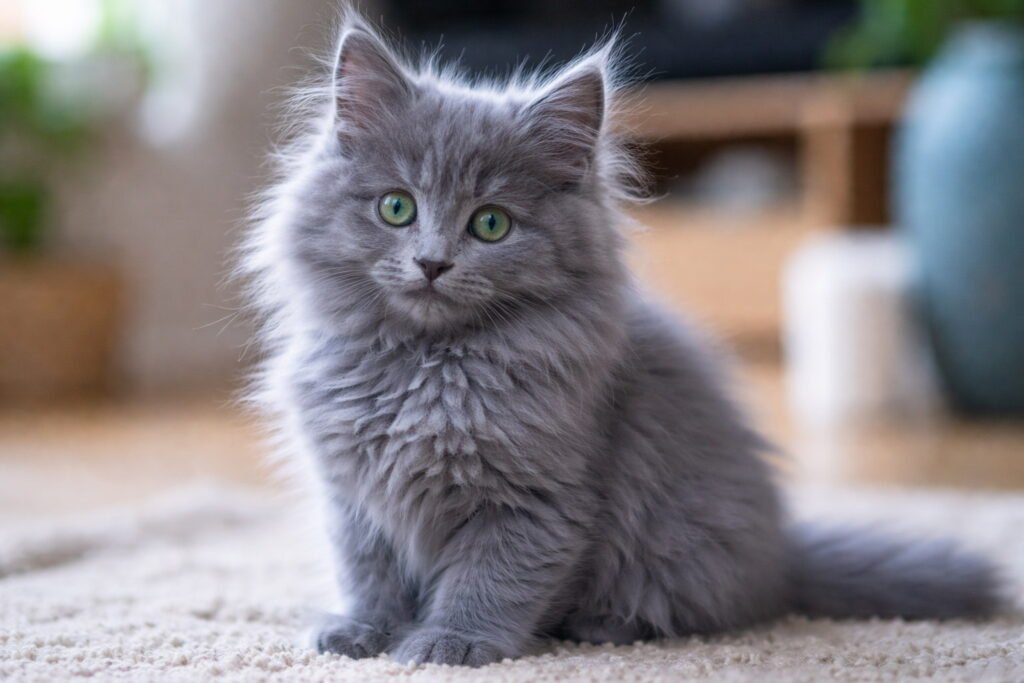
The long haired Russian Blue kitten is a topic that sparks curiosity, debate, and fascination among cat lovers. Photos circulate online showing fluffy, silver-blue kittens labeled as Russian Blues, leaving many people wondering whether this variation truly exists or belongs to another breed altogether. The fascination is understandable. A Russian Blue is already admired for its elegance, plush coat, and calm personality—imagining that beauty paired with longer fur feels irresistible.
Interest in the long haired Russian Blue kitten has grown rapidly due to social media, breeder listings, and viral pet content. Many prospective owners search specifically for this look, hoping to combine the trademark blue-gray color and emerald eyes with a softer, more flowing coat. Mislabeling, however, remains common, making accurate information more important than ever.
This article explores the reality behind the long haired Russian Blue kitten using breed standards, genetics, and expert insights. Each section stays tightly focused on helping readers understand what is scientifically possible, what is rare, and what claims should be viewed with caution.
In This Article
Is a Long Haired Russian Blue Kitten Genetically Possible?
Understanding whether a long haired Russian Blue kitten can exist begins with feline coat genetics. Coat length in cats depends on a specific gene, known as the FGF5 gene, which determines whether fur grows short or long. Long hair is a recessive trait, meaning both parents must carry the gene for it to appear in kittens.
Russian Blue Breed Genetics Explained
Russian Blues are genetically fixed as a short-haired breed. According to major cat registries, the breed standard does not include a long-coat gene in its accepted lineage.
Key genetic facts:
- Russian Blues possess a double-layered short coat
- The long-hair gene is not present in purebred Russian Blue bloodlines
- Both parents must carry the long-hair gene for kittens to inherit it
Can Mutations or Crossbreeding Create Long Hair?
Rare situations exist where cats resembling Russian Blues develop longer fur. These cases almost always involve crossbreeding, either intentional or accidental, with long-haired breeds such as:
- Siberian cats
- Nebelung cats
- Domestic longhair cats
In such cases, kittens may appear Russian Blue–like in color and eye shape while displaying semi-long or long fur.
“If a kitten has a long coat, it cannot be genetically pure Russian Blue under current breed standards.” — Feline Genetics Research Group
Breed Registry Recognition
Major feline organizations maintain strict definitions:
| Registry | Long-Haired Russian Blue Recognized |
| CFA (Cat Fanciers’ Association) | No |
| TICA (The International Cat Association) | No |
| GCCF | No |
A long haired Russian Blue kitten may exist visually, but purebred status is not recognized by any official registry.
Physical Appearance of a Long Haired Russian Blue Kitten
A long haired Russian Blue kitten stands out due to its striking aesthetics, even when purity is debated. Coat length alters the breed’s traditional silhouette, giving the kitten a softer, more rounded presence while retaining classic Russian Blue traits.
Coat Texture and Color
True Russian Blues are famous for a dense, plush, blue-gray coat tipped with silver. Long-haired lookalikes often share the same coloring, though texture varies.
Typical coat characteristics include:
- Silver-tipped blue-gray fur
- Medium to long coat length, often feathered at the tail
- Softer, silkier texture than standard Russian Blue fur
Some kittens develop fuller coats as they age, especially between 6–12 months, when adult fur replaces kitten fluff.
Facial Structure and Eye Development
Facial features remain one of the strongest indicators of Russian Blue ancestry.
Common physical traits:
- Wedge-shaped head
- High cheekbones
- Large, upright ears
Eye color starts yellow or amber in kittens and gradually shifts toward green by 4–6 months of age. Deep emerald green becomes more vivid with maturity, assuming Russian Blue lineage exists.
Kitten Fur vs Adult Coat Comparison
| Feature | Kitten Stage | Adult Stage |
| Coat Length | Soft, fluffy | Defined medium-long |
| Shedding | Minimal | Moderate, seasonal |
| Silver Tipping | Subtle | More pronounced |
Early appearance can be misleading. Many kittens appear fluffier than they remain as adults, making careful observation over time essential.
Important note: visual resemblance alone cannot confirm breed purity, even when the kitten strongly matches Russian Blue standards.
Long Haired Russian Blue Kitten vs Traditional Russian Blue
Comparing a long haired Russian Blue kitten with a traditional short-haired Russian Blue helps clarify why confusion happens so often. Both may share the same silver-blue coloration and elegant build, yet coat length changes more than just appearance.
Coat and Grooming Differences
The most obvious distinction lies in coat structure and maintenance.
| Trait | Long Haired Russian Blue Kitten | Traditional Russian Blue |
| Coat Length | Medium to long | Short, dense |
| Texture | Silky, flowing | Plush, velvety |
| Grooming Frequency | 3–4 times per week | 1–2 times per week |
| Matting Risk | Moderate | Very low |
Longer fur traps dirt and loose hair more easily, increasing grooming needs. Russian Blues are famous for low shedding, but longer coats shed noticeably more during seasonal changes.
Behavioral Similarities and Differences
Temperament remains largely consistent regardless of coat length. Both types are known for intelligence, sensitivity, and loyalty.
Shared traits include:
- Deep attachment to primary caregivers
- Quiet, soft vocalizations
- High emotional awareness
Occasionally, long-haired kittens introduced through crossbreeding display slightly higher energy levels. This difference depends on the secondary breed involved rather than the Russian Blue side.
Recognition by Cat Associations
Official recognition draws a firm line.
Short-haired Russian Blues
- Eligible for shows and championships
- Fully recognized by CFA, TICA, and GCCF
Long haired Russian Blue kittens
- Not recognized as purebred
- Typically categorized as mixes or Nebelung-type cats
Appearance alone never replaces documented lineage.
Temperament and Behavior of a Long Haired Russian Blue Kitten
Personality remains one of the strongest reasons people fall in love with a long haired Russian Blue kitten. Beneath the soft fur lies a thoughtful, affectionate companion that forms deep emotional bonds.
Intelligence and Emotional Sensitivity
Russian Blues rank among the most intelligent cat breeds, learning household routines quickly and responding to tone and body language.
Common behaviors include:
- Following owners quietly from room to room
- Waiting patiently near doors
- Observing before engaging with new situations
This breed often senses mood changes. Owners regularly describe Russian Blues as cats that “check in” during stressful moments.
“My Russian Blue mix seemed to know when the house was tense and would sit beside me without being asked.” — Long-time Russian Blue owner
Bonding Style and Social Preferences
Rather than seeking constant attention, these kittens prefer meaningful interaction.
Typical bonding patterns:
- Choosing one favorite human
- Sleeping nearby, not always on laps
- Maintaining personal space while staying close
Strangers may be greeted cautiously. Trust builds gradually but deeply once established.
Playfulness and Vocalization
Young kittens enjoy interactive toys and problem-solving games.
Preferred activities:
- Wand toys and puzzle feeders
- Window watching
- Short bursts of energetic play
Vocal communication stays soft and polite. Loud or persistent meowing is uncommon, making this kitten ideal for quieter homes or apartments.
Grooming Requirements for a Long Haired Russian Blue Kitten
Grooming plays a vital role in maintaining the health and beauty of a long haired Russian Blue kitten. A consistent routine prevents discomfort and keeps the coat in peak condition.
Brushing Schedule and Tools
Longer fur requires more attention than the breed’s traditional coat.
Recommended grooming tools:
- Stainless steel comb for detangling
- Soft slicker brush
- Rubber grooming glove for loose hair
Ideal brushing frequency:
- Every other day during normal seasons
- Daily during spring and fall shedding
Preventing Matting and Hairballs
Fine hair behind ears, under the chest, and around the tail base mats easily.
Prevention tips:
- Focus on friction areas during brushing
- Trim small knots early
- Use hairball-prevention food formulas
Long-haired kittens are more prone to hairballs due to increased self-grooming.
Bathing and Coat Care
Unlike many cats, Russian Blue types tolerate bathing surprisingly well when introduced early.
Basic care facts:
- Bath every 8–12 weeks if needed
- Use mild, cat-safe shampoo
- Thorough drying prevents chilling and skin irritation
Seasonal coat changes are normal. Shedding increases as daylight length shifts, especially in indoor cats exposed to natural light cycles.
Health Considerations in a Long Haired Russian Blue Kitten
Health remains a strong advantage when it comes to the long haired Russian Blue kitten, especially when Russian Blue genetics dominate the lineage. This type of kitten is generally robust, with fewer hereditary problems than many designer or brachycephalic breeds.
Inherited Health Traits from Russian Blues
Russian Blues are known for longevity and balanced physical development.
Well-documented health strengths include:
- Average lifespan of 15–20 years
- Low incidence of genetic defects
- Strong immune response compared to many purebred cats
Most individuals maintain stable weight and muscle tone well into senior years.
Long-Coat Specific Health Risks
Longer fur introduces unique maintenance-related concerns rather than breed-specific diseases.
Potential issues to monitor:
- Hairball accumulation in the digestive tract
- Skin irritation beneath dense fur
- Ear infections if hair traps moisture
Early grooming habits significantly lower these risks.
Veterinary Care Timeline for Kittens
A structured vet schedule supports early detection and prevention.
| Age | Recommended Care |
| 6–8 weeks | First wellness exam, deworming |
| 8–12 weeks | Core vaccinations |
| 4–6 months | Spay/neuter consultation |
| 1 year | Full health screening |
Balanced care ensures healthy growth and coat development throughout kittenhood.
Diet and Nutrition for Healthy Coat Development
Nutrition directly influences the appearance of a long haired Russian Blue kitten. Coat shine, softness, and thickness depend on what the kitten consumes during early growth stages.
Protein and Amino Acid Needs
Cats thrive on animal-based protein. Long-haired kittens benefit from higher-quality protein sources.
Ideal dietary protein sources:
- Chicken and turkey
- Salmon and ocean fish
- Duck and lamb
Protein should make up at least 35–40% of a growing kitten’s diet.
Essential Nutrients for Fur Health
Certain nutrients dramatically impact coat quality.
| Nutrient | Benefit |
| Omega-3 & Omega-6 | Reduces shedding, adds shine |
| Biotin | Strengthens fur structure |
| Zinc | Prevents hair thinning |
| Vitamin E | Supports skin health |
Wet food plays an important role by providing hydration that supports skin elasticity and digestion.
Feeding Schedules and Portions
Young kittens require regular meals.
Feeding guidelines:
- 3–4 small meals daily until 6 months
- Transition to 2 meals per day after maturity
- Avoid free-feeding to reduce obesity risk
Weight gain should be steady, not rapid. Russian Blue types are prone to overeating if unrestricted.
How to Identify a Genuine Long Haired Russian Blue Kitten
Correct identification remains one of the most confusing aspects of the long haired Russian Blue kitten discussion. Visual traits help, but documentation confirms reality.
Breeder Claims vs Reality
Many online listings misuse the Russian Blue label.
Common red flags include:
- No pedigree or registration papers
- Refusal to show parent cats
- Claims of “rare long-haired Russian Blue” without genetic proof
True breeders provide transparency and documentation.
Key Visual and Behavioral Indicators
Certain characteristics signal strong Russian Blue ancestry:
- Consistent blue-gray coat with silver tips
- Green eyes by adolescence
- Calm, observant temperament
Longer fur alone does not confirm authenticity.
Lineage Verification and DNA Testing
Genetic testing offers clarity when doubt exists.
Helpful verification methods:
- DNA breed analysis kits
- Vet-assisted genetic screening
- Written pedigree from recognized associations
According to the International Cat Association, Russian Blues remain strictly short-haired under official standards. More details can be reviewed on TICA’s official breed guide: https://tica.org
Accurate identification protects buyers and ensures ethical breeding practices.
Adoption and Purchase Guide for a Long Haired Russian Blue Kitten
Finding a long haired Russian Blue kitten requires patience, research, and realistic expectations. Because this coat type is not officially recognized, availability differs greatly from standard Russian Blues.
Where These Kittens Are Most Commonly Found
Long-haired Russian Blue–type kittens usually appear in specific situations rather than established breeding programs.
Most common sources include:
- Accidental litters from Russian Blue mixes
- Nebelung breeders (a related long-haired breed)
- Shelters labeling cats based on appearance
Purebred Russian Blue breeders do not intentionally breed long-haired kittens under ethical standards.
Ethical Breeders vs Accidental Litters
Ethical breeders focus on health, temperament, and transparency.
Signs of ethical practices:
- Full disclosure about mixed lineage
- Health records for both parents
- Written adoption or sales contracts
Unethical sellers often rely on buzzwords like “ultra-rare” or “exclusive long-haired Russian Blue” to inflate prices.
Cost Expectations and Warning Signs
Pricing varies widely depending on lineage clarity.
| Source | Typical Price Range |
| Shelter or rescue | $100–300 |
| Mixed-breed breeder | $400–800 |
| Nebelung breeder | $900–1,500 |
Prices exceeding these ranges without pedigree proof should raise concern. Payment pressure or refusal to allow visits often signals misrepresentation.
Living With a Long Haired Russian Blue Kitten
Daily life with a long haired Russian Blue kitten blends elegance with companionship. These kittens adapt well to structured households and calm environments.
Ideal Home Environment
Quiet, predictable homes suit this kitten best.
Preferred conditions include:
- Low-noise living spaces
- Stable routines
- Vertical spaces such as cat trees
Sudden changes or loud environments may cause temporary withdrawal, though trust rebuilds over time.
Interaction With Children and Other Pets
Socialization during early weeks plays a critical role.
- Gentle children are usually tolerated well
- Other cats are accepted gradually
- Dogs require calm introductions
Aggressive play styles or forced interaction often overwhelm sensitive kittens.
Indoor vs Supervised Outdoor Life
Indoor living offers the safest option.
Indoor benefits:
- Reduced disease exposure
- Longer lifespan
- Coat stays cleaner and knot-free
Supervised outdoor time, such as leash walks or secure catios, provides enrichment without unnecessary risk.
Final Thoughts: Is a Long Haired Russian Blue Kitten Right for You?
A long haired Russian Blue kitten appeals to those drawn to quiet beauty, emotional intelligence, and refined companionship. While official recognition does not exist, many of these kittens thrive as loving, healthy pets when their needs are fully understood.
Pros and Challenges at a Glance
Advantages
- Gentle and loyal temperament
- Striking silver-blue appearance
- Strong bond with owners
Considerations
- Higher grooming commitment
- Potential mislabeling issues
- Limited breeder availability
Ideal Owner Profile
This kitten suits individuals or families who value:
- Calm companionship over constant attention
- Consistent routines
- Long-term pet commitment
Long-Term Commitment Perspective
Owning this kitten means investing time, care, and understanding—not chasing labels. When chosen thoughtfully, a long haired Russian Blue–type kitten becomes more than a visual novelty. It becomes a deeply connected companion whose presence enriches daily life through subtle affection and quiet loyalty.