
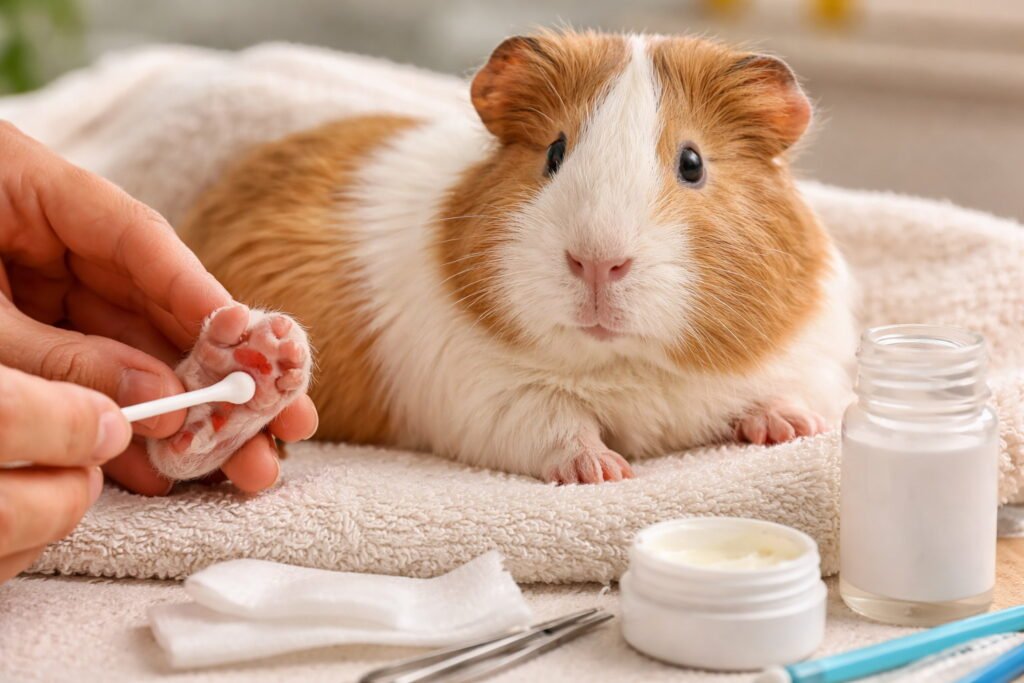
Learning how to get rid of bumblefoot in guinea pigs starts with understanding what this condition really is, why it happens, and how early recognition can prevent serious complications. Bumblefoot is not a minor foot issue. Left untreated, it can progress from mild irritation to deep infection that affects a guinea pig’s quality of life.
This guide breaks down the fundamentals in a clear, practical way. These first sections focus on education and awareness, which are the foundation of effective treatment and long-term prevention.
In This Article
What Is Bumblefoot in Guinea Pigs?
Bumblefoot in guinea pigs, medically known as pododermatitis, is a bacterial infection that affects the soles of the feet. The condition develops when tiny cuts or pressure sores allow bacteria—commonly Staphylococcus species—to enter the skin.
How Bumblefoot Develops
Guinea pigs have delicate foot pads with very little natural protection. Constant pressure or irritation leads to skin damage, which then becomes infected. Over time, untreated bumblefoot can move deeper into tissues and even reach the bone.
Key facts about bumblefoot:
- Starts as skin irritation
- Progresses into swelling and infection
- Can become chronic or life-threatening without care
Why Guinea Pigs Are Especially Prone
Several biological traits increase the risk:
- Flat feet designed for soft grass, not hard surfaces
- Heavy body weight relative to foot size
- Limited ability to heal foot wounds quickly
“Bumblefoot is rarely sudden; it develops gradually when daily living conditions quietly work against foot health.”
Mild vs. Severe Bumblefoot
| Stage | Appearance | Pain Level | Urgency |
| Early | Pink skin, slight swelling | Low | Moderate |
| Moderate | Redness, scabs | Medium | High |
| Severe | Open sores, pus | High | Immediate veterinary care |
Understanding these stages plays a critical role in how to get rid of bumblefoot in guinea pigs safely and effectively.
Common Causes of Bumblefoot in Guinea Pigs
Bumblefoot rarely happens without a reason. Most cases trace back to environmental and lifestyle factors that create constant stress on the feet.
Cage Flooring and Bedding Issues
Hard or abrasive surfaces are one of the most common triggers.
Problematic flooring includes:
- Wire-bottom cages
- Hard plastic bases without padding
- Damp or compacted bedding
Foot-friendly bedding options:
- Fleece liners with absorbent layers
- Paper-based bedding
- Soft kiln-dried wood shavings (not cedar or pine)
Obesity and Limited Movement
Extra body weight increases pressure on the feet. A guinea pig weighing over 1,200 grams (2.6 lbs) without sufficient activity faces a higher risk.
Contributing factors:
- Overfeeding pellets
- Limited floor time
- Small cage sizes
Poor Hygiene and Moisture Exposure
Wet, dirty cages soften the skin and weaken natural defenses.
High-risk conditions:
- Urine-soaked bedding
- Infrequent cage cleaning
- High humidity environments
Age, Genetics, and Health Conditions
Older guinea pigs and those with arthritis move less, increasing pressure points. Some bloodlines also show thinner foot pads, making them more vulnerable.
Early Signs vs. Advanced Bumblefoot in Guinea Pigs
Recognizing symptoms early dramatically improves recovery outcomes. Knowing what to watch for can prevent weeks—or months—of treatment later.
Early Warning Signs
Mild bumblefoot often looks harmless, which makes it easy to ignore.
Early signs include:
- Pink or slightly red foot pads
- Small smooth calluses
- Reduced activity
- Occasional foot lifting
Advanced Bumblefoot Symptoms
As infection spreads, symptoms become more obvious and painful.
Serious indicators:
- Open sores or scabbing
- Swelling around toes
- Discharge or foul odor
- Limping or reluctance to stand
Behavioral Changes That Signal Pain
Guinea pigs hide pain instinctively. Subtle behavior shifts often appear before visible wounds.
Watch for:
- Reduced appetite
- Irritability when handled
- Staying in one area of the cage
- Grinding teeth quietly (a pain response)
“If a guinea pig changes how it walks, assume discomfort until proven otherwise.”
Early detection not only shortens healing time but is the most reliable way to learn how to get rid of bumblefoot in guinea pigs before it becomes severe.
How to Get Rid of Bumblefoot in Guinea Pigs Naturally at Home
Understanding how to get rid of bumblefoot in guinea pigs naturally begins with correcting daily care mistakes and supporting the body’s ability to heal. Mild to early-moderate cases often respond well to consistent home management when caught early.
Daily Foot Inspections and Gentle Cleaning
Foot checks should become part of your regular routine, especially for guinea pigs older than one year.
Daily care essentials:
- Examine foot pads under natural light
- Look for redness, swelling, or scab formation
- Gently rinse feet using warm saline solution
A mild saline soak (5–7 minutes) can soften debris and reduce bacterial load. Always dry feet thoroughly afterward.
Improving Cage Flooring and Bedding
Healing will stall if pressure and moisture continue.
Immediate changes that help recovery:
- Replace wire or hard flooring with solid bases
- Add fleece liners with absorbent pads underneath
- Change wet bedding daily
Ideal bedding setup
| Bedding Type | Comfort Level | Moisture Control |
| Fleece liners | High | Excellent |
| Paper bedding | Medium | Good |
| Hardwood shavings | Medium | Moderate |
Reducing Pressure on the Feet
Pressure management plays a major role in natural healing.
Helpful strategies:
- Add thick resting areas
- Provide low-entry hideaways
- Rotate walking surfaces to avoid pressure points
Supporting Healing Through Diet and Weight Control
Healthy weight speeds recovery. Overweight guinea pigs experience slower healing due to increased foot pressure.
Diet adjustments:
- Unlimited Timothy hay
- Fresh leafy greens daily
- Limit pellets to 1/8 cup per day
Vitamin C intake (20–30 mg/day) supports tissue repair but avoid over-supplementing unless directed by a veterinarian.
How to Get Rid of Bumblefoot in Guinea Pigs With Medical Treatment
Some cases require professional care. Learning how to get rid of bumblefoot in guinea pigs with veterinary treatment prevents serious complications when infection deepens.
When Veterinary Care Is Necessary
Seek veterinary intervention if you notice:
- Open or bleeding sores
- Pus or yellow discharge
- Persistent limping
- Symptoms lasting longer than two weeks
Advanced bumblefoot may involve deep tissue or bone infection, which cannot be resolved at home.
Common Veterinary Treatments
Veterinary plans vary depending on severity, though typical approaches include:
Medical options used by exotic veterinarians:
- Oral antibiotics targeting Staphylococcus
- Topical antimicrobial ointments
- Anti-inflammatory pain relief
- Professional wound debridement
Severe cases occasionally require surgery to remove infected tissue.
Bandaging and Recovery Support
Bandaging is highly effective but must be done correctly.
Proper bandaging goals:
- Protect the wound
- Reduce swelling
- Allow air circulation
Improper wrapping can restrict blood flow, so professional guidance is essential.
“Antibiotics without environmental correction rarely succeed long-term.”
Step-by-Step Care Routine to Treat Bumblefoot in Guinea Pigs
Consistency determines success when treating bumblefoot. A structured care routine speeds healing and prevents relapse.
Safe Cleaning Process
Follow a predictable process to minimize stress and infection risk.
Daily routine checklist:
- Wash hands thoroughly
- Soak feet in warm saline
- Gently pat dry using clean cloth
- Apply veterinarian-approved topical treatment
- Return guinea pig to clean enclosure
Correct Application of Treatments
Topicals should be applied sparingly to avoid moisture buildup.
Best practices:
- Apply using a cotton swab
- Avoid human antiseptics unless vet-approved
- Never remove scabs forcefully
Monitoring Healing Progress
Visible improvement usually appears within 7–14 days for mild cases.
Signs of improvement:
- Reduced redness
- Smaller swelling
- Increased activity
- Normal walking posture
Warning signs that treatment needs adjustment:
- Worsening redness
- Bleeding or discharge
- Loss of appetite
“Healing feet reflect healing care habits.”
How Long Does It Take to Get Rid of Bumblefoot in Guinea Pigs?
Healing time varies depending on severity, consistency of care, and overall health. Understanding the recovery timeline helps set realistic expectations and prevents frustration during treatment.
Healing Timelines by Severity
Mild cases respond faster when addressed early, while advanced infections demand extended care.
| Severity Level | Average Healing Time | Care Type |
| Mild irritation | 1–2 weeks | Home care |
| Moderate infection | 3–6 weeks | Home + vet support |
| Severe bumblefoot | 6–12+ weeks | Veterinary treatment |
Factors That Affect Recovery Speed
Several elements influence how fast bumblefoot improves:
- Body weight and activity level
- Cage hygiene consistency
- Proper bedding support
- Immune system strength
Older guinea pigs often heal slower due to thinner skin and reduced circulation.
Signs the Treatment Is Working
Progress appears gradually rather than overnight.
Positive healing indicators include:
- Reduced swelling and redness
- Drying and shrinking of scabs
- More natural walking posture
- Increased appetite and movement
When improvement stalls after two weeks, reevaluation is necessary to adjust care.
Preventing Bumblefoot in Guinea Pigs From Coming Back
Once you learn how to get rid of bumblefoot in guinea pigs, prevention becomes the most valuable tool. Recurrence is common when root causes remain uncorrected.
Proper Cage Setup for Long-Term Foot Health
Daily comfort determines long-term outcomes.
Prevention-focused cage features:
- Soft, dry, non-abrasive bedding
- Spacious enclosure allowing movement
- Multiple resting zones
Routine Hygiene and Maintenance
Cleanliness protects foot integrity better than any medication.
Best hygiene practices:
- Spot-clean wet areas daily
- Full cage cleaning 1–2 times per week
- Replace fleece liners every 2–3 days
Nail Trimming and Foot Checks
Overgrown nails change foot pressure angles, increasing injury risk.
Healthy grooming habits:
- Trim nails every 3–4 weeks
- Inspect feet weekly
- Address redness immediately
“Prevention costs minutes; treatment costs weeks.”
Mistakes That Make Bumblefoot in Guinea Pigs Worse
Even well-meaning owners sometimes unknowingly slow recovery. Avoiding common mistakes makes treatment far more effective.
Using Unsafe or Incorrect Home Remedies
Certain substances damage healing skin.
Avoid completely:
- Hydrogen peroxide
- Undiluted iodine
- Human antibiotic creams without vet approval
Ignoring Early Symptoms
Small changes often signal bigger issues ahead. Waiting until sores appear increases treatment difficulty and pain.
Delaying Veterinary Treatment
Home care alone cannot resolve:
- Pus-filled wounds
- Deep swelling
- Limping lasting more than a few days
“Delay transforms a manageable condition into a prolonged medical challenge.”
Final Thoughts on How to Get Rid of Bumblefoot in Guinea Pigs Safely
Knowing how to get rid of bumblefoot in guinea pigs combines awareness, daily care, and environment control. Early detection paired with consistent hygiene and proper bedding prevents most cases from ever becoming serious.
Guinea pigs rely entirely on their caregivers to maintain safe living conditions. Gentle observation, prompt action, and thoughtful prevention habits protect not only their feet but their overall quality of life.
For additional veterinary-backed guidance on guinea pig foot health and pododermatitis, refer to this trusted resource from an exotic animal authority:
https://vcahospitals.com/know-your-pet/pododermatitis-in-guinea-pigs