
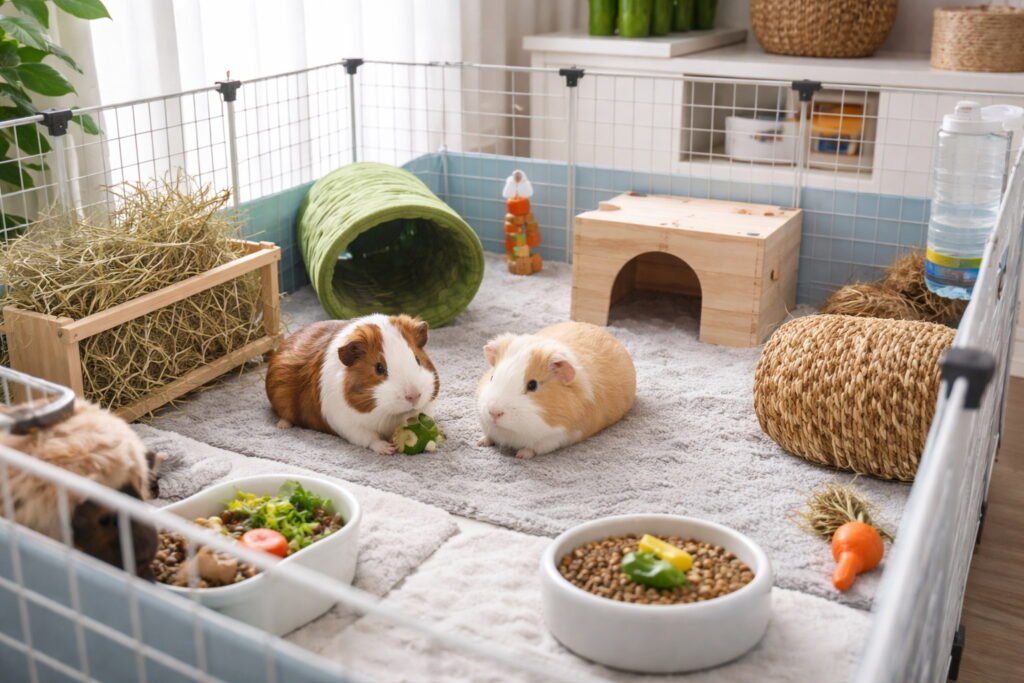
Proper guinea pig housing requirements are the foundation of a healthy, stress-free life for these gentle animals. Housing affects everything—from digestion and joint health to social behavior and lifespan. Many owners unknowingly rely on cages marketed as “guinea pig friendly,” only to discover later that poor housing leads to obesity, foot sores, respiratory illness, and chronic stress.
This guide explains guinea pig housing requirements in a clear, practical way, using current best practices from veterinarians, breeders, and rescue organizations. Every detail focuses solely on housing, with no off-topic content, making it easy to build or improve a setup that truly meets a guinea pig’s needs.
In This Article
Guinea Pig Housing Requirements
Guinea pigs are ground-dwelling herd animals designed to roam, forage, and interact. Housing that restricts movement or isolates them socially directly harms both physical and emotional health. Proper guinea pig housing requirements balance space, safety, cleanliness, and environmental comfort.
Key facts every owner should know:
- Guinea pigs need continuous floor space, not vertical climbing areas
- Restricted movement raises the risk of obesity and arthritis
- Poor ventilation contributes to upper respiratory infections, a leading cause of vet visits
- Housing stress often shows as teeth chattering, hiding, or weight loss
“Cage size is not a luxury for guinea pigs—it is a medical necessity.”
— Exotic Animal Veterinarian Advisory Panel
Meeting proper housing standards often results in:
- Increased activity and “popcorning” behavior
- Stronger immune systems
- Longer lifespans (average 5–8 years when properly cared for)
Minimum Space Standards in Guinea Pig Housing Requirements
Floor space matters more than any other housing factor. Guinea pigs run in bursts, need room to turn easily, and require separate zones for resting, eating, and toileting.
Recommended Cage Sizes
| Number of Guinea Pigs | Minimum Floor Space | Ideal Floor Space |
| Single guinea pig | 7.5 sq ft (0.7 m²) | 10+ sq ft |
| Two guinea pigs | 10.5 sq ft (1.0 m²) | 13–16 sq ft |
| Three guinea pigs | 13 sq ft (1.2 m²) | 18+ sq ft |
| Four guinea pigs | 16 sq ft (1.5 m²) | 24+ sq ft |
Important housing facts:
- Most pet-store cages provide less than half the required space
- Larger cages reduce aggression and dominance disputes
- Extra space improves muscle tone and digestion
Guinea pigs housed in adequately sized cages demonstrate:
- Higher daily movement levels
- Reduced anxiety-related behaviors
- Better litter habits
Space should always increase with group size, not remain static.
Cage Types That Meet Guinea Pig Housing Requirements
Choosing the right enclosure plays a major role in meeting long-term guinea pig housing requirements. Not every cage sold for small animals is safe or appropriate.
Best Cage Types
C&C Cages (Cubes and Coroplast)
- Highly recommended by rescues and veterinarians
- Customizable floor size
- Excellent airflow and visibility
Large Wire Cages with Solid Bases
- Acceptable if floor space meets minimum guidelines
- Easy access for cleaning
- Strong ventilation
Indoor Playpens (Permanent Setup)
- Ideal for dedicated guinea pig rooms
- Allows natural movement patterns
- Requires secure walls and flooring
Cage Types to Avoid
- Wire-bottom cages (cause bumblefoot and joint injuries)
- Aquariums or glass tanks (trap ammonia and heat)
- Multi-level cages with ramps (unsafe for guinea pig anatomy)
- Tiny plastic cages marketed for “starter pets”
Quick comparison table:
| Cage Type | Meets Housing Needs | Safety Level |
| C&C cage | Yes | Very high |
| Large wire cage | Yes | High |
| Glass tank | No | Dangerous |
| Wire floor cage | No | Harmful |
Housing that meets standards encourages natural behaviors like foraging, stretching, and social interaction—core elements of guinea pig welfare.
Flooring and Bedding in Guinea Pig Housing Requirements
Flooring and bedding play a crucial role in guinea pig housing requirements, directly affecting foot health, cleanliness, and respiratory comfort. Guinea pigs spend most of their lives in direct contact with the cage floor, making material choice far more important than many owners realize.
Safe Flooring Standards
Guinea pigs require solid, non-slip surfaces. Wire flooring causes pressure sores, infections, and chronic pain.
Recommended flooring materials:
- Coroplast (plastic corrugated sheets)
- Sealed plywood with protective liner
- Solid plastic cage bases
Any surface that flexes or has gaps underfoot should be avoided.
Best Bedding Options
Bedding should absorb moisture, control odor, and remain dust-free.
| Bedding Type | Absorbency | Safety Level | Notes |
| Fleece liners | High (with pads) | Very safe | Washable, soft on feet |
| Paper-based bedding | Moderate–High | Safe | Easy spot cleaning |
| Aspen shavings | Moderate | Generally safe | Monitor for dust |
| Wood pellets | Very high | Safe when kiln-dried | Best in litter zones |
Bedding to Avoid
- Cedar or pine shavings (release harmful aromatic oils)
- Corn cob bedding (harbors mold and bacteria)
- Cat litter (clumps and causes intestinal blockage)
Clean, supportive bedding prevents bumblefoot, reduces ammonia buildup, and keeps guinea pigs comfortable throughout the day.
Indoor vs. Outdoor Guinea Pig Housing Requirements
Location determines whether guinea pig housing requirements truly support long-term health. While outdoor housing may seem natural, indoor environments usually provide better consistency and safety.
Indoor Housing Advantages
- Stable temperature control
- Protection from predators and parasites
- Reduced risk of respiratory illness
- Closer social interaction with humans
Ideal indoor environments maintain:
- Temperature between 18–24°C (65–75°F)
- Humidity below 70%
- Minimal exposure to drafts or smoke
Outdoor Housing Risks
Outdoor setups can work only in exceptionally controlled climates, which is rare.
Common outdoor hazards include:
- Heat stress above 27°C (80°F)
- Cold-related hypothermia
- Mosquitoes, ants, rats, and snakes
- Sudden weather changes
Even brief exposure to overheating can be fatal for guinea pigs.
Because guinea pigs lack efficient sweating ability, indoor housing remains the safest and most reliable choice for meeting true housing standards.
Cage Layout Essentials for Guinea Pig Housing Requirements
A well-organized layout completes proper guinea pig housing requirements, ensuring both comfort and mental stimulation. Crowding accessories in limited space often causes stress and territorial behavior.
Essential Cage Components
Every enclosure should include:
- At least one hideout per guinea pig
- Constant access to fresh hay (80% of diet)
- Heavy ceramic food bowls
- Non-tip water bottles
Hideouts must have two exits to prevent bullying or trapping.
Smart Layout Tips
- Place hay at one end to encourage movement
- Keep open run areas clear of obstacles
- Separate sleeping and feeding zones
- Rotate enrichment items weekly
Overcrowding reduces usable floor space, even in large cages. Empty running areas are essential for natural movement and joint health.
Enrichment Without Clutter
Guinea pigs benefit from:
- Cardboard tunnels
- Paper bags stuffed with hay
- Wooden chew toys
Proper layout supports confident exploration, reduces anxiety, and allows social behaviors to develop naturally.
Temperature, Lighting, and Ventilation Requirements
Environmental control is a core part of guinea pig housing requirements and often overlooked until problems appear. Guinea pigs are sensitive to temperature swings, stale air, and improper lighting, all of which can trigger serious health issues.
Ideal Temperature Range
Guinea pigs thrive in a narrow comfort zone.
| Condition | Safe Range | Health Impact |
| Ideal temperature | 18–24°C (65–75°F) | Optimal comfort |
| Mild risk zone | 24–27°C (75–80°F) | Early heat stress |
| Danger zone | Above 27°C (80°F) | Heat stroke risk |
| Cold stress | Below 15°C (59°F) | Hypothermia risk |
Heat intolerance facts:
- Guinea pigs cannot sweat
- Overheating can occur within minutes
- High humidity increases danger rapidly
Lighting Needs
Natural light cycles support healthy sleep patterns.
Best practices include:
- Indirect daylight exposure
- Consistent day–night rhythm (10–12 hours of light)
- No direct sunlight on cages
Bright artificial lighting should never shine directly into the enclosure, as it disrupts rest and causes anxiety.
Ventilation Essentials
Clean air prevents respiratory illness.
Proper ventilation requires:
- Open wire sides or mesh panels
- Avoiding enclosed plastic or glass housing
- Keeping cages away from drafts, fans, and air conditioners
Stale air allows ammonia from urine to accumulate, irritating sensitive lungs and increasing infection risk.
Cleaning and Hygiene in Guinea Pig Housing Requirements
Cleanliness directly affects how well guinea pig housing requirements protect health. Poor hygiene quickly leads to odor, illness, and insect problems.
Daily and Weekly Cleaning Routine
Daily tasks:
- Remove wet bedding and droppings
- Refill hay and water
- Spot-clean feeding areas
Weekly tasks:
- Replace all bedding or wash fleece
- Wipe cage surfaces with pet-safe cleaner
- Clean food bowls and water bottles
Monthly Deep Cleaning
A full deep clean prevents bacteria buildup.
Monthly steps include:
- Complete cage disassembly
- Vinegar-water rinse to break down urine scale
- Thorough drying before reassembly
Avoid strong chemicals such as bleach or ammonia-based sprays, which damage respiratory systems even in small amounts.
Hygiene Benefits
Clean cages result in:
- Lower respiratory infection rates
- Reduced fly attraction
- Healthier skin and coat condition
Strong-smelling cages indicate poor ventilation or insufficient cleaning frequency.
Multi-Guinea Pig Housing Requirements and Social Space
Social structure is inseparable from proper guinea pig housing requirements. Guinea pigs are herd animals and experience distress when housed alone unless medically necessary.
Housing for Pairs and Groups
Ideal pairings include:
- Neutered male with one or more females
- Same-sex pairs introduced gradually
Each additional guinea pig requires increased floor space to prevent territorial conflict.
| Group Size | Minimum Space Needed |
| Pair | 10.5 sq ft |
| Trio | 13–16 sq ft |
| Group of four | 18–24+ sq ft |
Preventing Territorial Problems
Effective space management includes:
- Duplicate food and water stations
- Multiple hideouts with two openings
- Wide walkways instead of narrow tunnels
Quarantine and Recovery Housing
Temporary housing should be available for:
- New guinea pigs (14–21 days)
- Injured or ill pets
- Post-surgery recovery
Quarantine cages must still meet core housing standards, never cramped or isolated entirely from visual contact.
Common Housing Mistakes That Violate Guinea Pig Housing Requirements
Many health and behavior problems trace back to housing errors rather than genetics or diet. Understanding these mistakes helps owners correct issues before long-term damage occurs.
Most Frequent Housing Errors
Using cages sold as “guinea pig cages”
Pet-store cages often measure under 4 square feet, far below minimum standards. Marketing labels are misleading and should never replace verified space guidelines.
Overcrowding accessories
Too many hideouts, toys, or bowls reduce usable running space. Guinea pigs need open areas more than decorative items.
Ignoring growth and lifespan needs
Young guinea pigs grow quickly. Housing that seems adequate at eight weeks becomes restrictive within months.
Improper cage placement
Placing cages:
- Near windows with direct sunlight
- In kitchens with fumes
- Beside TVs or speakers
creates stress and unsafe environmental exposure.
Behavioral aggression and repeated illness often disappear after correcting housing mistakes.
Recognizing and fixing these problems significantly improves quality of life.
How to Upgrade and Improve Guinea Pig Housing Requirements Over Time
Housing should evolve as guinea pigs age, bond, or recover from health challenges. Proper guinea pig housing requirements are not static.
Signs an Upgrade Is Needed
Watch for:
- Frequent chasing or teeth chattering
- Reduced movement or weight gain
- Strong odors returning quickly after cleaning
- One guinea pig blocking access to hideouts
Smart, Budget-Friendly Improvements
Effective upgrades include:
- Expanding C&C cages using additional grids
- Adding floor extensions instead of vertical levels
- Switching from disposable bedding to fleece systems
- Improving ventilation by removing plastic covers
Small increases in floor space often deliver dramatic improvements in harmony and activity.
Real-Life Case Insight
A rescue shelter reported a 40% drop in fighting incidents after increasing average cage sizes by just 4 square feet per enclosure.
Housing upgrades remain one of the most impactful changes owners can make without altering diet or medical care.
Final Checklist for Meeting Guinea Pig Housing Requirements
This checklist summarizes all essential guinea pig housing requirements into one practical reference.
Guinea Pig Housing Essentials Checklist
- Minimum floor space met or exceeded
- Solid flooring with safe, dust-free bedding
- Indoor placement with stable temperature
- Proper ventilation without drafts
- One hideout per guinea pig (two exits each)
- Unlimited hay access
- Daily spot cleaning and weekly full cleaning
- Expanded space for pairs or groups
- Quiet, low-traffic cage location
Meeting every point on this list creates a housing environment that supports both physical health and emotional well-being.
For further reading on evidence-based housing standards, refer to guidance from the Royal Society for the Prevention of Cruelty to Animals (RSPCA) in their small pet care resources:
https://www.rspca.org.uk
Strong housing foundations allow guinea pigs to thrive, not merely survive.