
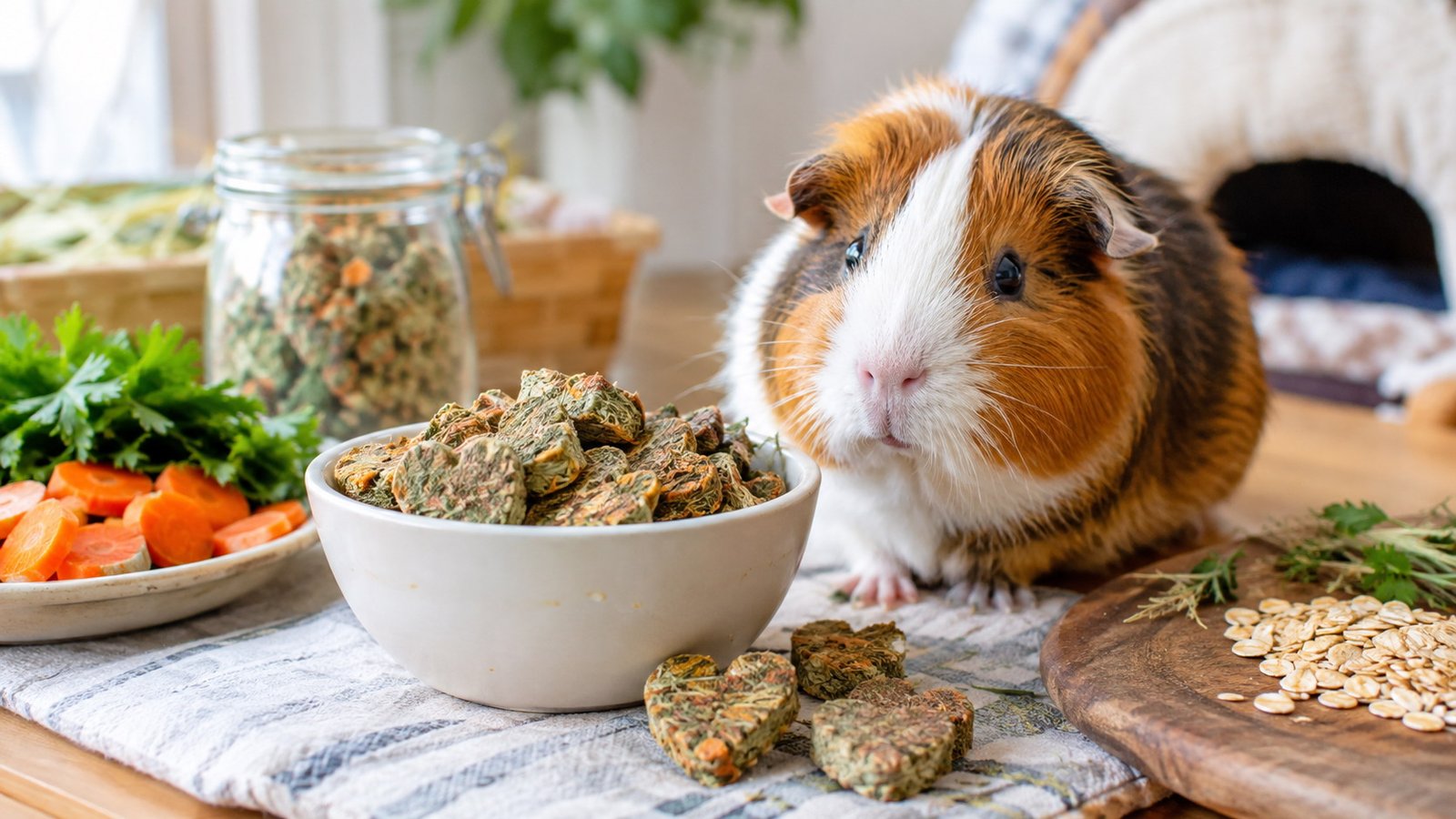
Homemade guinea pig treat recipes are a great way to give your pet something special without relying on heavily processed snacks. With a few guinea-pig-safe vegetables, herbs, fruits, and plenty of hay, you can create simple treats that add variety and enrichment to your pet’s routine.
The important part is knowing which ingredients are safe, how much to offer, and how often treats should be given. Guinea pigs have sensitive digestive systems, so a treat that looks healthy to us may not be appropriate for them.
This guide covers safe ingredients, foods to avoid, preparation methods, portion guidance, and 10 homemade guinea pig treat recipes you can make at home. You’ll also learn how to turn snack time into enrichment without compromising your guinea pig’s everyday nutrition.
In This Article
Homemade Guinea Pig Treat Recipes: What Makes a Treat Safe and Healthy?
A good guinea pig treat should complement a healthy diet rather than compete with it. Guinea pigs are herbivores with a digestive system designed around constant access to fiber-rich foods, particularly grass hay.
Hay should remain the foundation of your guinea pig’s diet. Fresh vegetables, appropriate guinea pig pellets, and clean drinking water also play important roles. Treats are extras and should stay relatively small.
When preparing homemade guinea pig treats, think simple rather than fancy. You don’t need sugar, flour, frosting, or complicated ingredients to make something your guinea pig will enjoy.
The best ingredients are usually fresh and simple
Many homemade treats can be made from foods your guinea pig already eats safely as part of a balanced diet.
Good choices can include:
- Bell peppers
- Cucumber
- Leafy greens
- Small amounts of carrot
- Fresh cilantro
- Fresh basil
- Other appropriate fresh herbs
- Small portions of suitable fruit
- Good-quality grass hay
Bell peppers are particularly useful because they provide vitamin C, an essential nutrient guinea pigs cannot produce on their own. They can be part of a regular vegetable rotation rather than being reserved exclusively for treats.
Fruit requires more restraint. Apples, berries, and similar fruits can be enjoyable occasional treats, but their naturally occurring sugars mean they shouldn’t become a large part of your guinea pig’s diet.
What makes a guinea pig treat unhealthy?
The biggest problem is often not the basic ingredient but what gets added to it.
Avoid turning a simple vegetable snack into a human-style dessert with:
- Added sugar
- Honey
- Syrups
- Artificial sweeteners
- Chocolate
- Dairy products
- Salt
- Seasonings
- Processed sauces
- Sweetened cereals
- Peanut butter or other sticky human snack ingredients
Xylitol is particularly important to avoid. Human foods containing artificial sweeteners are not appropriate guinea pig treats.
Another common mistake is making treats too calorie-dense. A homemade snack doesn’t automatically become healthier just because you prepared it yourself.
Fresh food still needs food-safety precautions
Wash fresh produce thoroughly before giving it to your guinea pig. Remove spoiled, wilted, moldy, or questionable pieces.
Fresh treats should also be removed from the enclosure before they become contaminated or begin to spoil. This matters especially with warm, moist foods.
Introduce unfamiliar ingredients gradually. If your guinea pig has never eaten a particular vegetable or herb before, start with a tiny amount rather than introducing several new foods in the same meal.
Before You Start: Ingredients Guinea Pigs Can—and Can’t—Eat
Creating safe homemade guinea pig treats becomes much easier when you have a simple ingredient checklist.
Guinea pigs don’t need a huge variety of exotic foods. In fact, keeping recipes straightforward makes it easier to control portions and identify a food that doesn’t agree with your pet.
Guinea-pig-safe ingredients to consider
| Ingredient | Treat use | Important note |
| Bell pepper | Excellent | A useful vitamin C-rich vegetable |
| Cucumber | Good | High in water, so offer sensible portions |
| Carrot | Occasional | Naturally sweet, so don’t overdo it |
| Cilantro | Good | Can be used fresh in small portions |
| Basil | Good | Fresh herb option |
| Leafy greens | Excellent | Choose appropriate guinea-pig-safe varieties |
| Apple | Occasional | Remove seeds and offer a small portion |
| Berries | Occasional | Naturally sweet; keep portions small |
| Grass hay | Excellent | Fiber-rich and suitable as the base for enrichment treats |
The word safe doesn’t mean “unlimited.” Even an appropriate food can become unsuitable when fed excessively.
Carrots and fruit are good examples. A guinea pig may happily eat a large quantity because it tastes sweet, but that doesn’t mean a large serving is appropriate.
Foods you should never use in homemade guinea pig treats
Some foods should simply stay out of your guinea pig’s bowl.
Avoid ingredients such as:
- Chocolate
- Onion
- Garlic
- Avocado
- Dairy products
- Meat
- Highly processed human snacks
- Sugary desserts
- Foods containing xylitol
- Salty or seasoned foods
- Moldy or spoiled produce
Don’t assume that an ingredient is safe because another pet can eat it. Guinea pigs have their own nutritional requirements and food sensitivities.
When you’re uncertain about a particular ingredient, leave it out until you’ve confirmed that it is appropriate for guinea pigs.
For additional guidance on guinea pig nutrition and safe feeding practices, the Merck Veterinary Manual’s guinea pig care information is a useful veterinary reference.
What about oats, bread, and other “treat” ingredients?
This is where many homemade guinea pig treat recipes found online can become misleading.
Oats, grains, bread, crackers, cookies, and similar foods may seem convenient for making little baked treats, but guinea pigs do not need human-style baked goods.
Their digestive system is much better suited to a high-fiber diet centered around hay and appropriate plant foods. You can make interesting treats without relying on flour or grain-based binders.
A hay-based enrichment activity, for example, is generally a more natural direction than trying to recreate a cookie for your guinea pig.
10 Easy Homemade Guinea Pig Treat Recipes to Try at Home
The following homemade guinea pig treat recipes focus on simple ingredients and minimal preparation. They are designed as occasional treats or enrichment ideas, not replacements for hay, vegetables, pellets, or water.
Start with very small portions when trying a new combination. Your guinea pig’s normal diet should remain the priority.
Fresh Vegetable Crunch Cups
This is one of the easiest homemade guinea pig treats because there’s no cooking involved.
Ingredients:
- A small piece of bell pepper
- A small piece of cucumber
- A thin slice or small piece of carrot
How to make it:
Wash the vegetables thoroughly. Cut them into small, manageable pieces and combine them in a tiny serving.
The vegetables can be placed in a shallow dish or scattered around a clean enclosure area to encourage natural foraging.
Why it works: The different textures give your guinea pig something interesting to investigate while keeping the ingredients simple.
Keep the carrot portion modest because it is sweeter than many leafy vegetables.
Apple and Herb Mini Bites
A tiny piece of apple paired with a fresh herb makes a fragrant occasional treat.
Ingredients:
- A very small piece of apple
- A few leaves of an appropriate fresh herb, such as cilantro
Preparation:
Wash the apple and herb thoroughly. Remove the apple’s seeds and core, then cut off a tiny piece of flesh.
Mix it with a small amount of herb and serve immediately.
Important: Apple should be an occasional treat, not a daily staple. The goal here is a little variety rather than a large fruit serving.
Carrot and Bell Pepper Bites
This colorful combination requires almost no preparation.
Ingredients:
- A small piece of bell pepper
- A small amount of carrot
Preparation:
Wash both vegetables and cut them into appropriately sized pieces. You can offer them separately or place them together as a small treat.
Bell pepper can provide useful vitamin C, while carrot adds a naturally sweet flavor that many guinea pigs enjoy.
Keep the carrot as the smaller component. Your guinea pig doesn’t need a bowl full of carrots to enjoy this snack.
Cucumber and Cilantro Snack
Fresh cucumber combined with fragrant cilantro creates a light treat with plenty of texture.
Ingredients:
- A few small pieces of cucumber
- A small amount of fresh cilantro
Wash both ingredients thoroughly and serve fresh.
This option works particularly well for guinea pigs that enjoy leafy textures and aromatic herbs.
Because cucumber contains a lot of water, reasonable portions are important. Large amounts of watery produce may not suit every guinea pig.
Berry-and-Greens Treat
A berry can make an appealing occasional treat when paired with greens.
Ingredients:
- A tiny piece of a suitable berry
- A small amount of guinea-pig-safe leafy greens
Wash everything thoroughly before serving.
The greens should make up most of this small snack, with the berry acting as the occasional sweet accent.
Don’t let fruit become the main attraction of every treat. Guinea pigs can quickly learn to prefer sweeter foods, while their nutritional needs are better served by fiber-rich foods and appropriate vegetables.
Homemade Hay-Based Treat Balls
Hay can be turned into a simple enrichment activity without adding sugar or processed ingredients.
What you’ll need:
- Clean, good-quality grass hay
- A small amount of appropriate fresh food if desired
Instead of creating a dense baked ball, consider loosely arranging hay into an appropriate forageable bundle or using a guinea-pig-safe enrichment setup that allows your pet to pull pieces out naturally.
The objective isn’t to create a hard “cookie.” The objective is to make hay more interesting to explore.
Always make sure any enrichment item is safe for chewing and supervise your guinea pig when introducing a new toy.
Frozen Summer Vegetable Treat
A cool vegetable treat can provide variety during hot weather.
Ingredients:
- Small pieces of guinea-pig-safe vegetables
- Clean water, if making a simple frozen enrichment option
Place tiny portions of suitable vegetables into an appropriate ice tray or enrichment container with water and freeze.
Allow the treat to soften enough that your guinea pig can interact with it safely rather than offering an extremely hard frozen object.
Never use flavored drinks, sweetened juice, or dairy products as the freezing liquid.
Fresh Herb and Veggie Salad
A miniature salad can be more exciting than simply placing one vegetable in a bowl.
Ingredients:
- A small amount of leafy greens
- A little bell pepper
- A few cucumber pieces
- A small amount of an appropriate fresh herb
Wash everything carefully and chop it into manageable pieces.
Use this idea to provide variety, not a huge serving. If the same vegetables are already part of your guinea pig’s regular daily diet, there is no need to dramatically increase the overall amount simply because you’re presenting them as a “treat.”
Simple Stuffed Hay Toy
Turn snack time into a foraging game by placing a small amount of safe fresh produce into a hay-filled enrichment toy designed for guinea pigs.
Use:
- Grass hay
- A few pieces of bell pepper
- A little leafy green
- An appropriate herb
Hide the vegetable pieces loosely rather than packing the toy tightly.
Your guinea pig then has to sniff, investigate, and pull apart the hay to find the food. This can make a tiny treat last longer and encourage natural exploratory behavior.
Remove fresh food that has been left sitting in the toy for too long. Moist vegetables can spoil much faster than dry hay.
Two-Ingredient Everyday-Style Treat
When you don’t have time for a complicated recipe, simplicity is your friend.
Try combining two appropriate foods, such as:
- Bell pepper + cilantro
- Cucumber + leafy greens
- Bell pepper + a small amount of basil
Wash, cut, and serve a small portion.
This type of treat is a good reminder that homemade guinea pig treats don’t need to look like baked goods. Fresh, appropriate plant foods can be more suitable than elaborate recipes containing unnecessary ingredients.
The best homemade treat is often the one that’s easy enough to prepare correctly and consistently.
How to Make Homemade Guinea Pig Treat Recipes Without Adding Unnecessary Sugar
Sweet flavors can be especially tempting when you’re making homemade guinea pig treats, but guinea pigs don’t need added sugar in their diet. Their treats are better built around fiber-rich hay, appropriate vegetables, and small amounts of naturally sweet produce.
Fruit can be included occasionally, but it shouldn’t become the main ingredient in homemade snacks. Apples, berries, and other fruits contain natural sugars, so think of them as occasional extras rather than everyday foods.
Natural sugar vs. added sugar
There’s an important difference between the natural sugars found in whole produce and the concentrated sugar added to processed foods.
A small piece of apple, for example, comes with water, fiber, and other nutrients. Sugar, honey, syrup, or sweetened ingredients add concentrated sweetness without being necessary for your guinea pig.
When preparing homemade guinea pig treat recipes, skip ingredients such as:
- White or brown sugar
- Honey
- Maple syrup
- Molasses
- Fruit juice
- Sweetened yogurt
- Artificial sweeteners
- Frosting or icing
- Sweetened cereal
- Candy or cookies
A treat doesn’t need to taste sweet to be enjoyable to a guinea pig. Fresh herbs, crunchy vegetables, and hay can provide plenty of variety.
Fruit treats should stay small
Fruit is one of the easiest ingredients to overuse because many guinea pigs love its sweetness.
A tiny piece of an appropriate fruit can be offered occasionally, but a large fruit serving isn’t a better treat. Pairing a small amount of fruit with leafy greens or another suitable vegetable can help keep the snack more balanced.
Watch your guinea pig’s overall diet rather than focusing on a single recipe. If fruit is already being offered elsewhere during the week, there’s little reason to add more simply because you’re preparing a homemade treat.
Don’t use human “sugar-free” foods
The phrase sugar-free can be misleading for pet owners.
A product designed for humans may contain artificial sweeteners, flavorings, preservatives, fats, or other ingredients that aren’t appropriate for guinea pigs.
Never assume a human diet product is safe simply because it contains less sugar. Homemade treats are safest when they’re made from recognizable, guinea-pig-appropriate ingredients rather than modified human foods.
Baked, Fresh, or Frozen? Choosing the Best Homemade Treat Method
Homemade guinea pig treats don’t have to be baked. In fact, fresh treats are often the simplest option because they require fewer ingredients and preserve the natural texture and moisture of vegetables.
Your choice of preparation method should depend on the ingredient, how quickly it spoils, and how you’re using the treat.
| Treat method | Main advantage | What to watch for |
| Fresh | Simple and minimally processed | Spoilage and portion size |
| Frozen | Interesting enrichment option | Don’t serve extremely hard frozen pieces |
| Hay-based | Encourages foraging | Avoid unsafe binders and materials |
| Baked | Can be convenient for storage | Many recipes contain unnecessary grains or sugars |
Fresh treats: the easiest choice
Fresh vegetables and herbs are usually the most straightforward homemade treats.
Simply wash the produce, remove anything unsuitable, cut it into manageable pieces, and serve a small amount.
Fresh treats also allow your guinea pig to experience the natural crunch, moisture, smell, and texture of the food.
The downside is storage. Fresh produce can spoil, particularly in a warm enclosure, so remove uneaten pieces before they become wilted or contaminated.
Frozen treats: useful for enrichment
Frozen treats can make snack time more interesting, particularly during hot weather.
You can freeze tiny portions of appropriate vegetables with water to create a simple enrichment activity. Let the treat soften appropriately before your guinea pig interacts with it.
Avoid freezing sugary drinks, juice, dairy, or flavored liquids.
The goal isn’t to give your guinea pig a rock-hard ice cube to chew. Instead, create something that gradually becomes accessible as it warms.
What about baked guinea pig treats?
Baked homemade treats can look appealing in photos, but baking isn’t necessary to make a good guinea pig snack.
Many internet recipes use flour, oats, bananas, honey, peanut butter, or other ingredients primarily because they make a dough that can be shaped and baked. Those ingredients don’t automatically make a better treat for a guinea pig.
If you do see a baked recipe, evaluate every ingredient individually rather than assuming the recipe is safe because it’s marketed specifically for guinea pigs.
A complicated recipe isn’t automatically healthier than a piece of fresh bell pepper.
Hay-based treats can double as enrichment
Hay is particularly useful when you want to make treat time more engaging.
Instead of creating a dense biscuit, use clean grass hay as part of a forage activity. Hide a few tiny pieces of appropriate vegetables or herbs among the hay, or use a safe enrichment toy designed for small herbivores.
This approach encourages your guinea pig to search, sniff, pull, and explore while keeping a fiber-rich food at the center of the activity.
Any toy should be checked regularly for damage, and fresh food should be removed before it spoils.
How Much Treat Is Too Much? Guinea Pig Portion and Frequency Guide
Even the healthiest homemade guinea pig treat can become a problem if your pet receives too much of it.
Treats should remain a small part of the overall diet, while unlimited appropriate grass hay provides the bulk of the fiber a guinea pig needs. Fresh vegetables, suitable pellets, and water also have important roles in daily care.
There’s no universal “one giant treat portion” that works for every guinea pig. The appropriate amount depends on the food, the animal’s overall diet, size, age, health, and individual tolerance.
Use tiny portions for treats
A useful rule is to think in terms of taste and enrichment, not a full snack plate.
For example:
- Offer a small piece of fruit rather than several pieces.
- Use carrot sparingly because it is relatively sweet.
- Give herbs and vegetables in sensible portions.
- Don’t combine several large treats into one serving.
- Keep hay freely available regardless of whether a treat is offered.
The treat should complement the diet rather than leave your guinea pig too full to eat its normal foods.
Daily vegetables aren’t the same as special treats
This distinction can be confusing.
A guinea pig can have appropriate fresh vegetables as part of its normal balanced diet, while sweeter foods such as fruit are better treated as occasional extras.
Calling a piece of bell pepper a “treat” doesn’t necessarily mean it has to be restricted in the same way as a piece of fruit. The nutritional profile of the food matters more than the label you give it.
Introduce new foods gradually
A new homemade recipe should not contain five unfamiliar ingredients at once.
Start with an ingredient your guinea pig already tolerates whenever possible. If you’re introducing something new, offer a very small amount and monitor your pet.
Pay attention to:
- Appetite
- Stool consistency and quantity
- Energy level
- Normal eating behavior
- Any unusual digestive changes
If your guinea pig develops significant digestive symptoms or stops eating, don’t simply continue experimenting with treats. Guinea pigs can become seriously unwell when they stop eating, so veterinary advice is appropriate when there’s a meaningful change in appetite or health.
A simple treat-planning approach
You can make homemade treats easier to manage by rotating between different types rather than increasing the amount.
For example:
Vegetable day: A tiny combination of bell pepper and cucumber.
Herb day: A small amount of cilantro with appropriate greens.
Fruit occasion: A very small piece of apple or berry alongside suitable greens.
Foraging day: Hay with a few hidden vegetable pieces.
This keeps treat time interesting without turning every day into a high-sugar snack session.
When in doubt, make the portion smaller and keep the recipe simpler. A guinea pig doesn’t need a large homemade snack to benefit from variety and enrichment.
Common Mistakes Owners Make When Making Guinea Pig Treats
Making homemade guinea pig treats can be simple, but a few common mistakes can turn a healthy idea into an unsuitable snack. Most problems come from using too many ingredients, offering oversized portions, or adapting human recipes that aren’t designed for guinea pigs.
Keeping treats close to the foods your guinea pig naturally eats is usually the safest approach.
Mistake: Using too much fruit
Fruit is appealing because guinea pigs often love its sweet taste. That enthusiasm can make it easy to offer more than necessary.
A homemade treat containing a little apple or berry can be fine as an occasional option, but large fruit-heavy snacks add unnecessary sugar to the diet.
Think of fruit as a garnish, not the foundation of a treat recipe.
Mistake: Adding sugar or sweeteners
Honey, maple syrup, sugar, and artificial sweeteners have no place in a guinea pig treat.
You may find recipes online that use banana, honey, or other sticky ingredients to hold homemade “cookies” together. That doesn’t mean those recipes are nutritionally appropriate.
There is rarely a good reason to make a guinea pig treat sweeter. Fresh vegetables, herbs, and hay already provide plenty of interesting flavors and textures.
Mistake: Assuming “healthy human food” is safe
Human foods marketed as healthy can still be inappropriate for guinea pigs.
Granola, crackers, breakfast cereals, whole-grain cookies, flavored oats, and similar products may contain ingredients that don’t belong in a guinea pig’s diet.
Always evaluate the individual ingredients rather than trusting a health claim on the package.
Mistake: Making treats too large
A homemade snack can look harmless when you’re preparing it in the kitchen, but portion size matters.
Large pieces can encourage overeating and may also leave your guinea pig less interested in its normal foods.
Cut fresh produce into appropriately sized pieces and keep special treats genuinely small.
Mistake: Introducing several new foods at once
Suppose you make a recipe containing apple, carrot, cucumber, basil, and a new leafy green. If your guinea pig develops digestive changes afterward, you won’t know which ingredient caused the problem.
A better approach is to introduce unfamiliar foods one at a time and in small quantities.
Once you know your guinea pig tolerates each ingredient, combinations become much easier to manage.
Mistake: Forgetting about freshness
Fresh vegetables and herbs don’t last indefinitely inside an enclosure.
Remove uneaten fresh treats before they become spoiled, slimy, wilted, or contaminated. Check enrichment toys carefully when they contain fresh produce.
Dry hay can remain available much longer, but even hay should be kept clean, dry, and free from mold.
Mistake: Replacing nutritious foods with treats
This is perhaps the most important mistake to avoid.
Homemade treats are extras. They should never replace unlimited appropriate hay or take the place of a properly balanced guinea pig diet.
If your guinea pig consistently chooses treats over hay or normal foods, reduce the treats rather than trying to make them more appealing.
Homemade Treats vs. Store-Bought Guinea Pig Treats: Which Is Better?
There’s no universal winner between homemade and commercial guinea pig treats. The better option depends on the ingredients, the nutritional quality of the product, and how you intend to use it.
The biggest advantage of homemade treats is control. You know exactly what goes into the snack and can avoid unnecessary sugar, flavorings, and additives.
Store-bought treats offer convenience and may be easier to portion or store, but product labels need to be read carefully.
| Factor | Homemade treats | Store-bought treats |
| Ingredient control | Excellent | Depends on the product |
| Preparation time | Requires some effort | Very convenient |
| Freshness | Can be very fresh | Usually shelf-stable |
| Portion control | Depends on owner | Often easier with packaged pieces |
| Added ingredients | Easy to avoid | Must check the label |
| Enrichment potential | Very flexible | Depends on the product |
| Cost | Often inexpensive | Varies by product |
| Storage | Fresh recipes spoil faster | Usually easier to store |
Why homemade treats can be a great choice
A few pieces of washed bell pepper, cucumber, or a suitable herb can become a homemade treat with almost no preparation.
You don’t need specialized equipment, and you can adjust the recipe based on foods your guinea pig already enjoys.
Homemade treats are also useful for enrichment. Instead of simply handing over a snack, you can hide small vegetable pieces in hay or place them in a suitable forage toy.
When commercial treats may be convenient
Commercial products can be useful when you need something portable, consistent, or easy to store.
The key is choosing carefully.
Check the ingredient list and be cautious about products containing:
- Added sugars
- Honey or syrup
- Artificial sweeteners
- Chocolate
- Dairy
- Excessive grains
- Seeds or nuts
- Highly processed ingredients
- Unnecessary coloring or flavoring
A product specifically labeled for guinea pigs isn’t automatically something your pet needs. Treats are optional; a balanced everyday diet is not.
How to choose a better packaged treat
If you decide to purchase treats, favor products with straightforward ingredients and avoid snacks that resemble human desserts.
A treat that primarily consists of appropriate plant ingredients is generally a more sensible choice than a brightly colored, heavily processed “cookie.”
You should also consider whether the same benefit can be achieved more simply with a small amount of fresh produce.
For many guinea pigs, a tiny piece of bell pepper or an appropriate herb can be just as exciting as a packaged snack.
Expert Tips for Making Treat Time More Enriching
Treats can do more than provide something tasty. Used thoughtfully, they can turn feeding into an opportunity for natural exploration and foraging.
Guinea pigs spend much of their time searching for and eating plant material in the wild. You can recreate some of that behavior in a safe home environment without making feeding complicated.
Hide treats in hay
Place a few tiny pieces of safe vegetables or herbs among clean, dry hay.
Your guinea pig has to sniff around and move the hay to discover the food. This takes longer than simply eating a vegetable from a bowl.
Keep the hidden food pieces small and remove any fresh leftovers before they spoil.
Use safe forage toys
Appropriate small-animal enrichment toys can make treat time more interactive.
Choose items that are specifically designed to be chewed or explored by guinea pigs and avoid anything with:
- Loose strings
- Toxic materials
- Sharp edges
- Small detachable pieces
- Unsafe paints or coatings
Inspect toys regularly and replace anything that becomes damaged.
Scatter tiny pieces instead of using one bowl
A few small pieces of appropriate vegetables can be scattered around a clean, safe area for your guinea pig to discover.
This encourages movement and investigation while slowing down the process of eating.
You don’t need to scatter a large quantity. A few tiny pieces can create plenty of searching behavior.
Rotate textures and flavors
Variety doesn’t have to mean introducing lots of new foods.
You can rotate familiar ingredients:
- Crunchy bell pepper
- Moist cucumber
- Leafy greens
- Fragrant herbs
- Tiny occasional pieces of fruit
- Hay-based forage activities
This gives your guinea pig different sensory experiences without constantly changing its diet.
Let the treat support natural behavior
The best enrichment doesn’t force your guinea pig to perform tricks or complicated tasks. Simple opportunities to sniff, search, chew, and explore can be enough.
Try placing a small amount of hay around a favorite forage area, hiding a few vegetable pieces in an appropriate toy, or offering fresh herbs in a way that encourages investigation.
Treat time should remain enjoyable, safe, and secondary to proper nutrition.
A thoughtful homemade treat isn’t about creating the most elaborate recipe. It’s about giving your guinea pig a small amount of safe food while encouraging healthy eating habits and natural curiosity.
Signs a New Treat Isn’t Agreeing With Your Guinea Pig
Even safe foods can affect individual guinea pigs differently. A recipe that works well for one pet may not suit another, particularly if the food is unfamiliar or offered in a large amount.
That’s why it’s worth paying attention to your guinea pig after introducing a new homemade treat. Changes in eating, drinking, stool, or behavior shouldn’t be ignored.
Watch for changes in appetite
A healthy guinea pig should continue eating its normal foods, especially hay.
If your guinea pig suddenly eats much less, refuses food, or seems interested only in treats, stop offering the new snack and pay close attention.
A guinea pig that stops eating can become seriously ill relatively quickly. Contact a veterinarian promptly if your pet is not eating normally rather than waiting to see whether the problem resolves on its own.
Pay attention to droppings
Your guinea pig’s droppings can provide useful clues about digestive health.
Watch for:
- Noticeably softer stools
- Diarrhea
- A significant reduction in the amount of feces
- Unusual changes that persist
- Changes occurring alongside reduced appetite or lethargy
One soft stool isn’t necessarily proof that a particular ingredient is harmful, but persistent or significant digestive changes deserve attention.
Look for changes in normal behavior
Guinea pigs are often good at hiding signs that they aren’t feeling well.
Be alert for unusual:
- Lethargy
- Hiding
- Weakness
- Reduced movement
- Hunched posture
- Signs of obvious discomfort
- Changes in normal eating behavior
If your guinea pig appears seriously unwell, has difficulty breathing, becomes very weak, or stops eating, seek veterinary care rather than trying additional homemade remedies.
What to do after a suspected food reaction
If you think a new treat caused a problem, don’t continue giving it simply to “test” the reaction.
Stop the new treat, return to the familiar diet your guinea pig normally tolerates, and contact your veterinarian if symptoms are significant, persistent, or accompanied by reduced appetite.
Keep track of what your guinea pig ate and approximately when it was introduced. That information can be useful when discussing the problem with a veterinarian.
Guinea Pig Nutrition Basics: What Should They Eat Every Day?
Homemade treats make much more sense when you understand where they fit into the bigger nutritional picture.
Treats are extras, not the foundation of a guinea pig’s diet. Your pet’s everyday food should provide the fiber and nutrients needed to support normal digestion and overall health.
Hay should be available all the time
Good-quality grass hay should be a major part of your guinea pig’s daily diet.
Hay provides substantial dietary fiber and encourages the constant chewing behavior that guinea pigs need.
Suitable grass hays can include options such as timothy, orchard, or meadow hay, depending on availability and your guinea pig’s individual needs.
Keep hay fresh, dry, clean, and readily accessible.
Fresh vegetables provide variety and nutrients
Appropriate fresh vegetables can form an important part of a balanced guinea pig diet.
Leafy greens and vegetables such as bell pepper can provide useful nutrients and variety. Bell peppers are particularly valuable as a source of vitamin C.
Introduce unfamiliar vegetables gradually rather than suddenly changing the entire menu.
Guinea pig pellets have a specific role
A small, appropriate portion of quality guinea pig pellets can complement hay and fresh vegetables.
Choose pellets formulated specifically for guinea pigs rather than rabbit food or generic rodent mixes.
Avoid products containing colorful sugary pieces, seeds, nuts, dried fruit, or other ingredients that encourage selective eating.
Fresh water is essential
Your guinea pig should always have access to clean drinking water.
Check the water source regularly and replace it as needed. Bottles and bowls should also be cleaned routinely to prevent buildup and contamination.
Don’t forget vitamin C
Guinea pigs cannot produce their own vitamin C, so their diet needs to provide it.
Fresh bell peppers and appropriate vegetables can contribute to vitamin C intake, while a properly formulated guinea pig diet can provide additional support.
Vitamin C requirements can vary with age, health, and individual circumstances. If you’re concerned that your guinea pig isn’t getting enough, discuss supplementation with a veterinarian rather than adding large amounts of vitamin C products on your own.
Frequently Asked Questions About Homemade Guinea Pig Treat Recipes
Can guinea pigs eat homemade treats every day?
Some fresh vegetables used as part of a balanced daily diet may be offered regularly, but special treats—particularly fruit-based or sugary foods—should remain limited. Homemade treats should never replace unlimited appropriate hay or other essential parts of the diet.
What is the healthiest homemade treat for a guinea pig?
Simple fresh vegetables and appropriate herbs are among the easiest options. Bell pepper, suitable leafy greens, cucumber, and small amounts of herbs can provide variety without requiring added sugar or processed ingredients.
Can I make guinea pig treats without an oven?
Yes. Many of the best homemade guinea pig treats require no cooking at all. Fresh vegetable combinations, herb snacks, hay-based forage activities, and simple frozen enrichment treats can all be prepared without an oven.
Can guinea pigs eat homemade cookies?
Traditional human-style cookies are generally unsuitable because they often contain sugar, flour, butter, dairy, salt, or other unnecessary ingredients. Guinea pigs don’t need cookies to enjoy treat time; fresh vegetables, herbs, and hay-based enrichment are simpler choices.
Are fruits good homemade treats for guinea pigs?
Suitable fruits can be offered occasionally in very small portions. Fruit contains naturally occurring sugar, so it shouldn’t become a major part of your guinea pig’s diet.
Can guinea pigs eat oats in homemade treats?
Oats aren’t necessary for a guinea pig’s normal diet, and they shouldn’t be used simply because they make homemade treats easier to bake. Prioritize grass hay, appropriate vegetables, and properly formulated guinea pig food instead.
How long do homemade guinea pig treats last?
Fresh vegetable and fruit treats are best served fresh and should not be left sitting in the enclosure long enough to spoil. Refrigerate appropriate prepared produce when necessary, and discard anything that becomes wilted, slimy, moldy, or otherwise questionable.
What should I do if my guinea pig gets diarrhea after a treat?
Stop offering the new treat and monitor your guinea pig closely. Diarrhea, significant stool changes, or digestive symptoms combined with reduced appetite warrant veterinary attention. Don’t rely on additional treats or home remedies to solve a potentially serious digestive problem.
Keep Homemade Guinea Pig Treats Simple and Safe
The best homemade guinea pig treat recipes don’t need to look like elaborate desserts. A few pieces of safe vegetables, a fragrant herb, or a hay-based foraging activity can provide plenty of enjoyment without unnecessary sugar or processed ingredients.
Focus on three things: safe ingredients, sensible portions, and a balanced everyday diet. Introduce new foods gradually, keep fresh treats clean and fresh, and pay attention to changes in appetite or digestion.
Most importantly, remember that your guinea pig’s favorite treat should never come at the expense of proper nutrition. Keep plenty of good-quality hay available, provide an appropriate everyday diet, and use homemade treats as small moments of variety and enrichment.
Ready to make treat time more exciting? Start with one simple recipe—such as bell pepper and cilantro or a small hay-foraging activity—and see which safe flavors and textures your guinea pig enjoys most.

Passionate about pets and animal care, we shares trusted tips, fun facts, and practical advice to help pet lovers give their furry, feathered, and scaly companions the best life possible. From everyday care guides to fascinating animal insights, we’re dedicated to making pet information easy, helpful, and enjoyable for every reader.
1 thought on “Homemade Guinea Pig Treat Recipes: 10 Safe and Easy Ideas for Happy Piggies”