
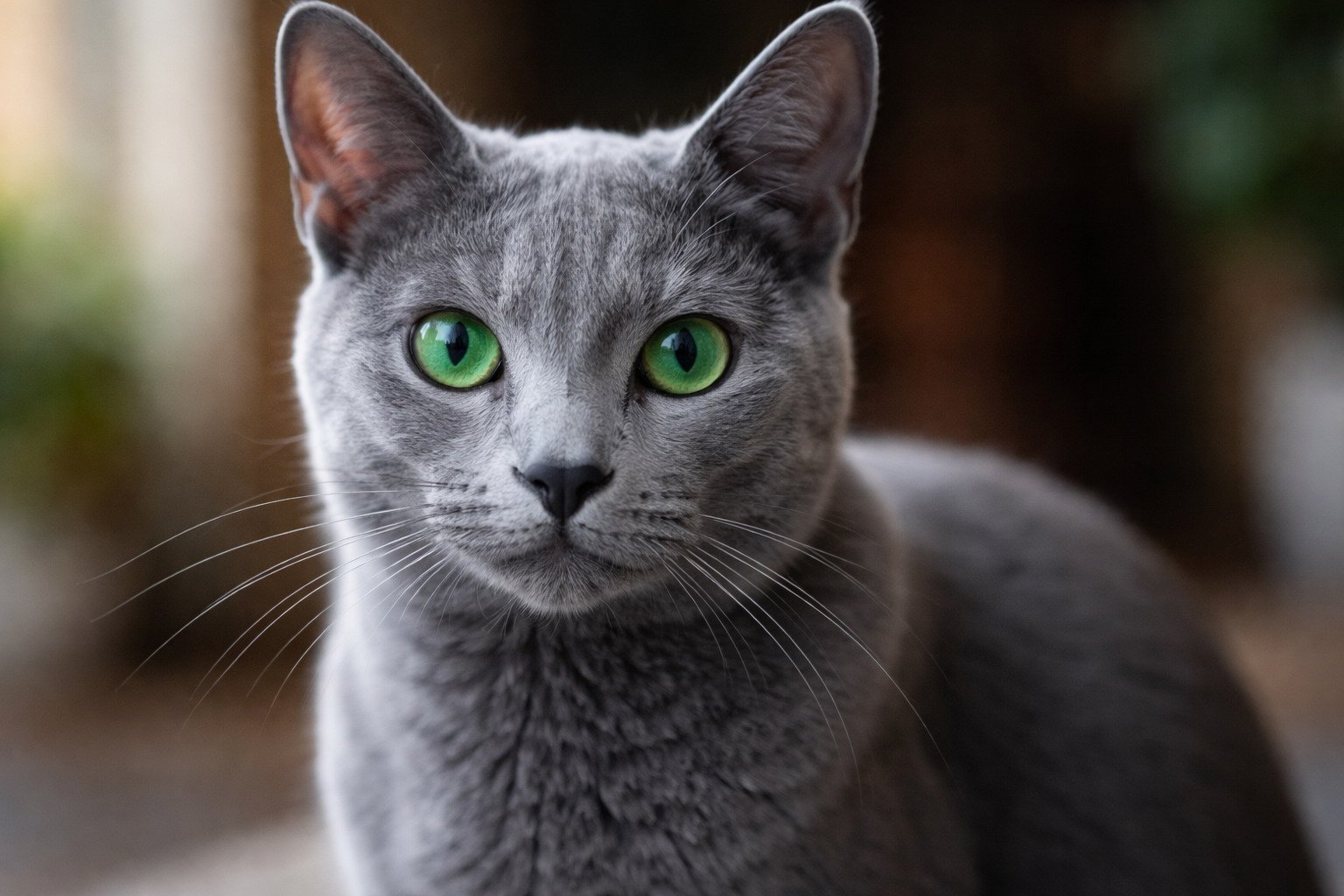
Russian Blue cat eyes color is often described as mesmerizing, hypnotic, and unforgettable. One look is enough to understand why this breed commands attention in both show rings and living rooms. The intense green eyes, paired with a plush blue-gray coat, create a visual contrast that feels almost sculpted rather than accidental.
Many people assume that all gray cats with green eyes are Russian Blues. That assumption leads to frequent misidentification and confusion about what truly defines authentic Russian Blue cat eyes color. Breed standards, genetics, and development stages all play precise roles in shaping the final eye color.
This article explores Russian Blue cat eyes color with clarity and depth—how it develops, why green is the gold standard, and what makes this breed’s eyes so distinctive compared to others.
In This Article
What Is the Natural Russian Blue Cat Eyes Color?
Breed Standards for Russian Blue Cat Eyes Color
Russian Blue cat eyes color is officially recognized as vivid green by major cat associations such as CFA and TICA. Judges look for clarity, brightness, and richness of color rather than size alone. Cloudy, dull, or yellow-tinged eyes reduce breed quality in competitive settings.
Ideal characteristics include:
- Clear, almond-shaped eyes
- Medium to large size, set wide apart
- Bright emerald green tone with no haze
Yellow, amber, or gold eyes do not meet the ideal standard for adult Russian Blues, even though these colors may appear temporarily during early development.
Common Eye Colors Seen in Russian Blue Cats
The natural Russian Blue cat eyes color changes over time. Kittens rarely show their final eye color at birth.
| Life Stage | Typical Eye Color |
| Birth to 4 weeks | Blue-gray |
| 2–4 months | Yellow or amber |
| 6–12 months | Yellow-green |
| 12–18 months | True emerald green |
This gradual transformation explains why many young cats are mistakenly labeled as “mixed” or “non-standard” too early.
Why Green Dominates the Russian Blue Cat Eyes Color Spectrum
Green eyes in Russian Blues come from a specific genetic combination affecting melanin distribution in the iris. High-quality breeding focuses on strengthening this trait through generations.
Emerald green remains the most prized shade, although lighter green tones still qualify when clarity and brightness remain strong.
“The brilliance of a Russian Blue’s eyes should feel luminous, never muddy.” — Cat Fanciers’ Association Judge Commentary
Russian Blue Cat Eyes Color Development From Kitten to Adult
Early Eye Color Changes Explained
Russian Blue kittens enter the world with blue eyes, a common trait across nearly all cat breeds. Pigment cells remain undeveloped at birth, leaving eye color neutral and muted.
Around six to eight weeks of age, melanin production begins. Yellow tones appear first, often leading owners to believe the cat will never develop green eyes. That assumption usually proves incorrect.
Timeline of Russian Blue Cat Eyes Color Maturity
Russian Blue cat eyes color matures slowly compared to many breeds. Full color development can take up to 18 months, sometimes longer in show-quality lines.
Key milestones include:
- Blue fades as pigment cells activate
- Amber hues peak during adolescence
- Green pigmentation strengthens gradually
- Final depth and brightness settle in adulthood
Patience plays a crucial role when evaluating eye color quality in young Russian Blues.
Factors Influencing Final Eye Color
Several elements shape the final Russian Blue cat eyes color:
- Genetics: Strong green-eyed lineage increases vibrancy
- Nutrition: Proper taurine and micronutrient intake supports eye health
- Overall health: Chronic illness may dull brightness
- Light exposure: Natural light can enhance perceived color depth
Healthy cats with balanced diets tend to show clearer, more radiant eyes over time.
Genetics Behind Russian Blue Cat Eyes Color
How Genetics Shape Russian Blue Cat Eyes Color
Russian Blue cat eyes color is not accidental. Genetics determine how pigment cells, known as melanocytes, distribute color within the iris. Russian Blues carry genetic traits that reduce yellow and brown pigments while emphasizing green tones, resulting in that signature emerald look.
Selective breeding strengthens this trait over generations. Breeders who prioritize vivid eye color carefully pair cats with deep green eyes and strong lineage records. Weak genetic matches often produce paler or uneven eye pigmentation.
Key genetic influences include:
- Low pheomelanin levels, reducing amber hues
- Balanced eumelanin distribution promoting green intensity
- Polygenic inheritance, meaning multiple genes affect eye color
These factors explain why even within the same litter, Russian Blue cat eyes color can vary slightly in shade and brilliance.
Dominant and Recessive Traits Affecting Eye Color
Russian Blue eye color does not rely on a single dominant gene. Instead, several recessive traits must align to produce ideal green pigmentation. When non-ideal genes appear, eyes may remain yellow-green or muted.
Common outcomes of genetic variation:
- Pure lineage: vivid emerald green
- Partial lineage: light green or green-yellow
- Mixed ancestry: persistent gold or amber
Understanding these variations helps prevent unrealistic expectations when evaluating young cats.
Role of Ethical Breeding in Preserving Russian Blue Cat Eyes Color
Responsible breeders track eye color development across multiple generations. Cats showing early, bright green pigmentation are often preferred in breeding programs.
Ethical breeding is the backbone of preserving true Russian Blue cat eyes color, especially as demand for the breed continues to grow worldwide.
Variations in Russian Blue Cat Eyes Color Shades
Common Shades Seen in Russian Blue Cats
Although green defines the Russian Blue cat eyes color standard, that green appears in several natural shades. Subtle differences give each cat a unique visual identity.
Recognized green variations include:
- Emerald green: deep, saturated, highly prized
- Moss green: softer tone with natural warmth
- Light green: pale yet acceptable if clear and bright
Eye clarity matters more than shade alone. Even lighter greens can appear striking when brightness and transparency remain intact.
How Lighting Alters the Appearance of Russian Blue Cat Eyes Color
Russian Blue cat eyes color reacts strongly to environmental light. Natural daylight enhances green brilliance, while artificial lighting may mute or shift tones.
Cats photographed indoors often appear yellow-eyed due to warm lighting. Sunlit environments, on the other hand, reveal the true green depth.
Lighting effects include:
- Morning sunlight: sharper contrast and sparkle
- Low indoor light: softer, duller appearance
- Flash photography: reflective glare masking true color
Eye color evaluation should always occur in neutral or natural lighting for accuracy.
Why Some Russian Blues Appear More Vibrant Than Others
Differences in vibrancy stem from genetics, health, and hydration. Well-hydrated cats tend to show clearer iris definition, while poor diet or stress may dull color intensity.
A calm, healthy Russian Blue displays eyes that look almost luminous rather than flat.
Eye Color vs Coat Color: The Russian Blue Cat Eyes Color Contrast
The Visual Harmony Between Coat and Eye Color
Russian Blue cat eyes color stands out because of its relationship with the breed’s distinctive coat. The blue-gray fur, tipped with silver, acts as a neutral backdrop that magnifies green tones.
This contrast creates a polished, almost metallic appearance unique to the breed.
Key contrast elements include:
- Cool-toned silver coat
- Dense double fur structure
- Bright green eye pigmentation
Together, these traits create a balanced visual effect rarely matched by other breeds.
Why Contrast Defines Russian Blue Breed Identity
Many gray cats have yellow or copper eyes. Russian Blues differ sharply because green eyes elevate the aesthetic from ordinary to iconic.
Judges and breed experts often describe the effect as clean, crisp, and refined. The balance between coat texture and Russian Blue cat eyes color plays a major role in breed recognition.
Breed Recognition Through Eye–Coat Interaction
During cat shows, Russian Blues are evaluated as a complete visual package. Eye color cannot be judged in isolation from coat quality.
A cat with perfect fur but weak eye color loses points. A cat with radiant green eyes and average coat still leaves a stronger impression.
“The Russian Blue is defined as much by its eyes as by its coat.” — International Cat Association Commentary
Russian Blue Cat Eyes Color and Health Indicators
What Healthy Russian Blue Cat Eyes Color Looks Like
Russian Blue cat eyes color offers subtle clues about overall health. Healthy eyes appear clear, bright, and evenly pigmented, without discharge or cloudiness. The green tone should look lively rather than flat.
A vibrant eye color usually indicates proper hydration, balanced nutrition, and good systemic health.
Signs of healthy eyes include:
- Consistent green coloration in both eyes
- Clear sclera with no redness
- Smooth eye surface without excessive tearing
Any sudden change in brightness or color intensity deserves attention.
When Changes in Russian Blue Cat Eyes Color Signal Problems
Eye color shifts in adult cats rarely occur without a reason. Sudden dullness or discoloration may point to underlying issues.
Potential health concerns linked to eye changes:
- Liver disorders causing yellow tinting
- Infections producing cloudiness
- Dehydration leading to dull appearance
- Trauma affecting one eye only
Prompt veterinary evaluation prevents minor issues from becoming serious conditions.
“Eye clarity often mirrors internal health long before other symptoms appear.” — Veterinary Ophthalmology Insight
Normal Variations vs Warning Signs
Minor shade changes caused by lighting or mood remain harmless. Persistent changes, redness, or discharge should never be ignored. Russian Blue cat eyes color stays stable once adulthood is reached.
Russian Blue Cat Eyes Color Compared to Other Blue Cat Breeds
Russian Blue vs Chartreux Eye Color
Chartreux cats share a similar blue-gray coat, leading to frequent confusion. Eye color creates a clear distinction.
| Breed | Typical Adult Eye Color |
| Russian Blue | Vivid green |
| Chartreux | Copper or gold |
Chartreux kittens may briefly show greenish hues, yet they mature into warm-toned eyes rather than emerald green.
Russian Blue vs British Shorthair Eye Color
British Shorthairs often display blue, copper, or gold eyes depending on coat variation. Green appears rarely in true blue-coated individuals.
Russian Blue cat eyes color stands out due to its consistency and intensity, supported by strict breeding standards.
Why Russian Blue Cat Eyes Color Is More Intense
Russian Blues possess a unique genetic balance that eliminates excess yellow pigment. That balance produces clarity rather than muddiness.
Misidentification frequently occurs when owners rely solely on coat color. Eye color remains the most reliable identifier for this breed.
How Breeders Evaluate Russian Blue Cat Eyes Color
Eye Color Standards in Cat Shows
Judges assess Russian Blue cat eyes color using multiple criteria rather than shade alone.
Evaluation factors include:
- Depth and saturation of green
- Eye brightness and symmetry
- Clarity without clouding
- Harmony with coat color
Emerald tones receive higher scores, yet clarity often outweighs depth.
What Breeders Look for in Breeding Stock
Breeders study kittens for early green development, often around three to four months. Rapid transition from yellow to green suggests strong genetics.
Cats with slow or incomplete transitions may still make excellent companions but are usually excluded from breeding programs.
Practices Used to Preserve Ideal Eye Color
Responsible breeding focuses on lineage tracking rather than shortcuts.
Preservation practices include:
- Genetic screening
- Pairing complementary eye tones
- Avoiding mixed-breed crossings
- Monitoring eye color changes across generations
Eye color integrity defines breed authenticity.
Myths and Facts About Russian Blue Cat Eyes Color
Common Myths Surrounding Russian Blue Cat Eyes Color
Russian Blue cat eyes color attracts attention, which also invites misinformation. Many claims circulating online confuse natural development with myths.
Widespread myths include:
- Diet alone can turn yellow eyes green
- All gray cats with green eyes are Russian Blues
- Eye color can be permanently changed with supplements
These ideas oversimplify a complex genetic process.
The Truth Behind Eye Color Changes
Russian Blue cat eyes color is genetically predetermined. Nutrition supports eye health and clarity, yet it cannot override genetics. Supplements marketed as “eye color enhancers” lack scientific evidence and should be avoided.
Temporary changes occur during kittenhood, aging, or illness. Permanent shifts in healthy adult cats are extremely rare.
Fact-based clarity:
- Genetics determines final eye color
- Diet influences brightness, not pigment
- Lighting alters perception, not biology
“True eye color emerges through genetics, not food bowls.” — Feline Genetics Research Summary
Separating Breed Purity From Visual Assumptions
Many mixed-breed cats display green eyes, yet lack other defining Russian Blue traits. Eye color alone does not confirm pedigree status.
Authentic Russian Blues combine coat texture, eye color, body shape, and temperament into a cohesive whole.
Caring Tips to Maintain Healthy Russian Blue Cat Eyes Color
Nutrition That Supports Eye Clarity
Russian Blue cat eyes color benefits from balanced nutrition rather than gimmicks. Specific nutrients promote eye function and clarity.
Essential nutrients include:
- Taurine for retinal health
- Omega-3 fatty acids for inflammation control
- Vitamin A for overall eye function
- Clean water for hydration and brightness
High-quality, protein-rich diets help eyes appear luminous and sharp.
Environmental and Grooming Considerations
Clean living spaces reduce exposure to irritants that cause tearing or dullness. Gentle face grooming removes debris without damaging delicate eye tissue.
Helpful care practices:
- Wipe eyes with a damp, soft cloth
- Avoid dusty litter products
- Maintain low-stress environments
Russian Blues respond positively to calm surroundings, which often reflects in their eye expression.
Veterinary Care and Long-Term Eye Health
Regular veterinary checkups help preserve long-term Russian Blue cat eyes color quality. Early detection of infections or systemic issues prevents permanent damage.
Reliable veterinary guidance on feline eye health is available through the American Veterinary Medical Association, which offers evidence-based resources for cat owners: ttps://www.avma.org
Healthy eyes preserve the breed’s most iconic feature.

Passionate about pets and animal care, we shares trusted tips, fun facts, and practical advice to help pet lovers give their furry, feathered, and scaly companions the best life possible. From everyday care guides to fascinating animal insights, we’re dedicated to making pet information easy, helpful, and enjoyable for every reader.